

New York City is the largest city in the United States, with one of the highest concentrations of small businesses of any US metro. Brooklyn's food and creative scenes, Queens' immigrant business districts, Manhattan's restaurants and professional services, and the Bronx and Staten Island's neighborhood economies all create diverse, strong deposit patterns that MCA underwriting evaluates directly.
New York's bank lending environment is dominated by large institutions that have minimal appetite for small business loans under $500K. The SBA process takes 90+ days. NYC businesses operating on $30K monthly in deposits cannot wait three months for capital; they need MCA's faster cycle. Operating costs in NYC are extreme; capital availability must match the pace of the market.

A finished job or a delivered invoice does not pay payroll. A Manhattan consulting firm that closes a project still waits on a client's net-30 or net-60 terms. A Queens contractor who finishes a build-out still waits on a general contractor's AP cycle. That gap between doing the work and the invoice actually clearing is the specific, time-boxed problem MCA is built to bridge, not a way to fund a business that isn't otherwise winning real work.
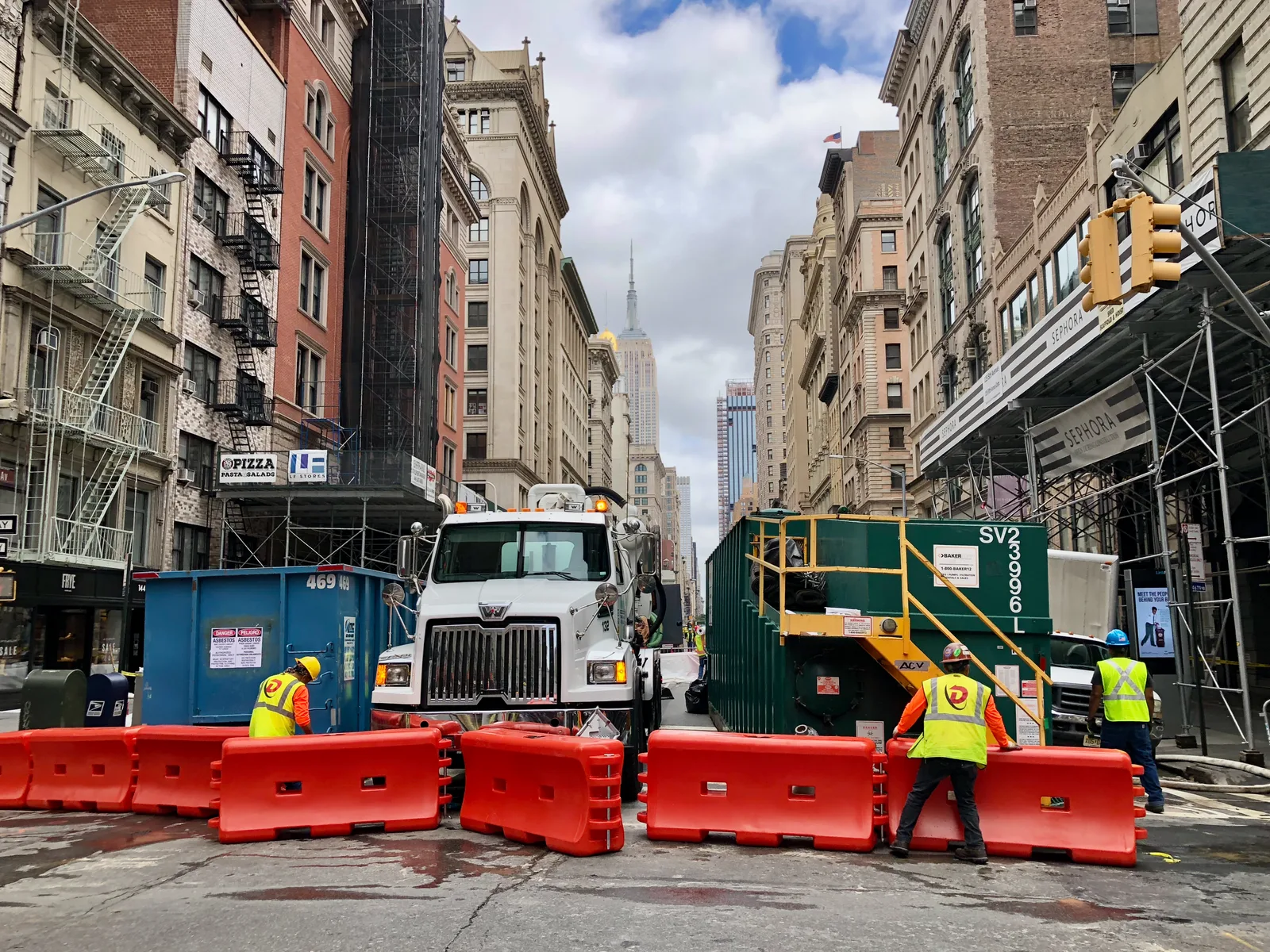
New York is not one market. Manhattan's Midtown and Financial District run on professional-services and finance-firm billing cycles. Brooklyn's Williamsburg and Bushwick corridors run on restaurant and creative-studio card volume. Queens' Flushing and Jackson Heights districts run on immigrant-owned retail and food-service deposits. The Bronx's Fordham Road corridor and Staten Island's neighborhood retail strips run on steadier, community-driven local spending. Each borough's deposit pattern looks different, and MCA underwriting reads that pattern directly rather than applying one generic standard.
Upstate New York is a different economy, not a smaller version of NYC. Buffalo and Rochester carry a manufacturing and healthcare-system base (Buffalo's Kaleida Health and Catholic Health networks, Rochester's University of Rochester Medical Center); Syracuse leans on education and healthcare; Albany's economy runs heavily on state-government contracting and the professional-services firms that serve it. These businesses often wait on slower insurer, institutional, or government payment cycles rather than NYC's faster card-driven consumer revenue, which changes when a cash-flow gap actually shows up, not whether MCA can evaluate the deposit pattern. Any New York business, in any of the five boroughs or upstate, that meets the base qualifications below can apply.
Full tri-state metro served: all five boroughs plus New Jersey (Newark, Jersey City, Hoboken), Long Island (Nassau, Suffolk), Westchester, and Connecticut.
The document ask is a signed application plus 6 consecutive months of business bank statements, all pages, non-redacted; personal statements aren't accepted. A driver's license and voided business check are only requested after approval, never upfront. Initial review is a soft credit pull; a hard pull typically happens later, before final approval, with a small, disclosed impact on your score. A personal guarantee is standard on MCA agreements.
Apply Online (10 min)
Basic business info + 6 consecutive months of business bank statements (personal statements aren't accepted). No hard credit pull at application.
Underwriting (1-3 hrs)
We review your NYC business's deposit pattern and revenue, not just FICO.
Offer and Approval
Advance amount, factor rate, and remittance. No hidden fees.
Funds Deposited
Wire to your New York business bank account. The funding provider sets the timing.
MCA advance amounts are calculated directly from your business bank deposit history. New York City's high-revenue environment often produces larger advance amounts than comparable businesses in smaller markets.
- Formula
- Average Monthly Deposits × 0.75 to 1.5 = MCA Qualification Range
- Manhattan Restaurant Example
- $55,000/month in deposits → qualifies for $41,250-$82,500
- Brooklyn Contractor Example
- $80,000/month in deposits → qualifies for $60,000-$120,000
| Monthly Deposits | Min Advance (0.75×) | Mid Advance (1.0×) | Max Advance (1.5×) |
|---|---|---|---|
| $12,000 | $9,000 | $12,000 | $18,000 |
| $30,000 | $22,500 | $30,000 | $45,000 |
| $55,000 | $41,250 | $55,000 | $82,500 |
| $80,000 | $60,000 | $80,000 | $120,000 |
| $150,000 | $112,500 | $150,000 | $225,000 |
New York City small businesses have several financing options, but timelines and requirements differ dramatically. Here is how they compare for the typical NYC operator:
| Option | Min. FICO | Speed | Amount | NYC Availability |
|---|---|---|---|---|
| Merchant Cash Advance | 500 FICO | 24-48 hours | $5K-$2M | All 5 boroughs + tri-state |
| NYC Business LOC | 620+ FICO | 5-10 business days | $10K-$500K | Major banks; many decline <$250K |
| SBA 7(a) Loan | 640+ FICO | 60-90 days | Up to $5M | Limited preferred lenders in NYC |
| NYC Bank Loan | 680+ FICO | 30-90 days | $250K+ | JPMorgan, Citi, Capital One: small biz focus limited |
New York enacted NYCRR Part 600 effective , requiring MCA providers to disclose the following to New York business borrowers:
- APR Equivalent
- The annualized cost rate, disclosed even though MCA is not legally a loan
- Total Payment
- Total amount financed and total payment amount
- Prepayment Information
- Whether early payoff reduces total cost
- Estimated Term
- Estimated term or estimated number of payments
- Fees
- Origination fees and any other charges
Part 600 NYCRR does not cap MCA factor rates, but requires transparency. Always ask your MCA provider for the NY SBFS disclosure form if you are a New York business. New York is one of 11 states with an enacted commercial financing disclosure law as of 2026. See the full state-by-state disclosure matrix for how New York's requirements compare to California, Texas, Florida, and the other enacted states.
Don't confuse this with the FAIR Business Practices Act (signed December 2025, effective February 2026), a separate, broader amendment to New York's general consumer-protection statute (GBL §349) letting the Attorney General pursue "unfair" and "abusive" trade practices against small-business treatment generally. It is not a commercial-financing-specific disclosure requirement and doesn't change what Part 600 NYCRR requires above.
MCA is a bridge for a specific, time-boxed gap between finishing work or billing a client and the payment that actually clears. It is not the cheapest way to fund long-term growth, and it is not meant to cover a business that isn't otherwise winning enough signed work or paying invoices on its own. The comparison below is meant to help you decide before you apply, not after.
Can a New York City small business get a merchant cash advance?
Yes. NYC businesses in restaurants, contractors, professional services, healthcare, and retail qualify for MCA with 6+ months operating, $4,000-$6,000+/month in deposits, and 500+ FICO. NYC's business density supports strong, evaluable card volume, with funding on the provider’s own timeline after review.
What New York City industries qualify for MCA?
Top NYC MCA industries: restaurants (all five boroughs), professional services, contractors, healthcare (NYU Langone, Mount Sinai, Cornell Weill), retail, and salons and spas.
Does T.A.G. serve businesses outside Manhattan (Brooklyn, Queens, Bronx, New Jersey, Long Island)?
Yes. All five boroughs are served plus New Jersey (Newark, Jersey City), Long Island (Nassau, Suffolk), Westchester, and Connecticut. Any tri-state business meeting base qualifications can apply.
What credit score do I need for business funding in New York City?
The minimum FICO score for MCA funding in NYC is 500. Approval is based primarily on monthly bank deposits and revenue consistency. Bank declines, tax liens, and prior bankruptcies do not automatically disqualify you.
How fast can a New York City business get funded?
NYC businesses typically receive an MCA decision once your file is complete. Funding follows once you accept an offer, on the provider’s timeline. The funding provider sets the timing.
Is revenue-based financing legal in New York?
Yes. Merchant cash advances and revenue-based financing are legal and widely used in New York. As of August 2023, New York requires MCA providers to disclose the annualized cost rate, total payment, and prepayment terms, giving NYC businesses more transparency than most other states. The law does not cap factor rates but mandates disclosure.
Can a New York restaurant get an MCA with bad credit?
Yes. New York restaurants are among the most MCA-eligible businesses in the country. High card transaction volume and consistent daily deposits are exactly what MCA underwriting rewards. A Brooklyn restaurant doing $40K/month in deposits with a 520 FICO can qualify; approval is revenue-driven, not credit-driven.
How much can a New York City business qualify for with MCA?
NYC businesses typically qualify for 75%-150% of average monthly deposits. A Manhattan restaurant averaging $55,000/month qualifies for $41,250-$82,500. A Brooklyn contractor averaging $80,000/month qualifies for $60,000-$120,000. NYC's high-revenue environment often produces larger advance amounts than comparable businesses in smaller markets. Submit 6 consecutive months of business bank statements to receive an accurate estimate.
Can a Brooklyn restaurant declined by Chase or TD Bank qualify for MCA?
Yes. Bank declines, including from JPMorgan Chase, TD Bank, Wells Fargo, and Citibank, do not affect MCA eligibility. MCA evaluates your deposit history, not your loan application history. A Brooklyn restaurant with $30,000-$50,000/month in consistent deposits qualifies for MCA regardless of a bank rejection. NYC restaurants are among the strongest MCA profiles in the country due to high, consistent card volume.
How do I compare merchant cash advance companies in NYC?
T.A.G. is an independent broker (ISO), matching your deposit profile against funding partners rather than offering one fixed rate. When comparing MCA companies serving New York, check whether they're a direct funder or a multi-funder broker, their Part 600 NYCRR disclosure, factor rate range, holdback percentage, and whether they charge any upfront fee.
What is revenue-based funding for a New York City business?
Revenue-based funding sizes the advance and repayment to your NYC business's actual bank deposits and card revenue rather than a fixed personal-credit-based amount. Repayment is a daily or weekly percentage of revenue, so payments flow with your actual sales volume, typically faster to approve than a fixed-payment bank loan.
How does NYC business funding work between invoice payments?
NYC businesses qualify for MCA funding based on 6 consecutive months of business bank deposits, not collateral. Initial review needs only a 1-page application plus those statements, with funding on the provider’s own timeline after review once approved.
Ready to Fund Your New York Business?
Apply in 10 minutes. No hard pull at application. Review begins as soon as your file is complete.
Get My Offer MCA vs Business Loan