

Can a salon or barbershop get business funding?
Yes. With 6+ months in business, $4,000-$6,000+/month in bank deposits, and 500+ FICO. Cash deposits and card receipts both count toward the monthly deposit average.
Beauty Industry · Salon · Barbershop · Spa · Nail Studio
Salons and barbershops generate consistent daily cash and card revenue, which makes them strong MCA candidates. This guide explains how beauty businesses qualify, how cash deposits are handled in underwriting, what the booth rental model means for your application, and which seasonal timing gives you the strongest application.
Salons and barbershops qualify for MCA with 6+ months in business, $4,000-$6,000+/month in business bank deposits, and 500+ FICO. Cash deposits count. Money deposited to the business bank account from cash services is treated the same as card revenue. The critical requirement for cash-heavy beauty businesses: cash must be deposited to the business account to count toward underwriting. Businesses that keep cash without depositing it cannot demonstrate the deposit volume needed for MCA qualification.
Beauty industry businesses have characteristics that align well with MCA underwriting:
MCA underwriting is entirely deposit-based. If your salon collects significant cash but doesn't deposit it to the business bank account, your bank statements will show low deposits even if your revenue is strong.
What this means: To qualify for the advance amount your actual revenue supports, cash must be deposited to the business checking account. If you haven't been doing this consistently, starting 60-90 days before applying, roughly two to three months of consistent cash deposits, materially changes your underwriting profile.
Illustrative math at $250/week per booth. Actual rental income depends on booth rate, occupancy, and how many stations a location can physically add.
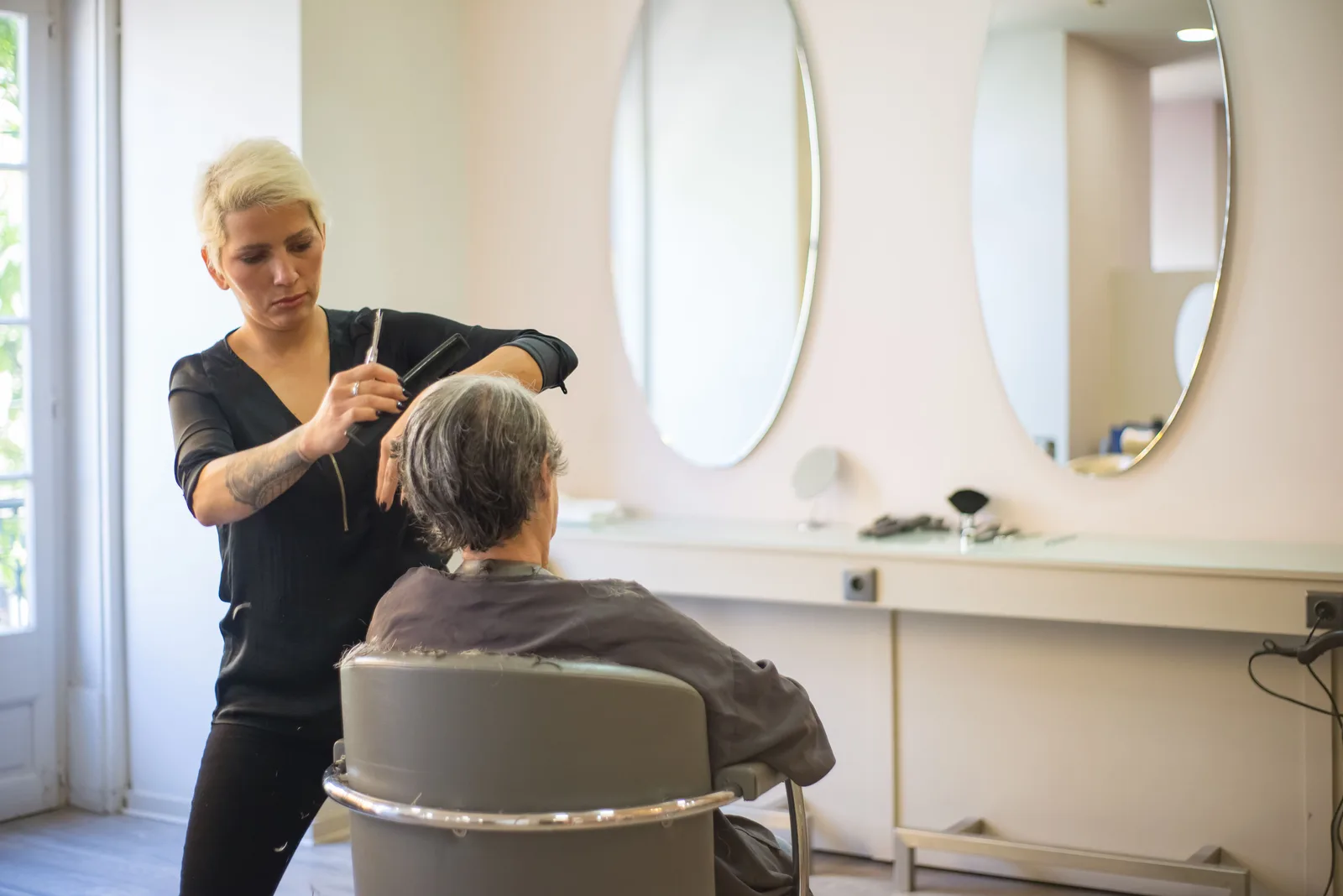
Professional-grade salon equipment is expensive. Hydraulic styling chairs run $500-$2,500 each; shampoo bowls $300-$1,500; color stations and processing equipment add up quickly. Outfitting or upgrading a full salon floor requires $5,000-$25,000+. MCA can fund equipment purchases without the 30-60 day bank approval cycle that delays opening new stations.
A salon's physical space directly affects client experience and booking rates. Renovation (flooring, stations, lighting, mirrors, branding) typically costs $10,000-$50,000+. Contractors require partial payment upfront. MCA provides capital to start renovation, with repayment from the increased revenue a refreshed space typically generates through higher bookings and new client acquisition.
Booth rental is scalable recurring revenue: an independent stylist pays weekly or monthly rent for a station. Adding booth rental capacity requires equipment, additional stations, and sometimes partition construction. Example (illustrative): 4 booth rental units at $250/week each generates $4,000/month in rental income before a single service is performed. MCA can fund the expansion of booth rental capacity.
Professional beauty supply (color, developer, retail products, wax, skincare) is purchased in bulk at wholesale. Larger orders typically come with better pricing. MCA can fund larger inventory orders, reducing per-unit cost and ensuring products are available during peak demand (holiday season, prom, wedding season).
Expanding to a second location requires a security deposit and first month's rent before the space is operational, plus buildout costs that must be paid before the location opens. MCA on the existing location can fund the deposits and initial buildout for the second one, with repayment coming from the combined revenue of both locations once opened.
| Season | Revenue Pattern | MCA Timing Consideration |
|---|---|---|
| Holiday (November-December) | Strongest: styling, color, treatments peak before holiday events | Best deposits of the year: applying now can qualify for the largest available advance amount |
| Prom/Graduation (April-June) | Strong spike: updo, styling, color demand peaks | Apply before the spike to fund product inventory and extra staffing it requires |
| Wedding Season (May-September) | Bridal bookings; premium-priced packages | Advance bookings create predictable revenue, a favorable underwriting period |
| January-February | Post-holiday dip: clients defer non-essential services | Advance taken in December can bridge January-February operating costs |
| Summer (June-August) | Solid for barbershops (grooming is consistent); variable for salons (vacations reduce walk-ins) | Generally stable period; good underwriting baseline for established salons |
A general seasonal shape for this industry, not a projection for any specific salon. An advance is sized on actual deposit history, so applying near a deposit peak can support a larger available amount.
A salon owner weighing a bank/SBA loan against a merchant cash advance is weighing a lower headline cost against speed and accessibility. Here's how they compare for a beauty business that needs capital for equipment, renovation, or expansion now.
| Feature | Merchant Cash Advance (MCA) | Traditional Bank/SBA Loan |
|---|---|---|
| Approval basis | Business bank deposit history (cash + card + booth rent), 500+ FICO, 6+ months in business | Credit history, financials, collateral, 2+ years in business |
| Time to funding | Fast, set by provider | 4-8+ weeks |
| Cash-heavy businesses | Cash deposits count the same as card receipts | Cash-heavy businesses often face extra scrutiny |
| Collateral | None. A UCC-1 is filed against future receivables | Often required (equipment lien or blanket lien) |
| Best fit | Equipment, renovation, or booth-rental expansion needed now | Established salons that can plan months ahead for the lowest annualized cost |
Verify your package: Document Readiness Checker →
T.A.G. Business Funding
Equipment, renovation, expansion. Cash deposits OK. 500 FICO minimum. Apply in 10 minutes.
500 FICO minimum · 6+ months in business · $4K-$6K+/month deposits
Yes. With 6+ months in business, $4,000-$6,000+/month in bank deposits, and 500+ FICO. Cash deposits and card receipts both count toward the monthly deposit average.
Yes, if the cash is deposited to the business bank account. Cash revenue that isn't deposited doesn't appear on bank statements and can't be counted. If your salon takes significant cash, depositing it consistently is essential to establishing the deposit history MCA underwriting requires.
Booth rental income that deposits to the business bank account counts toward the monthly deposit average. Consistent weekly or monthly rent collections create predictable deposit patterns, favorable for MCA underwriting.
Yes. Nail salons, day spas, lash studios, waxing centers, and other beauty businesses qualify with the same criteria. Daily service revenue that deposits consistently is favorable for MCA underwriting.
During or just before peak seasons, such as holiday (November-December) or prom/wedding season, when deposit averages are strongest. The advance is sized on current deposit levels, so applying when deposits are at their highest yields the largest available advance amount.
Common salon and barbershop MCA uses: styling chair and station upgrades, shampoo bowl installation, salon renovation and buildout, additional booth rental units, product inventory, salon management software, marketing, staff hiring, and lease deposit for a new location.
Last reviewed: July 2026. T.A.G. Business Funding is an independent ISO partner, not a direct lender. All examples are illustrative. Advance amounts and rates vary by business profile and funder.