Roofing Contractor Business Funding

Business Funding for
Roofing Contractors

Storm hits Tuesday. Forty leads come in by Thursday. You need materials, crew, and equipment before homeowners start calling the next guy. Banks take weeks. Insurance payments take longer. MCA can fund quickly once a provider approves your file, with no materials as collateral and no contractor license required.

Quick Answer

Roofing contractors qualify for MCA with 6+ months operating, $4,000-$6,000+/month in business bank deposits, and 500+ FICO. Common uses: materials before job payment, crew payroll while waiting for insurance checks, equipment, and storm-season ramp-up. MCA funds once the provider approves your file, with no contractor license, no materials collateral, and no bank relationship required.
What Roofing Contractors Use MCA For

Materials Before Job Payment
Shingles, underlayment, decking, flashing, and fasteners purchased upfront before homeowner or insurance payment clears. Materials can run 30-50% of total job cost.
$8K-$35K per project
Crew Payroll During Delay
Laborers and subcontractors expect weekly pay. Insurance payments and homeowner checks take 2-6 weeks to clear. MCA bridges the payroll gap while jobs are in progress.
$10K-$40K typical
Equipment & Safety Systems
Ladder systems, safety harnesses, nail guns, compressors, and roofing tools. Commercial equipment for a roofing crew runs $15,000-$60,000+ for a full kit.
$10K-$50K typical
Vehicle Down Payments
Work trucks, dump trailers, and flatbeds for material hauling. Roofing trucks run $35,000-$80,000. MCA funds the down payment for equipment financing to close.
$8K-$20K typical
Storm Season Ramp-Up
After a hail or wind event: hiring additional crew, renting equipment, purchasing surge material inventory, and upfront marketing to homeowners while insurance claims are filed.
$15K-$60K typical
Insurance Dumpster Deposits
Debris removal is required on most roofing jobs. Dumpster rentals for a storm season can run $500-$1,500 per job, with deposits required upfront before delivery.
$3K-$15K typical
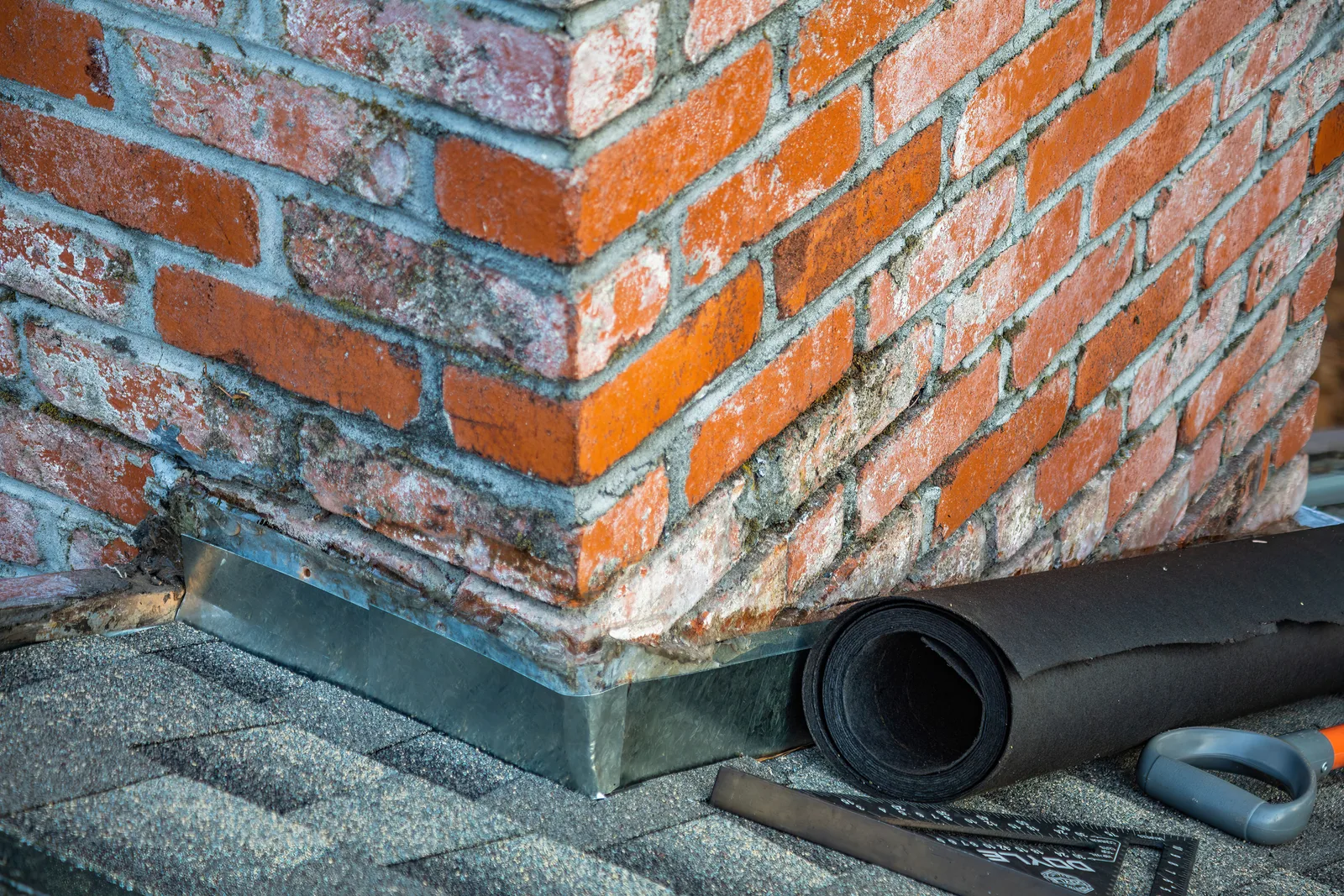
Materials and tools staged for a chimney repair
Materials get ordered and the crew gets paid before a homeowner's insurance settlement or a GC's draw actually clears.

The Materials-to-Payment Gap

Why roofing jobs create a cash timing problem even when the job itself is profitable.

Roofing job cash timing: materials go out before the customer or insurer pays A timeline from day 0 to week 6. Materials are purchased around day 2, crew payroll continues through the job, and the homeowner or insurance payment does not arrive until roughly week 2 to week 6. The gap between the materials outflow and the payment inflow is the window MCA is used to bridge. Day 0 Job signed Materials out Day 2-5 Crew payroll Week 1-3 Capital gap window Payment arrives Week 2-6

Materials go out days after the job is signed. The homeowner's or insurer's payment typically does not land until 2 to 6 weeks later. MCA is used to cover that window, not to replace the job's underlying profitability.

Roofing Seasonality & MCA Timing

Storm seasons create high-opportunity, high-capital-need windows that MCA is designed for.

Spring Storm Season
March-June (Midwest/South)
Hail and wind events drive the bulk of insurance replacement jobs. Apply as storm leads start flowing: materials capital is needed immediately.
Hurricane Season
June-November (Gulf/Southeast)
Florida, Texas, Louisiana, and Gulf Coast markets see massive storm demand. MCA funds storm ramp-up faster than insurance advances arrive.
Fall Pre-Winter Rush
August-October (Northern States)
Homeowners want roofs done before winter. Pre-winter backlog creates peak demand. Materials and crew must be ready.
Off-Season Planning
November-February
Best time to buy equipment, upgrade vehicles, and invest in marketing before spring storm season. Cash flow is thinner in this window, and MCA can help bridge equipment acquisition.
Ice buildup at the eaves of a roof in winter
Winter repair work and peak storm season both draw on working capital differently, but the underlying materials-to-payment gap is the same.

Roofing Capital Demand Through the Year

Relative capital intensity by season, based on the storm and backlog patterns above. Not a forecast for any specific year or region.

Roofing capital demand rises sharply in storm season and falls in the winter off-season A bar chart across five roofing business periods. Off-season January and February is lowest. Spring storm season from March through June rises. Hurricane season from June through November is highest. Fall pre-winter rush in August through October stays elevated. Winter off-season planning from November through February drops back down. Jan-Feb Low Mar-Jun Rising Jun-Nov Peak Aug-Oct Elevated Nov-Feb Low

Hurricane season overlaps with parts of spring storm and fall rush windows in Gulf and Southeast markets. The pattern shifts by region; a hail-driven Midwest season and a hurricane-driven Gulf Coast season do not peak on the same calendar.

Roofing MCA Approval Requirements

Monthly Deposits
Strong: $20,000+/month
Acceptable: $4,000-$20,000
Risk: Under $4,000
Personal FICO
Strong: 600+
Acceptable: 530-599
Minimum: 500
Time Operating
Strong: 2+ years
Acceptable: 6-24 months
Minimum: 6 months
NSF Frequency
Strong: 0 per month
Acceptable: 1-2 per month
Risk: 3+ per month

No contractor license, bond, or insurance certificate required in MCA underwriting. Evaluation is based on business bank deposit history only.

Roofing Contractor Funding: Illustrative Scenarios

Illustrative examples built from typical underwriting profiles for this industry, not records of specific named customers or guaranteed outcomes. Actual approval amount, timeline, and rate depend on your own bank statements and profile.

Storm Ramp-Up
Hail event: 40 signed contracts, materials needed now
Oklahoma hailstorm. Contractor signed 40 homeowner contracts in 6 days. Needed $55K in materials upfront before insurance checks arrived. $28,000/month deposits (pre-storm baseline), 570 FICO, 3 years. Funded before the first crew hit the first job.
✓ Illustrative amount funded: $60,000
Materials Gap
Single large commercial job: materials upfront required
Won a 12,000 sq ft commercial flat roof contract at $140,000. Materials cost was $48,000, required upfront before owner would issue the first draw. $22,000/month deposits, 565 FICO, 4 years. MCA funded materials; first draw paid MCA back.
✓ Illustrative amount funded: $52,000
Equipment
New crew kit: safety equipment and tools for added crew
Added 4 crew members but needed full safety harness kits, compressors, nail guns, and staging for each. $14,000 in equipment total. $18,000/month deposits, 545 FICO, 2 years. Had to equip crew before next Monday's job start; the advance funded before then.
✓ Illustrative amount funded: $16,000
Vehicle
Work truck down payment: adding hauling capacity
Found a 2020 F-350 flatbed for $42,000. Equipment financing required $10K down. Had $3K available. MCA funded remaining $8K for down payment. $26,000/month deposits, 580 FICO, 5 years. Truck acquired same week as MCA funding.
✓ Illustrative amount funded: $10,000

Roofing Contractor Funding FAQs

Can a roofing contractor get a merchant cash advance?

Yes. Roofing contractors qualify for MCA with 6+ months operating, $4,000-$6,000+/month in deposits, and 500+ FICO. MCA funds once the provider approves your file with no materials or equipment as collateral and no contractor license required in underwriting.

Can a roofing company use MCA to cover materials costs before getting paid?

Yes. This is one of the most common roofing MCA uses. A $30,000 roofing job requiring $12,000 in materials upfront is exactly the kind of timing gap MCA solves. Materials capital now; job payment repays the advance.

How does storm season affect roofing contractor MCA qualification?

Storm season creates a capital-intensive, fast-moving opportunity. MCA can move quickly once a provider approves the file, which helps with storm ramp-up. Underwriters use a 6-month average, so a company applying at the start of storm surge may show strong recent months plus lower baseline months. Tip: apply as soon as storm leads start flowing, before spending down deposits on initial materials.

Can a small roofing company with 2-3 crew members get MCA?

Yes. Small operations qualify on the same criteria: 6+ months operating, $4,000-$6,000+/month in deposits, and 500+ FICO. A 2-3 person crew doing $15,000-$30,000/month in work has the deposit volume for a meaningful advance.

Does a roofing contractor need a commercial license to qualify for MCA?

No. MCA underwriting does not require proof of contractor licensing or bonding. Qualification is based on business bank deposit history, time in business, and personal FICO only.

What do roofing companies use MCA for most often?

Most common: materials before job payment, crew payroll during insurance check delays, equipment and safety systems, vehicle down payments, and storm season ramp-up capital. Materials advance before job payment is #1 by volume.

Roofing Contractor? Get Funded once the provider approves your file.

One-page application, 6 consecutive months of bank statements. No materials collateral, no contractor license required. Storm ramp-up, materials, and crew payroll are all fundable uses.

Or call/text: 330-238-3003

New to Merchant Cash Advances?

What Is an MCA? A Complete Guide Pros & Cons Qualification Guide Cost Calculator

Roofing Contractor Funding Resources

Roofing Approval FactorsWhat underwriters look at for roofing companies Roofing Cash Flow GuideStorm season cash flow, insurance delays, payroll Roofing MCA CalculatorDaily payment and total cost for your advance Roofer Funding PlaybookStrategy by revenue stage, debt spiral prevention Roofing Funding ChecklistDocuments and conditions before you apply MCA Rates: Roofing Benchmark2026 average factor rate for contractors: 1.33

Roofing Funding by State

State-specific roofing contractor funding guides: local storm history, permit volumes, insurance restoration data, and city-level links.

Texas Florida Georgia North Carolina Ohio South Carolina Arizona Pennsylvania Colorado Tennessee Indiana Missouri Virginia New Jersey Michigan Maryland

T.A.G. Business Funding

See If Your Business Qualifies

500 FICO minimum. Bank declines OK. Revenue matters more than credit score. Funding timing is set by the funding provider after review.

Apply Now → Call 330-238-3003
✓ No obligation ✓ Soft pull to start ✓ Free to apply ✓ Bank declines welcome

500 FICO minimum  ·  $4K-$6K+/month revenue  ·  Funding timing is set by the funding provider after review