Roofing MCA qualification: (1) 6+ months in business; (2) $4,000 to $6,000+ average monthly deposits; (3) 500+ FICO score. Roofing underwriting weighs deposit consistency and monthly revenue more heavily than credit score. Storm-dependent revenue spikes are averaged over 6 to 12 months.
Roofing Guide
Storm deposits inflate your advance capacity. The trap: daily payments don't stop when storm season ends. Understand how underwriters see roofing: before you apply.
Roofing Funding Center
Underwriters calculate your advance as a percentage of average monthly deposits. When storm season deposits are 5 to 10x your normal baseline, this creates an artificially inflated average that drives a much larger advance than your off-season cash flow can support.
| Scenario | 3-Month Avg | Advance Offered | Off-Season Daily Capacity |
|---|---|---|---|
| 3 storm months ($180K avg) | $180,000 | Up to $270,000 | $8,000/mo ÷ 22 = $364/day |
| Daily payment on that advance | $1,800 to $2,400/day: 5 to 7× what you can cover in January | ||
Most MCA underwriters do not specifically analyze off-season sustainability for roofing contractors. They apply their standard 75 to 150% multiplier to your 6-month average and offer you whatever that produces. It is your responsibility to run the off-season check yourself.
| Off-Season Check | Safety Assessment | Action |
|---|---|---|
| Daily payment ≤ 50% of off-season avg daily | Safe | Accept the offer |
| Daily payment 50 to 80% | Tight | Accept with reserve fund in place |
| Daily payment 80 to 120% | Dangerous | Negotiate smaller advance; explain to funder |
| Daily payment > 120% | Default risk | Do not accept this size advance: counter-offer or decline |
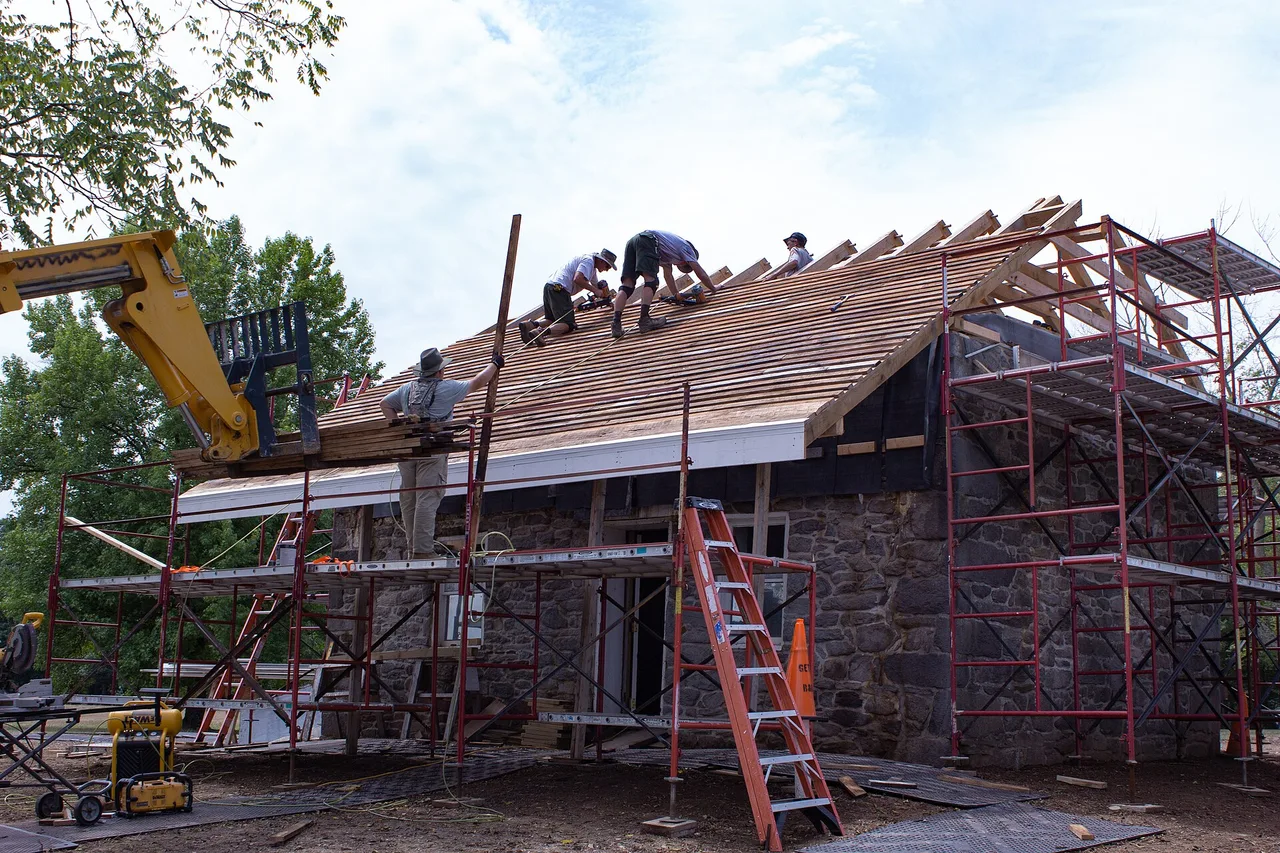
Insurance-approved roofing jobs in your pipeline represent confirmed near-term revenue. This is one of the most powerful supporting documents a roofing contractor can provide: it tells the underwriter your revenue is committed and contracted, not dependent on new storm events.
| Pipeline Evidence | Underwriter Value | Rating |
|---|---|---|
| Signed contracts + ACV approval letters on file | Strongest forward signal: revenue is locked | Excellent |
| Supplement approvals pending with signed contracts | Strong: supplements predictably increase total | Good |
| Verbal adjuster approvals, no paperwork yet | Weak signal: not considered in underwriting | Weak |
| No documentation: prospecting in progress | Advances based on history only, no pipeline credit | None |
| NSF Pattern | Impact | Rating |
|---|---|---|
| 0 NSFs | Cleanest profile: best rates available | Excellent |
| 1 to 2 NSFs in storm month (high-volume, high-expense) | Often explained; minor rate impact | Acceptable |
| NSFs in off-season months | Pattern concern: cash management issue | Flag |
| 3+ NSFs any month | Significant rate increase or decline | Critical |

For roofing contractors, stacking is especially dangerous because every daily ACH continues through the off-season. A roofer with 2 active MCAs totaling $1,500/day in daily payments who enters November with $10K/month in deposits will fail within 30 to 45 days of off-season arrival.
| Active Positions | Off-Season Risk Level | Rating |
|---|---|---|
| 0 positions | None: full capacity available | Best |
| 1 position: off-season sustainable | Low: if daily ≤40% of off-season daily deposits | Acceptable |
| 1 position: tight off-season | High: daily payment may fail in slowest months | Risky |
| 2+ positions | Near-certain default risk entering off-season | Critical |
Apply during storm season with pipeline documentation. Always verify off-season sustainability before accepting.
T.A.G. Business Funding
500 FICO minimum. Bank declines OK. Revenue matters more than credit score. Decision timing is set by the funding provider after review.
500 FICO minimum · $4K to $6K+/month revenue · Funding timing is set by the funding provider after review
What does a roofing company need to qualify for MCA?
Roofing MCA qualification: (1) 6+ months in business; (2) $4,000 to $6,000+ average monthly deposits; (3) 500+ FICO score. Roofing underwriting weighs deposit consistency and monthly revenue more heavily than credit score. Storm-dependent revenue spikes are averaged over 6 to 12 months. Roofing companies with hail-season revenue peaks should time their MCA applications to align with peak deposit months for best qualification results.
Does a roofing company need workers' comp and general liability to qualify for MCA?
MCA funders typically do not verify insurance as a condition of approval. The advance is based on revenue, not operational credentials. However, some commercial job contracts require proof of insurance before you can begin work: maintaining coverage is a business requirement independent of MCA qualification.
Can a storm chaser or new roofing company get MCA?
Storm chasers and newer roofing companies (6 to 18 months in business) can qualify with consistent bank deposits. The challenge for storm-dependent businesses is deposit variability: a 6-month bank statement can look very different before and after a major storm event. Underwriters may average 6 to 12 months of deposit history for storm-sensitive businesses. 12+ months of history dramatically improves qualification and rate.
How much can a roofing contractor typically access through MCA?
Roofing advance amounts: typically 75 to 125% of average monthly deposits, from $10,000 to $500,000+. A roofing company averaging $45,000/month in deposits can typically qualify for $45,000 to $60,000 in first-position advance. Commercial roofing companies with larger contract volumes qualify for proportionally larger amounts. Material-intensive jobs (commercial flat roofing) that require significant upfront material purchase benefit most from larger advance amounts.