Texas plumbing contractors carry year-round capital demands: service vehicles, water heater and fitting inventory, licensing and bonding, and staffing up ahead of a new-construction push or a sudden statewide demand spike. Texas is one of the largest state economies in the US, with no state income tax.
Plumbing businesses in Texas qualify for MCA with 6+ months in business, $4,000-$6,000+/month in business bank deposits, and a 500+ FICO. Initial submission is a signed application plus 6 consecutive months of business bank statements, nothing more. Decision timing is set by the funding provider.
4-Point Qualification Breakdown
1
Revenue
$4,000-$6,000+/month in average business bank deposits
2
Bank Statements
6 consecutive months, $4,000+ average ending balance
3
Time in Business
6+ months of operating history
4
Business Ownership
Active Texas business bank account in the applicant's name
How Plumbing Businesses Use MCA Funding
Service van purchase or down payment
Water heater and pipe fitting inventory
Licensing, bonding, and insurance renewals
Technician hiring and equipment ahead of a demand surge
Covering payroll and material costs while a commercial progress payment is still in process
New subdivisions, multifamily projects and commercial builds all need rough-in, top-out and final plumbing in sequence, usually on a tight builder schedule.
Texas Growth and Climate: What Actually Drives Plumbing Demand Here
Dallas-Fort Worth, Houston, Austin, and San Antonio have ranked among the fastest-growing metro areas in the country for years, according to U.S. Census Bureau population estimates, and that growth shows up directly in plumbing demand: new single-family subdivisions, multifamily projects, and commercial builds all need rough-in, top-out, and final plumbing work in sequence, often on a tight builder schedule. A contractor who can staff up and stock parts ahead of a new-construction ramp-up is positioned to take that volume; a contractor who can't is watching a competitor take it instead.
Texas's climate also shapes the work differently than it does in colder states. Across most of the state, the recurring plumbing workload is driven by heat, not cold: AC condensate line clogs, water heater strain from near-constant summer run time, and irrigation and slab-leak calls, spread fairly evenly across the year rather than concentrated in a single winter freeze season. The real exception is severe winter weather events, which are occasional rather than annual but can be significant when they happen. Winter Storm Uri in February 2021 is the clearest example: sustained sub-freezing temperatures across nearly the entire state caused widespread residential and commercial pipe bursts and a statewide surge in emergency plumbing calls that lasted for weeks. That event is well documented, but it was not a typical Texas winter, and a plumbing business here should not plan around a recurring freeze season the way a contractor in the Midwest or Northeast would.
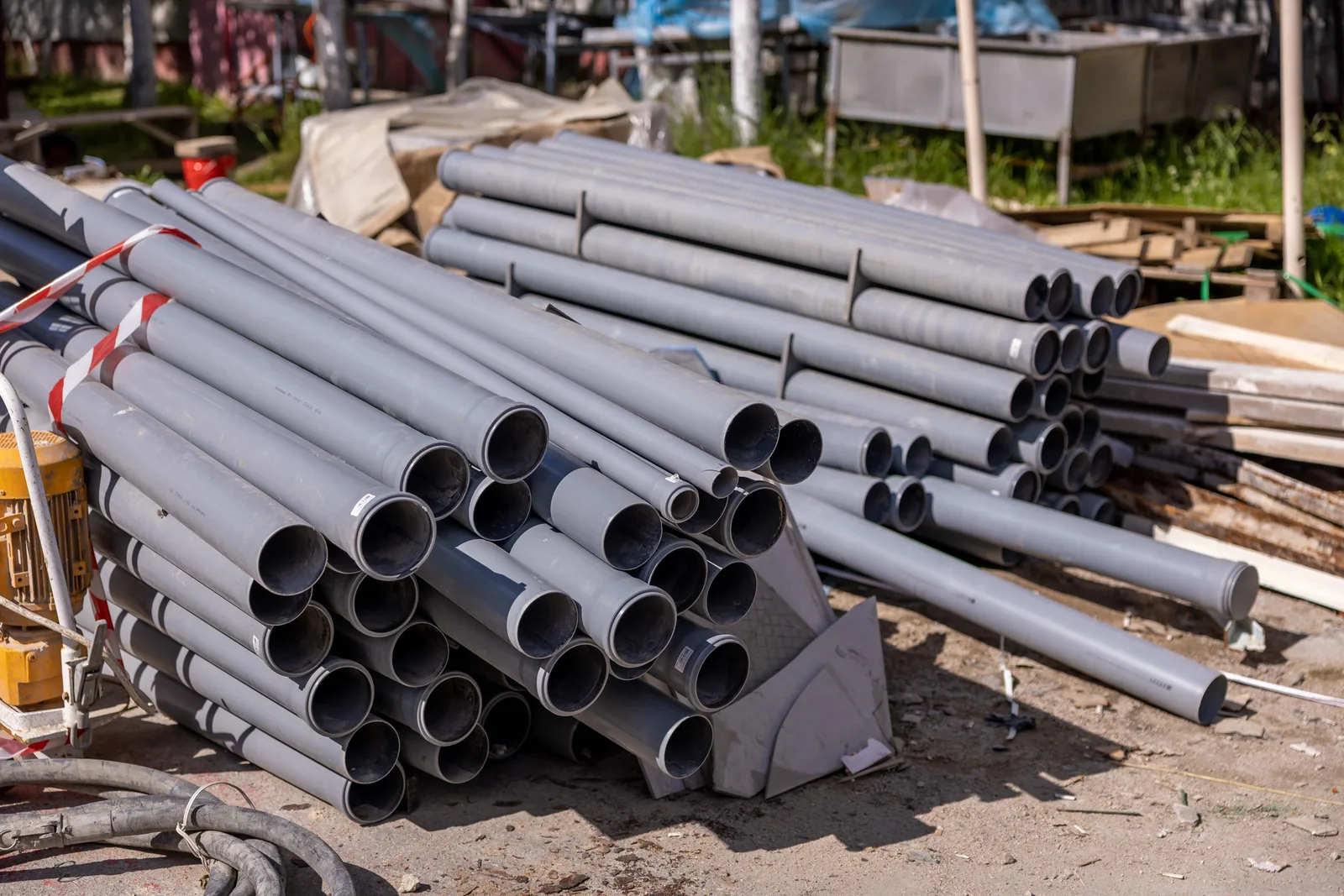
Stocking pipe and fittings ahead of a new construction ramp-up is what positions a contractor to take that volume.
The Real Cash Timing Gap: GC Progress Billing vs. Weekly Costs
For commercial and new-construction plumbing subcontractors, the cash gap usually isn't inventory. It's timing. A general contractor typically pays on a progress-billing schedule tied to job milestones (rough-in complete, top-out, final), and that invoice is commonly paid on net-30 or net-60 terms after GC review and approval, with 5-10% retainage withheld until the project reaches final completion and passes punch list. Meanwhile, payroll, material purchases, and fuel for the crew and vehicles are due weekly, whether or not the GC's payment has cleared yet. A plumbing subcontractor can be fully booked, doing profitable work on a real job, and still be short on cash simply because the money owed to them hasn't caught up to the money they owe out.
The same pattern shows up on the residential side during a demand surge, whether that's a new-construction push or an occasional severe weather event like the one described above: a contractor has to staff up, equip technicians, and stock water heaters and fittings before the calls (and the resulting revenue) actually arrive.
This is the situation MCA funding is built for. It isn't sized off a formal loan application or two years of tax returns; it's sized off actual deposit history, so a contractor who can show consistent revenue for the past 6 months can access capital fast enough to cover payroll and materials while a GC's progress payment is still working through net-30 or net-60 review.
What a Factor Rate Actually Costs, Not a Loan
A merchant cash advance is priced with a one-time factor rate, not an annualized interest rate. Example: a $15,000 advance at a 1.20 factor rate means $18,000 total repayment, a $3,000 cost of capital. That total is fixed at origination and repaid via a daily or weekly percentage of your bank deposits, not a fixed monthly loan payment. MCA agreements typically require a personal guarantee from the business owner. Funding partners generally run a soft credit check for initial review, with a hard pull typically occurring later, before final approval; that hard pull can affect your credit score by a few points.
Advance Amount
Factor Rate
Total Repayment
Cost of Capital
$15,000
1.20
$18,000
$3,000
Texas Commercial Financing Disclosure Law: HB 700
Texas enacted HB 700 (Tex. Fin. Code Ch. 398), effective September 1, 2025, which requires commercial-financing providers, including merchant cash advance providers, to disclose the finance charge and total repayment amount on sales-based financing offers under $1,000,000 before a merchant signs. Providers and brokers arranging Texas commercial financing must register with the Texas Office of Consumer Credit Commissioner (OCCC) by December 31, 2026. One nuance worth understanding: unlike California, New York, Georgia, or Florida, Texas's law does not require an APR-equivalent figure, only the finance charge and total repayment amount. T.A.G.'s funding partners provide full-term disclosure (total repayment amount, factor rate, and remittance schedule) on every offer.
Check Your Funding Estimate
Does an MCA Fit Now, or Is It Worth Comparing First?
A merchant cash advance is not the right tool for every situation. Before applying, it is worth being honest about which column below actually describes a plumbing business right now.
T.A.G. Business Funding
Plumbing Funding in Texas
$4,000-$6,000+/month revenue, 6 consecutive months of statements, 500+ FICO minimum.
500+ FICO minimum · 6+ months in business · $4,000-$6,000+/month revenue
FAQ
Can a plumbing business in Texas get a merchant cash advance?
Yes. Plumbing businesses in Texas qualify for MCA with 6+ months in business, $4,000-$6,000+/month in business bank deposits, and a 500+ FICO. Approval is based on your deposit history, not your credit score alone.
How many months of bank statements do I need?
Exactly 6 consecutive months of business bank statements: the same window used for the time-in-business minimum, with an average ending balance of $4,000+ across your 6 statements. Personal bank statements are not accepted.
Is this a loan?
No. A merchant cash advance is a purchase of a fixed amount of your future receivables, not a loan: there is no interest rate, no fixed monthly payment, and no fixed maturity date. It is priced with a one-time factor rate applied to the advance amount. MCA agreements typically require a personal guarantee from the business owner.
Does Texas require disclosure for merchant cash advances?
Yes. Texas HB 700 (Tex. Fin. Code Ch. 398), effective September 1, 2025, requires finance charge and total repayment disclosure for sales-based financing under $1,000,000, and providers and brokers must register with the Texas Office of Consumer Credit Commissioner by December 31, 2026. Texas does not require an APR-equivalent figure, unlike California, New York, Georgia, and Florida. T.A.G.'s funding partners provide full-term disclosure, including total repayment amount, factor rate, and remittance schedule, on every offer.
How much could a Texas plumbing business qualify for?
MCA amounts are typically 75%-150% of average monthly bank deposits. For example, a $15,000 advance at a 1.20 factor rate means $18,000 total repayment ($3,000 cost of capital), repaid via a daily or weekly percentage of deposits, not a fixed monthly bill.
Initial review uses a soft credit pull only. A hard credit pull typically occurs later, before final approval, and can affect your credit score by a few points.
Last reviewed: September 2026. T.A.G. Business Funding is an independent ISO partner, not a direct lender. All examples are illustrative. Advance amounts and rates vary by business profile and funder. Not financial advice.