AI helps roofing contractors: estimate qualifying advance size based on bank statement inputs; compare MCA offers side-by-side in APR equivalents; model whether a material purchase advance makes financial sense for a specific job; calculate breakeven revenue on a new crew hire using MCA to bridge the ramp period; draft payment projection models for slow-season months; and identify optimal MCA renewal timing based on…
Roofing Guide
Roofing MCA AI Prompt Pack
Storm pipeline modeling, off-season sustainability checks, insurance gap analysis, and advance sizing. Replace [BRACKETS] with your numbers.
Critical for roofing: Run the "Off-Season Sustainability Check" prompt before accepting any MCA offer sized from storm deposits. The lender is offering you based on what you can qualify for: not what you can safely repay through the off-season. That analysis is your responsibility.
Five prompt categories, from off-season risk-checking an offer to planning the season transition.
Off-Season Sustainability Analysis
The most important analysis for any roofing contractor before accepting an MCA offer.
Critical Analysis
Off-Season Sustainability Check Before Accepting an MCA Offer
I'm a roofing contractor who was offered an MCA. My statements include storm season deposits. Before I accept, I need to verify I can make payments through my off-season.
My storm season (current statements):
- 6-month average deposits: $[STORM_AVG]/month
- MCA offer: $[OFFER_AMOUNT]
- Factor rate: [FACTOR_RATE]
- Estimated term: [TERM_DAYS] business days
- Calculated daily payment: $[DAILY_PAYMENT]
My off-season reality:
- Off-season monthly deposits: $[OFF_SEASON_MONTHLY]
- Off-season months: [MONTHS] (e.g., November to March)
- Monthly overhead: $[MONTHLY_OVERHEAD]
- Off-season avg daily deposits: $[OFF_SEASON_MONTHLY] ÷ 22 = $[CALCULATE]
Calculate:
1. My daily payment as % of off-season avg daily deposits
2. Whether I can sustain payments through [MONTHS]
3. Maximum safe advance given my off-season baseline (daily payment ≤ 60% of off-season daily avg)
4. Recommended counter-offer amount
5. If I accept the full offer, in what month will I likely have a payment failure?
Reserve Planning
How Much Reserve Fund Do I Need to Cover Off-Season MCA Payments?
I'm taking an MCA advance during storm season. I need to build a reserve to cover MCA payments during my off-season when deposits are low.
My situation:
- MCA daily payment: $[DAILY_PAYMENT]
- Off-season months (when deposits may not cover payment): [MONTHS]
- Off-season monthly deposits: $[OFF_SEASON_DEPOSITS]
- Monthly overhead (non-MCA): $[OVERHEAD]
Calculate:
1. Monthly shortfall during off-season (MCA payment + overhead - off-season deposits)
2. Total reserve needed to survive the full off-season
3. How much of my storm season revenue I should transfer to a dedicated reserve account
4. Weekly transfer amount to build this reserve before off-season arrives
5. The exact date I should stop transferring (when reserve is fully funded)
Storm Pipeline Cash Flow Analysis
Model your pipeline from storm event through final insurance payment.
Pipeline Model
Model My Storm Pipeline Cash Flow (Week by Week)
Model the cash flow for my current storm job pipeline from materials purchase through final insurance payment.
My pipeline:
- Number of storm jobs under contract: [COUNT]
- Total contracted value: $[TOTAL_VALUE]
- Average job value: $[AVG_VALUE]
- Average ACV (first insurance check): $[ACV_AVG] per job
- Average supplement (if applicable): $[SUPPLEMENT_AVG] per job
- Average ACV-to-ACV timeline: [WEEKS] weeks from signed contract
Material costs:
- Average material cost per job: $[MATERIAL_COST]
- When I order materials: [TIMING] (e.g., immediately on signed contract)
- When I pay supplier: [PAYMENT_TERMS]
Labor:
- Average labor cost per job: $[LABOR_COST]
- When I pay crew: [PAYMENT_TIMING]
Build a week-by-week cash flow model showing my account balance if all jobs close normally, with:
1. Initial cash needed to start the pipeline
2. Maximum cash exposure (lowest point before ACV checks arrive)
3. When cash position turns positive
4. Final pipeline cash position when all jobs are complete
Insurance Gap
Calculate the Insurance Payment Gap for Roofing Capital Planning
Calculate how much working capital I need to bridge the gap between when I pay for materials/labor and when I receive insurance payments.
My typical job timeline:
- Day 0: Storm event: homeowner contacts me
- Day [X]: Contract signed
- Day [X]: Materials ordered and delivered
- Day [X]: Installation complete
- Day [X]: Final inspection / certificate of completion
- Day [X]: ACV check received from insurance
- Day [X]: Depreciation holdback released (if applicable)
- Day [X]: Supplement check received (if filed)
My typical job:
- Contract value: $[VALUE]
- ACV (first payment): $[ACV]
- Materials cost: $[MATERIALS]
- Labor: $[LABOR]
- ACV-to-supplement gap (if any): [WEEKS] weeks for $[SUPPLEMENT]
With [COUNT] active jobs at various stages, calculate:
1. Maximum simultaneous capital exposure
2. How much of that I currently have covered
3. The capital gap that MCA would need to fill
4. Right-sized advance for this pipeline level
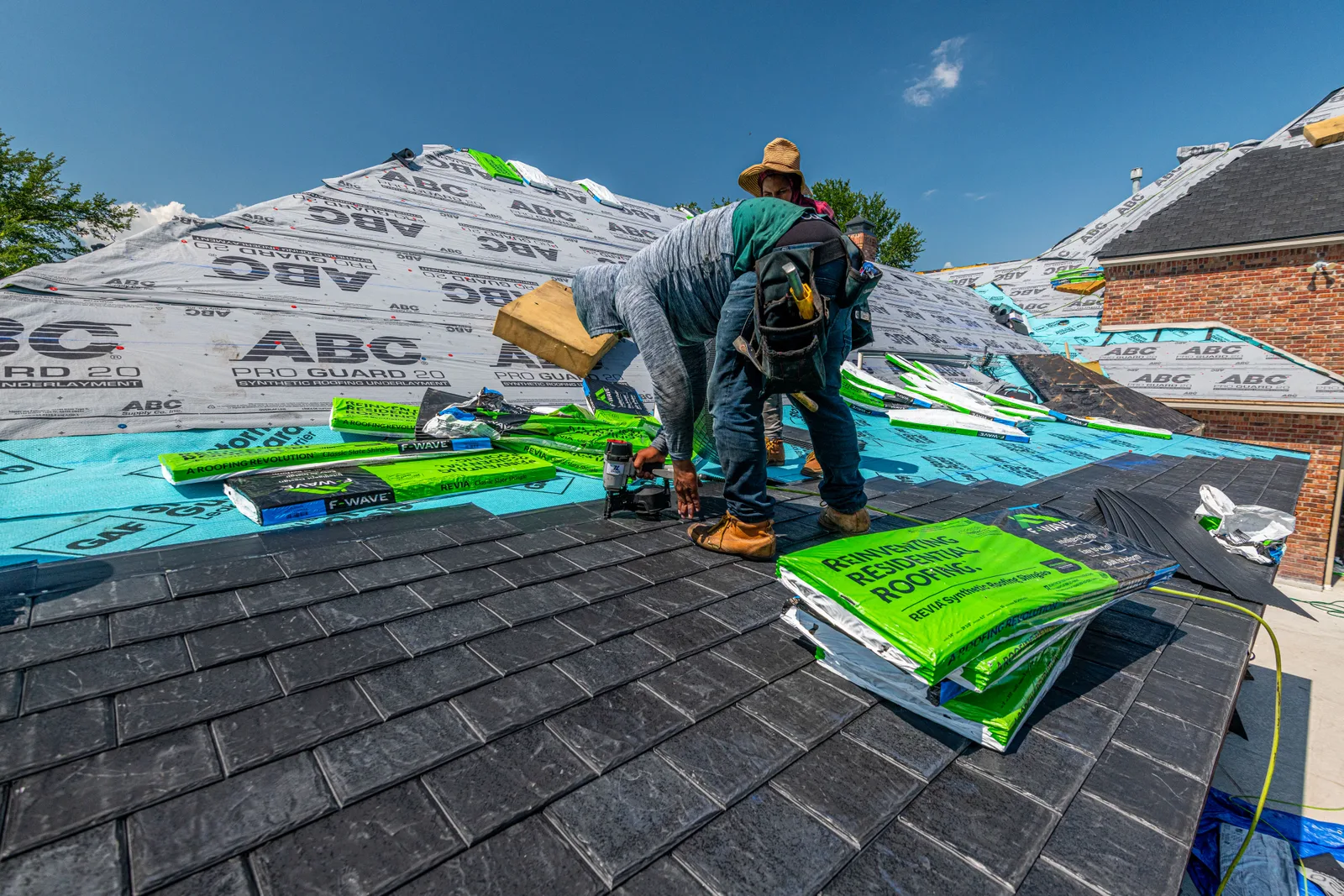
Materials staged for a job already tell you the real cost the advance needs to cover, before a single shingle goes down.
Right-Sizing Your Advance
Take what the pipeline requires: not the maximum you qualify for.
Sizing: Important
What Size Advance Is Safe for a Roofing Contractor?
I've been offered a large MCA advance based on my storm season deposits. Help me determine the safe maximum given my off-season baseline.
Offer details:
- Advance offered: $[OFFER]
- Factor rate: [FACTOR_RATE]
- Daily payment: $[DAILY_PAYMENT]
My revenue profile:
- Storm season monthly deposits: $[STORM_MONTHLY]
- Off-season monthly deposits: $[OFF_SEASON_MONTHLY]
- Off-season months per year: [COUNT]
- Monthly overhead (payroll, truck, insurance, etc.): $[OVERHEAD]
My actual need:
- Materials for current pipeline: $[MATERIALS_NEED]
- Labor bridge: $[LABOR_NEED]
- Other working capital: $[OTHER_NEED]
- 15% buffer: [calculate]
Calculate:
1. My actual capital need (vs. what was offered)
2. Maximum safe advance based on off-season sustainability (daily payment ≤ 60% of off-season daily average)
3. Recommended advance amount (minimum of: actual need, off-season max)
4. How much of the offer to decline/negotiate
5. What I should say to the lender when negotiating down
Same illustrative example used in the FAQ below. Your own offers will differ.
Insurance Pipeline Documentation
Create the pipeline summary that can significantly improve your offer amount.
Documentation
Write an Insurance Pipeline Summary for MCA Application
Help me create a professional insurance pipeline summary to attach to my MCA application. This document shows lenders my committed forward revenue.
My current pipeline:
Job 1:
- Address: [ADDRESS]
- Insurance carrier: [CARRIER]
- Contract value: $[VALUE]
- ACV approved: $[ACV]
- Supplement pending: $[SUPPLEMENT] (if applicable)
- Expected close date: [DATE]
Job 2:
- Address: [ADDRESS]
- Insurance carrier: [CARRIER]
- Contract value: $[VALUE]
- ACV approved: $[ACV]
- Supplement pending: $[SUPPLEMENT]
- Expected close date: [DATE]
(Add additional jobs as needed)
Total pipeline value: $[TOTAL]
Expected cash flow in next 60 days: $[60_DAY_EXPECTED]
Format this as a clean 1-page pipeline summary table that I can attach to my MCA application to demonstrate committed forward revenue.
The transition out of storm season is where a payment plan gets tested against real, slower deposits.
Storm-to-Off-Season Transition Planning
Plan the transition so the off-season doesn't create a crisis.
Transition Plan
Build a Storm Season Winddown / Off-Season Entry Plan
Storm season is ending and I need to plan the transition to off-season without a cash crisis. Help me build the plan.
Current situation:
- Current monthly deposits: $[CURRENT_DEPOSITS] (storm season)
- MCA daily payment (if active): $[DAILY_PAYMENT]
- Current account balance: $[CURRENT_BALANCE]
- Remaining storm jobs to close: [COUNT] jobs worth $[REMAINING_VALUE]
Expected transition timeline:
- Off-season begins: [MONTH]
- Expected off-season monthly deposits: $[OFF_SEASON_DEPOSITS]
- Monthly overhead (payroll, vehicles, insurance, etc.): $[OVERHEAD]
Build a month-by-month plan from now through [FIRST_OFF_SEASON_MONTH] covering:
1. Cash position each month as storm pipeline closes
2. Reserve transfer schedule (how much/when)
3. Month when I should stop taking on new jobs and focus on close-out
4. Minimum balance needed entering [FIRST_OFF_SEASON_MONTH]
5. Whether to pay down MCA early with final storm payments
Storm Season Applications Get the Best Offers
Apply with pipeline documentation. Always run the off-season check before accepting.
✓ No obligation✓ Soft pull to start✓ Free to apply✓ Bank declines welcome
500 FICO minimum · $4K to $6K+/month revenue · Funding timing is set by the funding provider after review
Frequently Asked Questions
How can AI help a roofing company manage funding decisions?
AI helps roofing contractors: estimate qualifying advance size based on bank statement inputs; compare MCA offers side-by-side in APR equivalents; model whether a material purchase advance makes financial sense for a specific job; calculate breakeven revenue on a new crew hire using MCA to bridge the ramp period; draft payment projection models for slow-season months; and identify optimal MCA renewal timing based on projected deposit patterns.
What AI prompts should a roofer use before applying for MCA?
Pre-application AI prompts: "My roofing company deposits average $55K in Q3 and $18K in Q1. How much MCA can I realistically afford in Q1 without NSF risk?"; "I need $40,000 for materials on a $110,000 job closing in 7 weeks. Show me the MCA math assuming a 1.31 factor rate over 4 months."; "Compare these two MCA offers for a roofer: Offer 1 to $45K at 1.29, 5 months. Offer 2 to $40K at 1.22, 4 months. Which is better total cost and which has lower daily payment?"
Can AI predict whether a roofing company will get approved for MCA?
AI can estimate likelihood of approval based on the six underwriting factors (monthly revenue, FICO, time in business, NSF count, position, advance size) and provide a probability estimate. This is useful for pre-qualifying before applying: if an AI model says "low probability with this FICO and NSF history," it may be better to address those factors before applying rather than accumulate hard inquiries from declines. Note: MCA uses soft pulls, so multiple applications do not affect credit score.