Restaurant cash flow challenges: (1) high fixed costs in slow seasons: rent, utilities, payroll, and food waste run whether or not guests show up; (2) perishable inventory: over-ordering generates trash, under-ordering loses sales; (3) equipment failure: a walk-in compressor or hood system failure creates a shut-down risk and emergency repair cost; (4) delivery platform holdbacks: DoorDash, Uber Eats, and Grubhub can hold payments for 7-14 days while daily operating costs continue; (5) staffing costs: turnover is high and training new staff costs productive labor hours.
Restaurant Guide
How to read your deposit pattern, build cash reserves, time your MCA applications, and manage repayment through seasonal cycles.
Restaurant Funding Center
Restaurants have one of the most challenging cash flow profiles of any small business: daily revenue, weekly labor costs, monthly rent and supplier invoices, and quarterly/annual expenses, all running simultaneously with 3-5% net margins. There is almost no buffer.
Add seasonal patterns, equipment failures, staffing turnover, and the unpredictability of dining traffic, and you have a business where cash flow management is a daily, active task, not a quarterly review.
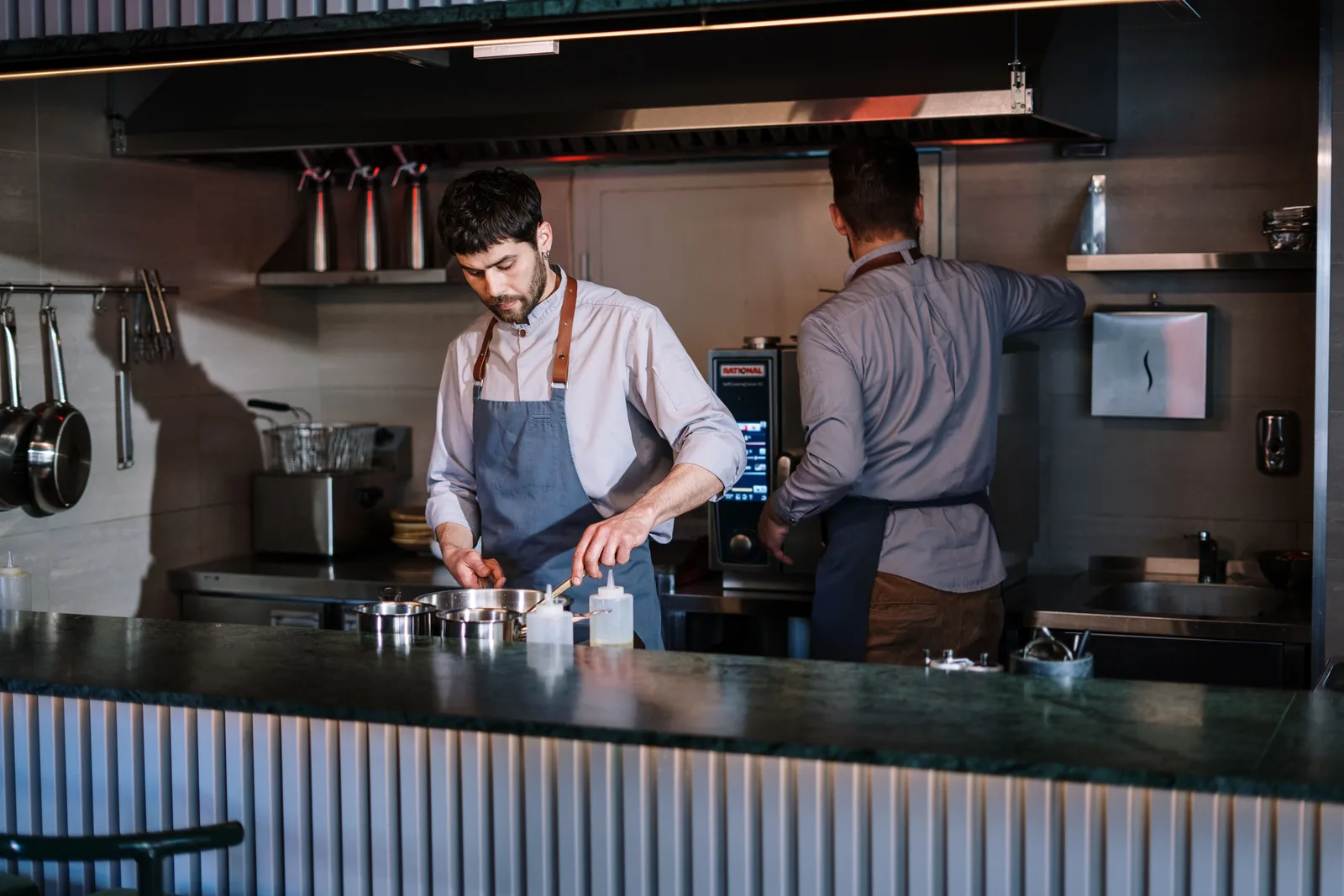
Your bank statement is the most honest financial document your restaurant produces. It doesn't reflect accruals, adjustments, or accounting adjustments; it shows real money in and real money out. Here's how to read it with a funding lens:
| Number | What It Tells You | Target Range | Red Flag |
|---|---|---|---|
| Monthly deposit total | Your actual revenue capacity | $15,000+/month | Under $4,000/month |
| Average daily balance | How much cushion you carry | $1,500-$5,000 | Under $500 |
| NSF count | How often account hits zero | 0/month | 3+/month |
| Largest single outflow | Your biggest cash drain | Manageable | One payment >40% of balance |
| Deposit frequency | How consistent cash comes in | 5-7 days/week | Gaps of 4+ days |
When an MCA underwriter reviews your 6 bank statements, they run this calculation in 30 seconds:
You can do this calculation yourself before applying using the Restaurant MCA Calculator.
Understanding the seasonal cash flow pattern for your restaurant type helps you time MCA applications and plan for known stress periods:
| Month | Typical Revenue | Common Expenses | Cash Pressure Points |
|---|---|---|---|
| January | Lowest (post-holiday slump) | Holiday payroll closeout, rent | Very high: hardest month |
| February | Low + Valentine's spike | Valentine's prep, overtime | High between Valentine's spike/slump |
| March | Building | Spring menu, staff recruitment | Moderate |
| April | Building | Equipment inspection, deep clean | Low-moderate |
| May | High (Mother's Day) | Mother's Day staffing, catering | Low: good deposit month |
| June | Variable by concept | Cooling costs, summer menu | Fine dining: high. Casual: low. |
| July-August | Variable | Vacation coverage, temp staff | Urban/fine dining slow; suburban strong |
| September | Return of regulars | Fall menu, supplier renegotiations | Low: typically strong month |
| October | Building toward holiday | Holiday menu prep, catering | Moderate |
| November | High | Thanksgiving, holiday parties | Low |
| December | Highest of year | Event staffing, food costs spike | Cashflow is strong, but January is coming |
The single most effective cash flow move a restaurant owner can make is building a dedicated cash reserve. Here's a simple system:
Every week, transfer 10% of gross revenue to a separate savings account designated as your cash reserve. Do not touch this account except for true emergencies (equipment failure, critical repair, payroll crisis). Over 6 months, this builds to roughly 3 weeks of revenue, enough to cover most cash flow gaps without needing external funding.
A restaurant with consistent deposits and a $5,000 average daily balance qualifies for a much better MCA offer than an identical restaurant with a $200 average daily balance. The reserve system naturally increases your average daily balance, reducing your factor rate when you do need funding.
The daily ACH payment structure of MCA is designed to align with daily deposit patterns, but you need to actively manage it, not just accept it passively.
| Daily Checkpoint | What to Verify | Action if Below Target |
|---|---|---|
| Every morning | Account balance covers today's MCA debit | Transfer from reserve immediately |
| End of week | Cumulative deposits vs. expected weekly pace | Contact funder if next week looks short |
| Before slow periods | Account balance vs. upcoming payroll + MCA | Contact funder 3-5 days in advance |
Refinance (new advance): If you're at 50-60% repayment and have a new capital need, refinancing is often more efficient than taking a second position. Your balance is lower, your statements should look strong, and your factor rate may improve.
Early repayment: If your revenue spikes (holiday season, catering windfall, equipment sale), pay down your MCA faster. There is typically no prepayment penalty; you pay the buyout amount and stop the daily debit. This frees cash flow and improves your next application profile.
If your current cash flow profile is weak (high NSFs, low ADB, thin reserves), these 4 steps in 30 days can meaningfully improve your application readiness:
Once your cash flow profile is ready, funding is fast. The funding provider sets the actual decision timeline after reviewing your file.
T.A.G. Business Funding
500 FICO minimum. Bank declines OK. Revenue matters more than credit score. The funding provider sets the actual decision timeline after reviewing your file.
500 FICO minimum · $4K-$6K+/month revenue · Funding timing is set by the funding provider after review
What are the biggest cash flow problems restaurants face?
Restaurant cash flow challenges: (1) high fixed costs in slow seasons: rent, utilities, payroll, and food waste run whether or not guests show up; (2) perishable inventory: over-ordering generates trash, under-ordering loses sales; (3) equipment failure: a walk-in compressor or hood system failure creates a shut-down risk and emergency repair cost; (4) delivery platform holdbacks: DoorDash, Uber Eats, and Grubhub can hold payments for 7-14 days while daily operating costs continue; (5) staffing costs: turnover is high and training new staff costs productive labor hours.
How can a restaurant improve cash flow before borrowing?
Before financing, restaurants should: negotiate Net-30 or Net-45 terms with food distributors; reduce comped meals and over-portioning to cut food cost; move slow-moving inventory to daily specials rather than letting it expire; switch from weekly to biweekly payroll to retain cash longer; optimize the menu by eliminating low-margin items; and move to daily sales deposits rather than holding cash in the register.
When does a restaurant's cash flow need external financing?
External financing is justified when: you have a capital need tied to a specific revenue opportunity (catering expansion, patio addition, new equipment that enables a menu line); you are bridging a temporary seasonal low that is predictable and historically resolves; or you face a one-time emergency repair cost that would otherwise force a closure. Financing recurring monthly shortfalls without a clear path to closing the shortfall is a trap: it delays an inevitable restructuring while adding cost.