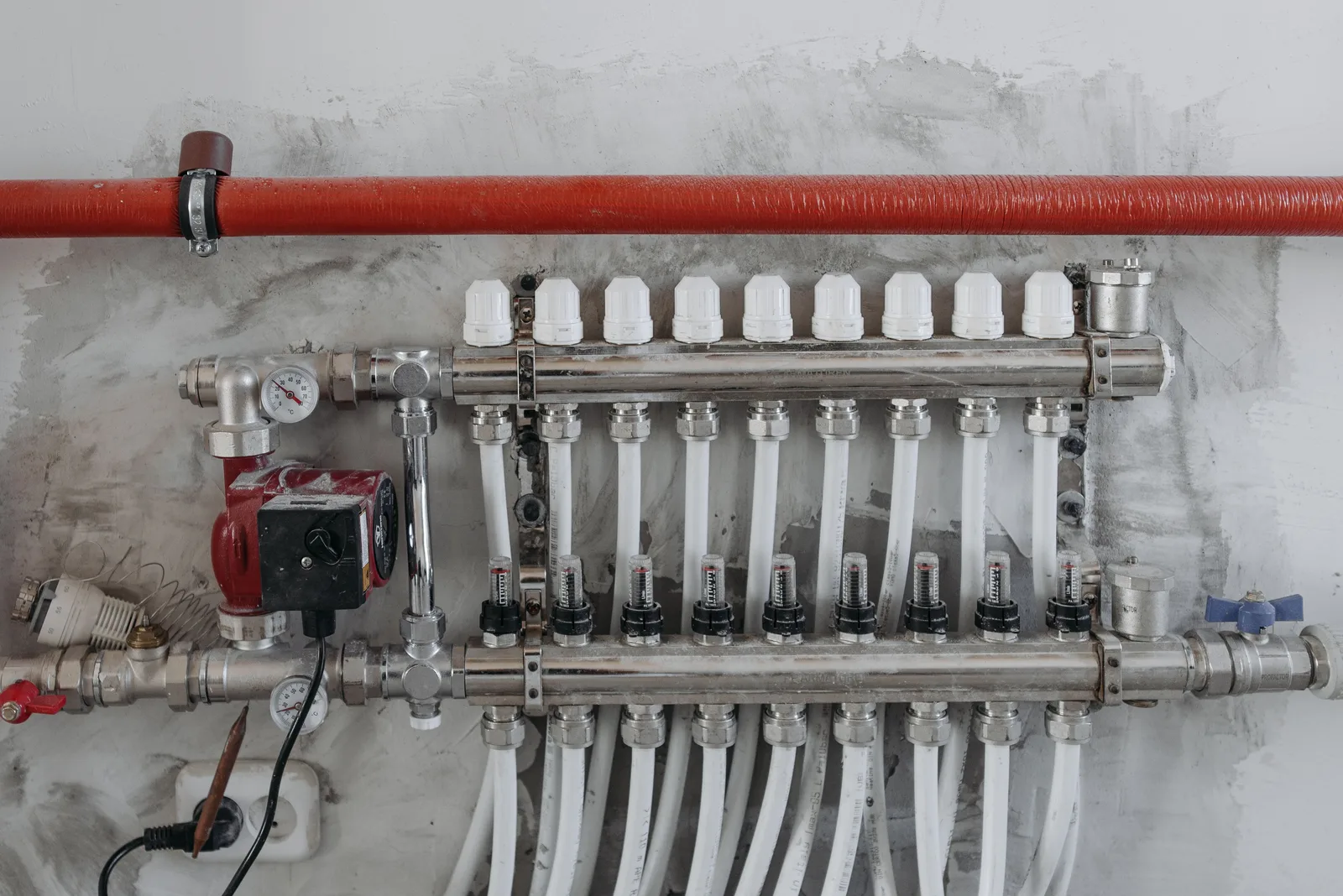
New York's old housing stock, dense multi-unit buildings, and cold winters keep plumbing contractors busy year-round, but that work does not always pay on the same schedule your payroll, parts, and fuel bills do. MCA funding bridges that gap using your existing bank deposit history.
Plumbing businesses in New York qualify for MCA with 6+ months in business, $4,000-$6,000+/month in business bank deposits, and a 500+ FICO. Initial submission is a signed application plus 6 consecutive months of business bank statements, nothing more. Decision timing is set by the funding provider.
New York Market
Dense multi-unit buildings and old housing stock keep New York contractors busy year round, but the work does not pay on the same schedule as payroll and fuel.
Why New York Plumbing Contractors Choose MCA
New York City's housing stock is genuinely old. Large parts of Brooklyn, Manhattan, and the Bronx are still built on pre-war construction, and a meaningful share of that housing still runs on the original cast-iron and galvanized supply and drain lines installed decades ago rather than modern copper or PVC. That aging infrastructure fails on its own timeline, not a contractor's, which is why it generates steady repair and replacement work independent of any single season. Layer on the city's density: five and six-story walkups, larger co-ops, and rental buildings each hold dozens of units on shared risers and stacks, so a single building can produce a stream of individual repair calls and larger multi-unit replacement jobs at once. That is a fundamentally different, steadier workload than the mostly single-family, whole-house-repipe market that dominates most suburban plumbing businesses elsewhere in the country.
Cold winters add a second, more seasonal layer on top of that base of work: once outdoor temperatures drop below freezing for a sustained stretch, freeze and burst-pipe emergency calls reliably spike across the city and the surrounding suburbs. Upstate New York carries a related version of the same story on a different scale. Buffalo, Rochester, Syracuse, and Albany sit on older, manufacturing-era housing stock, in cities with genuinely cold, snowy winters, so contractors there see a comparable pattern of steady repair demand punctuated by winter freeze calls, even though the building stock and the size of the market differ from New York City's.
Cash-Flow Timing
The Weekly-Cost, Delayed-Payout Gap
Plumbing contractors run into this timing problem in two related ways, depending on the work they do. A residential and emergency-service contractor gearing up for winter has to hire and train additional technicians, and stock water heaters, pipe fittings, and freeze-repair parts, weeks before the freeze season actually arrives and produces the call volume that pays for all of it. Payroll, parts, and fuel are due weekly no matter how many calls come in that week, while the heaviest call volume, and the revenue behind it, is concentrated into a handful of winter months.
A contractor doing larger commercial or multi-unit building work faces a related but different version of the same gap. That work is often billed to a general contractor or a property manager on net-30 or net-60 progress-billing terms, with a portion of each invoice held back as retainage until the job is signed off as complete. The plumbing contractor still has to pay its own technicians, material suppliers, and fuel costs on a weekly basis while that invoice sits unpaid.
MCA funding is sized against a contractor's existing bank deposit history rather than a construction schedule or a signed contract, which is why it fits this specific gap: it bridges the weeks or months between when payroll and parts costs are due and when either winter call volume converts to collected revenue, or a progress-billing invoice actually clears.
4-Point Qualification Breakdown
1
Revenue
$4,000-$6,000+/month in average business bank deposits
2
Bank Statements
6 consecutive months, $4,000+ average ending balance across all 6
3
Time in Business
6+ months of operating history
4
Business Ownership
Active New York business bank account in the applicant's name
Larger commercial and multi-unit work is usually billed to a general contractor or property manager on net-30 or net-60 terms, with retainage held back until sign off.
How Plumbing Businesses Use MCA Funding
Service van purchase, repair, or down payment
Water heater and pipe fitting inventory ahead of freeze season
Licensing, bonding, and insurance renewals
Technician hiring and payroll before winter call volume arrives
Covering weekly costs while a commercial or multi-unit job invoice is still outstanding
Fit Check
Does MCA Fit Your Situation Right Now?
MCA is a good fit for a plumbing contractor with existing deposit history who needs to bridge a specific, known timing gap. It is not the right tool for every stage of a plumbing business. Use the honest guide below.
Fits Now
You have 6+ months of business bank statements showing real service revenue
You are staffing up and stocking parts ahead of the winter freeze season
You are carrying a commercial or multi-unit job billed net-30 or net-60 while payroll is due weekly
You want repayment tied to a percentage of ongoing deposits, not a fixed monthly bill
Wait or Compare First
Your business is brand new with no deposit history to underwrite yet
It is your slow season with no near-term revenue-generating jobs on the books
Your financing need is unrelated to a short, revenue-backed timing gap
You have not compared the total cost of capital against your expected job margin
What a Factor Rate Actually Costs, Not a Loan
A merchant cash advance is priced with a one-time factor rate, not an annualized interest rate. Example: a $15,000 advance at a 1.20 factor rate means $18,000 total repayment, a $3,000 cost of capital. That total is fixed at origination and repaid via a daily or weekly percentage of your bank deposits, not a fixed monthly loan payment.
Advance Amount
Factor Rate
Total Repayment
Cost of Capital
$15,000
1.20
$18,000
$3,000
Before You Apply
Credit, Guarantees, and Documents: What to Expect
Credit check. Initial review uses a soft credit pull, which does not affect your score. A hard credit pull typically happens later, before final approval, and carries a real, disclosed impact of about 2 to 5 points on your credit score.
Personal guarantee. MCA agreements typically require a personal guarantee from the business owner. Treat a claim that no guarantee is ever required as a reason to look closer.
Business statements only. Only business bank statements are accepted, never personal or consumer accounts. All 6 consecutive months, all pages, non-redacted.
Driver's license and voided check. These are requested only after approval, as final supplemental documents, never as part of the initial submission.
Compliance
New York's Commercial Finance Disclosure Law
New York enacted a commercial financing disclosure law, the Commercial Finance Disclosure Law under Part 600 NYCRR, effective August 2023. It requires MCA and commercial-financing providers to disclose an annualized cost rate, the total repayment amount, and prepayment terms to New York business borrowers before a transaction is finalized. The law does not cap factor rates; it requires transparency so a New York business can see the true cost of the financing it is considering. T.A.G. is an independent ISO and broker, not a direct lender, and does not itself set or fund the transaction; the disclosure obligation runs to the funding provider that issues the actual offer.
Check Your Funding Estimate
T.A.G. Business Funding
Plumbing Funding in New York
$4,000-$6,000+/month revenue, 6 consecutive months of business bank statements, 500+ FICO minimum.
500+ FICO minimum · 6+ months in business · $4,000-$6,000+/month revenue
FAQ
Can a plumbing business in New York get a merchant cash advance?
Yes. Plumbing businesses in New York qualify for MCA with 6+ months in business, $4,000-$6,000+/month in business bank deposits, and a 500+ FICO. Approval is based on your deposit history, not your credit score alone.
How many months of bank statements do I need?
Exactly 6 consecutive months of business bank statements, the same window used for the time-in-business minimum, with an average ending balance of $4,000+ across those 6 statements. Personal statements are not accepted.
Is this a loan?
No. A merchant cash advance is a purchase of a fixed amount of your future receivables, not a loan. There is no interest rate, no fixed monthly payment, and no fixed maturity date. It is priced with a one-time factor rate applied to the advance amount.
How much could a New York plumbing business qualify for?
MCA amounts are typically 75%-150% of average monthly bank deposits. For example, a $15,000 advance at a 1.20 factor rate means $18,000 total repayment ($3,000 cost of capital), repaid via a daily or weekly percentage of deposits, not a fixed monthly bill.
Will a credit check affect my credit score?
Initial review uses a soft credit pull, which does not affect your score. A hard credit pull typically occurs later, before final approval, and carries a real, disclosed impact of about 2 to 5 points on your credit score. There is no version of this process with zero credit impact.
Is a personal guarantee required?
In most cases, yes. MCA agreements typically require a personal guarantee from the business owner. Any offer that claims otherwise should be reviewed carefully before you sign.
Does New York require MCA providers to disclose financing terms?
Yes. New York's Commercial Finance Disclosure Law (Part 600 NYCRR), effective August 2023, requires MCA providers to disclose an annualized cost rate, total repayment amount, and prepayment terms on New York transactions. The law does not cap factor rates; it requires transparency about the true cost of the financing.
Last reviewed: September 2026. T.A.G. Business Funding is an independent ISO partner, not a direct lender. All examples are illustrative. Advance amounts and rates vary by business profile and funder. Not financial advice.