You Won the Contract. Now You Need the Crew and Supplies to Deliver It.
Michigan's commercial cleaning demand runs across auto industry corporate campuses in metro Detroit, manufacturing and industrial plants that need specialized cleaning protocols, and hospital and university systems with year-round contracted service. Winning one of those contracts is the easy part. Staffing, training, and supplying a crew before your first invoice clears is where the real cash gap shows up.
Janitorial Services businesses in Michigan qualify for MCA with 6+ months in business, $4,000-$6,000+/month in business bank deposits, and a 500+ FICO. Initial submission is a signed application plus 6 consecutive months of business bank statements: nothing more is required to start. Decision timing is set by the funding provider.
4-Point Qualification Breakdown
1
Revenue
$4,000-$6,000+/month in average business bank deposits
2
Bank Statements
6 consecutive months, $4,000+ average ending balance
3
Time in Business
6+ months of operating history
4
Business Ownership
Active Michigan business bank account in the applicant's name
Michigan's Commercial Cleaning Market: Auto Campuses, Industrial Plants, and Institutional Contracts
Southeast Michigan's economy is still anchored by the automotive industry, and that shows up directly in commercial cleaning demand. Corporate office campuses in Detroit, Dearborn, and Auburn Hills sit alongside manufacturing plants and supplier facilities spread across Macomb, Oakland, and Wayne counties, and each of those property types needs a cleaning contract sized and scoped differently than a typical office suite. A manufacturing floor calls for industrial cleaning protocols, machine safety awareness, and often off-hours or weekend shift work that a standard office-cleaning crew is not set up to handle.
Beyond the auto corridor, Michigan's hospital systems and large public university campuses generate steady, recurring contracted cleaning demand statewide. Healthcare facilities carry infection-control and regulatory standards that raise the bar on training and documentation, and university campuses run on an academic calendar with a heavy turnover push during winter and summer breaks. Together, these three demand sources, automotive corporate and industrial, healthcare, and higher education, mean a Michigan janitorial company that wins a new contract in any of them is usually scaling up fast, not gradually.
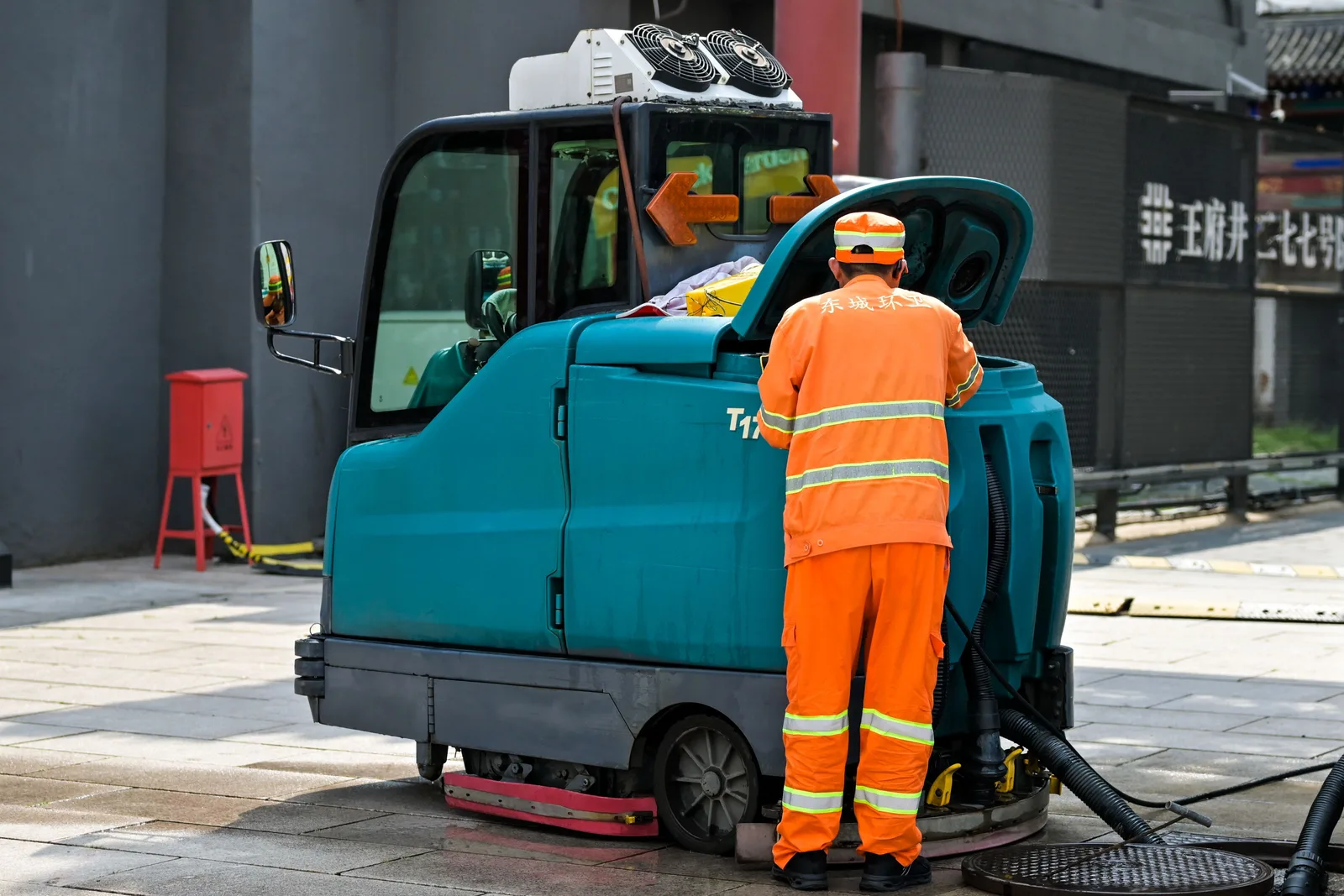
Michigan's auto campuses and industrial plants buy powered equipment and the labour to run it, both before the contract pays.Photo: Xiao He Shang
How Janitorial and Commercial Cleaning Businesses Use MCA Funding
Hiring and training a cleaning crew before a new contract's first invoice is paid
Bulk cleaning chemicals, paper products, and supply inventory for multi-site contracts
Floor care equipment: buffers, extractors, pressure washers, and industrial vacuums
Specialized equipment and PPE for industrial or manufacturing-facility cleaning work
Bonding, insurance, and certification costs required to bid on larger facility contracts
Bridging payroll while a corporate or institutional client pays on net-30 or net-60 terms
The New-Contract Cash Timing Gap
For a janitorial or commercial cleaning company, the cash gap almost never comes from the work itself. It comes from the gap between winning a contract and getting paid for it. The moment a facility, property manager, or corporate client awards a new cleaning contract, the buildout starts immediately: recruiting and training a crew sized for the site, buying bulk chemicals and paper supplies, and in many cases purchasing or renting floor equipment scaled to the square footage. None of that spending waits for revenue, and none of it is optional if the contract is going to start on schedule.
Once service actually begins, the mismatch continues. Cleaning crews are typically paid weekly or biweekly, and bulk supply orders arrive with their own invoice terms, while the client on the other end of the contract is very often a corporate account or facility manager paying on net-30 or net-60 terms. That means a janitorial company can be fully staffed, fully supplied, and delivering real service on a signed contract for a month or two before the first check from that client actually clears. The work is profitable on paper the whole time. The cash just is not there yet.
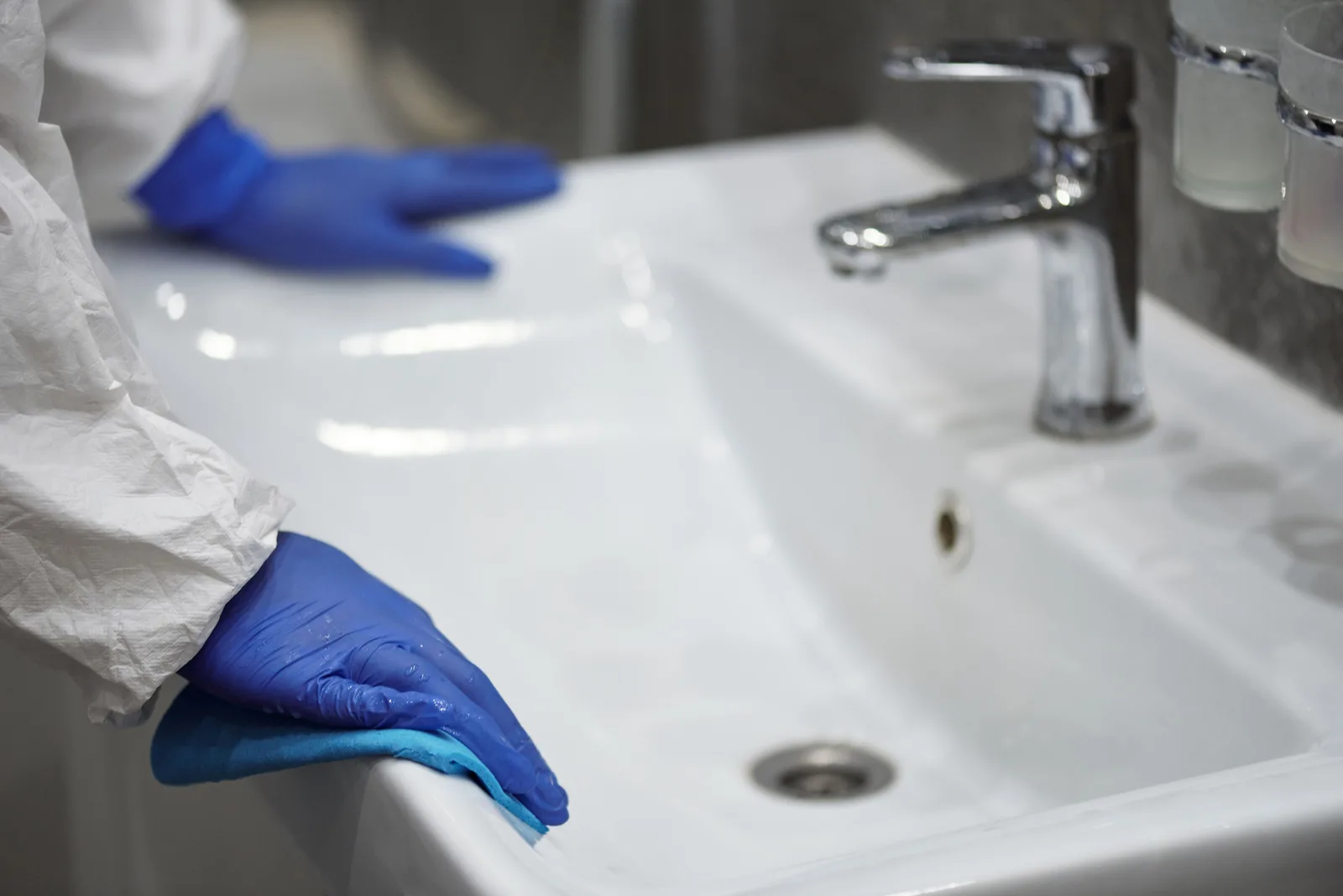
The scope on a single site is ordinary, repeated work. A fixed payback has to be earned back out of exactly that.Photo: Matilda Wormwood
What a Factor Rate Actually Costs, Not a Loan
A merchant cash advance is priced with a one time factor rate, not an annualized interest rate. Example: a $15,000 advance at a 1.20 factor rate means $18,000 total repayment (a $3,000 cost of capital). That total is fixed at origination and repaid via a daily or weekly percentage of your bank deposits, not a fixed monthly loan payment. This is an illustrative example only, not a quote: your actual advance amount, factor rate, and repayment structure are determined by the funding provider after reviewing your specific file.
Advance Amount
Factor Rate
Total Repayment
Cost of Capital
$15,000
1.20
$18,000
$3,000
Should You Apply Now, or Wait and Compare Options First?
A merchant cash advance is not the right tool for every situation. Here is an honest way to think through it before you apply.
Check Your Funding Estimate
Michigan Commercial Finance Disclosure: No State Law
Michigan does not currently have a commercial finance disclosure law equivalent to California's SB 1235. T.A.G. Business Funding voluntarily provides full cost disclosure, including the total payback amount and repayment structure, on every offer before signing, regardless of what state law requires.
T.A.G. Business Funding
Janitorial Services Funding in Michigan
$4,000-$6,000+/month revenue, 6 consecutive months of business bank statements, 500+ FICO minimum.
500+ FICO minimum · 6+ months in business · $4,000-$6,000+/month revenue
FAQ
Can a janitorial or commercial cleaning business in Michigan get a merchant cash advance?
Yes. Janitorial and commercial cleaning businesses in Michigan qualify for MCA with 6 or more months in business, $4,000-$6,000+ per month in business bank deposits, and a 500+ FICO score. Approval is based mainly on your deposit history, not your credit score alone.
How many months of bank statements do I need, and do they have to be business statements?
Exactly 6 consecutive months of business bank statements, the same window used for the time in business minimum. Personal bank statements are not accepted. Average ending balance across the 6 statements should be $4,000 or more.
Is a merchant cash advance a loan?
No. A merchant cash advance is a purchase of a fixed amount of your future receivables, not a loan. There is no interest rate, no fixed monthly payment, and no fixed maturity date. It is priced with a one time factor rate applied to the advance amount, and actual pricing and terms are determined by the funding provider after review of your file.
How much could a Michigan janitorial business qualify for?
MCA amounts are typically 75%-150% of your average monthly bank deposits. For example, a $15,000 advance at a 1.20 factor rate means $18,000 in total repayment (a $3,000 cost of capital), repaid via a daily or weekly percentage of deposits rather than a fixed monthly bill. This example is illustrative only: your actual advance amount, factor rate, and repayment structure are set by the funding provider after reviewing your file.
What credit score do I need, and will applying hurt my credit?
T.A.G. looks for a 500+ FICO score as a starting point, but approval is based primarily on your business bank deposits, not your score alone. Initial review uses a soft credit pull only. A hard credit pull typically occurs later, before final approval, and can affect your score by a few points. Most MCA agreements, including T.A.G.'s, also require a personal guarantee from the business owner.
Does Michigan require MCA cost disclosure?
Michigan does not currently have a commercial finance disclosure law equivalent to California's SB 1235. T.A.G. Business Funding voluntarily provides full cost disclosure, including the total payback amount and repayment structure, on every offer before signing, regardless of what state law requires.
What documents do I need to apply?
A completed application and your six most recent, consecutive months of business bank statements, all pages, unredacted. Personal bank statements are not accepted. A driver's license and a voided business check may be requested later, after approval, but neither is required to start your application.
Last reviewed: September 2026. T.A.G. Business Funding is an independent ISO partner, not a direct lender. All examples are illustrative. Advance amounts and rates vary by business profile and funder. Not financial advice.