Plumbing businesses face constant capital demands: emergency service vehicles, water heater and pipe fitting inventory, licensing and bonding, and staffing up before burst-pipe and remodel season. California's aging housing stock and fast-growing ADU market keep that demand steady across Los Angeles, San Francisco, and San Diego.
Plumbing businesses in California qualify for MCA with 6+ months in business, $4,000-$6,000+/month in business bank deposits, and a 500+ FICO. Initial submission is a signed application plus 6 consecutive months of business bank statements, nothing more. Decision timing is set by the funding provider.
4-Point Qualification Breakdown
1
Revenue
$4,000-$6,000+/month in average business bank deposits
2
Bank Statements
6 consecutive months, $4,000+ average ending balance
3
Time in Business
6+ months of operating history
4
Business Ownership
Active California business bank account in the applicant's name
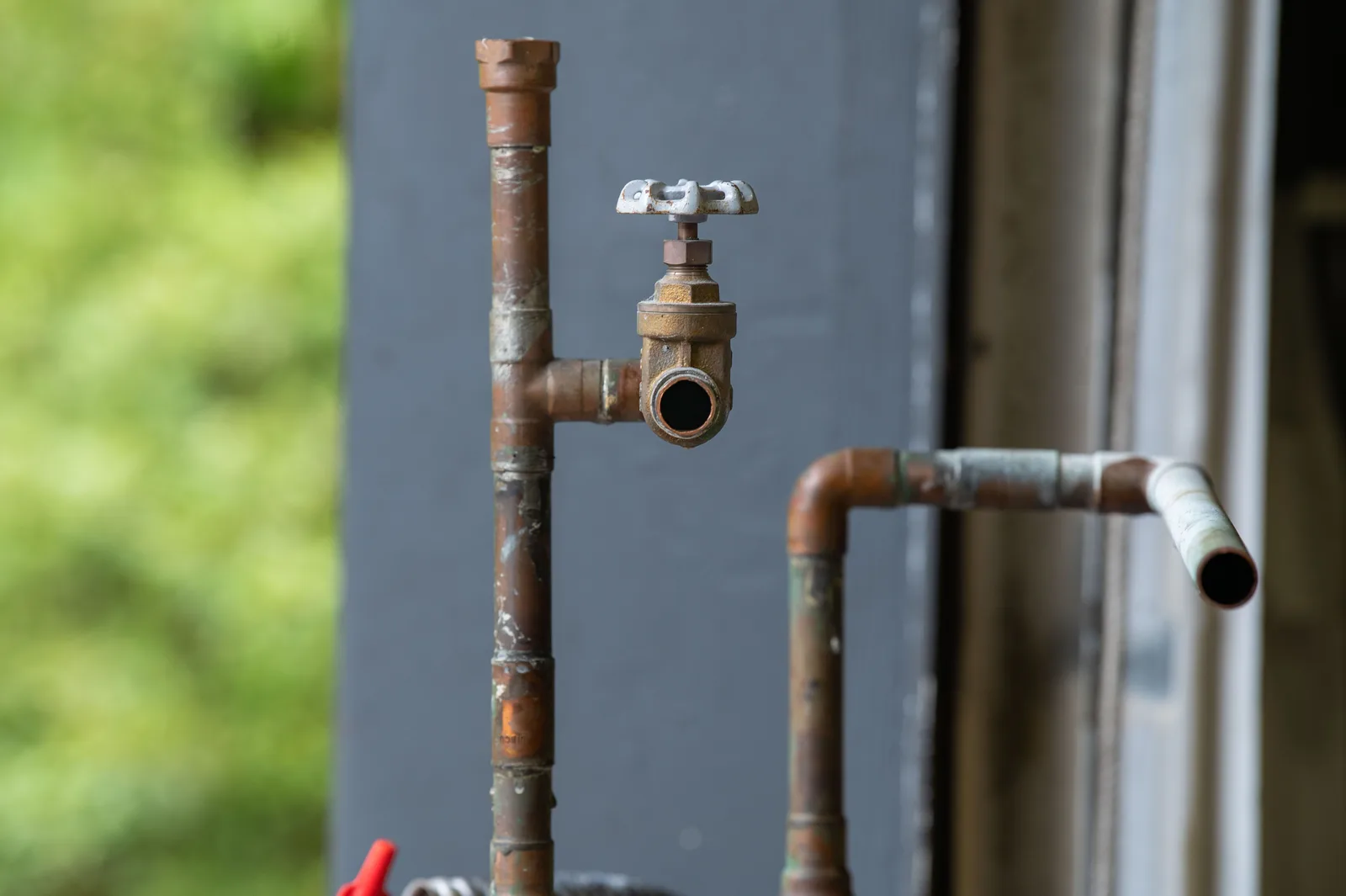
Galvanized and cast iron supply lines corrode from the inside over decades, which is what keeps repipe and emergency repair calls steady in older California neighborhoods.
Why California Plumbing Cash Timing Is Structural, Not Occasional
California plumbing demand runs on two very different clocks at once. A large share of Los Angeles and San Francisco's housing was built well before 1960, and much of it was originally plumbed with galvanized steel or cast iron supply and drain lines. Those materials corrode and fail from the inside over decades, which is why repipe and emergency repair work stays a steady, structural source of calls in older California neighborhoods rather than a seasonal spike. That work tends to get paid quickly, often on completion, straight from the homeowner's own funds or an insurance claim.
The other clock belongs to new construction. California's statewide accessory dwelling unit laws made ADU permitting far easier starting in 2017 and again with later updates, and the result has been a genuine boom in ADU construction as the state works to address its housing shortage. Every ADU, even a small one, needs a full rough-in: water supply, drain-waste-vent, and fixture connections. Larger new-construction and multifamily projects add to the same pipeline. That side of the business gets paid on a general contractor's schedule, not the homeowner's, which is a slower and more structured process than an emergency call. On top of both, California's cost of living, CSLB contractor licensing requirements, and workers' compensation insurance costs sit meaningfully higher than in most states, which raises the fixed overhead a plumbing business carries no matter which side of the work is currently paying the bills.
Los Angeles
Dense pre-1960s housing stock with original galvanized or cast iron pipe now reaching typical end-of-life, a steady repipe and repair demand source.
San Francisco Bay Area
Some of the oldest housing in the state alongside heavy ADU construction activity under California's statewide ADU laws.
San Diego
Strong ADU and infill construction growth tied to regional housing demand, plumbing rough-in work billed on GC timelines.
Sacramento / Central Valley
Continued new single-family and multifamily construction volume, with the same subcontractor progress-billing pattern.
The GC Progress-Billing and Seasonal Staffing Gap
On larger commercial, new-construction, and ADU rough-in jobs, a plumbing contractor is usually working as a subcontractor to a general contractor, not billing a homeowner directly. Payment runs on a progress-billing schedule: a percentage of the contract is billed as milestones are completed, that pay application has to be reviewed and approved before payment starts, terms often run net 30 to net 60 from approval, and the GC typically withholds retainage of 5%-10% until the job or the plumber's scope is fully signed off. None of that pauses the contractor's own weekly obligations: payroll for journeyman and apprentice plumbers, fuel and maintenance for the service fleet, and parts for the next job all come due on a weekly clock regardless of where a given GC payment sits in its approval cycle.
A second version of the same gap shows up heading into a seasonal demand surge, whether that is a cold-snap burst-pipe season or the busier remodel and real-estate season. A business often has to hire and equip additional technicians and stock pipe, fitting, and water heater inventory ahead of the calls that surge will generate, not after the revenue from it has arrived.
When Plumbing MCA Fits Now vs. When to Wait or Compare
MCA is a bridge for a specific, dated cash gap: a pay application that's already approved but not yet paid, or a seasonal staffing and parts buildup that has to happen before the calls that pay for it come in. It is not the cheapest way to fund long-term growth or to prop up a business that isn't generating enough deposits on its own. The comparison below is meant to help you decide before you apply, not after.
Stocking repipe fittings and water heater inventory for a busy remodel season means paying the supply house well before the finished jobs pay you.
How Plumbing Businesses Use MCA Funding
Service van purchase or down payment
Water heater and pipe fitting inventory ahead of season
Licensing, bonding, and insurance renewals
Technician hiring and payroll before peak season
Payroll and parts while a GC pay application is still in net terms
What You'll Need to Apply
The initial package is deliberately short: a signed T.A.G. application and the 6 most recent consecutive months of BUSINESS bank statements, all pages, non-redacted (personal bank statements are not accepted). A driver's license and voided business check are only requested after approval, as supplemental documents, never part of the initial upload. Like most MCA agreements, a personal guarantee is typically required as part of the final offer.
Not sure your statements are ready? Run them through the Bank Statement Analyzer before you apply.
California Disclosure: SB 1235
California's Commercial Financing Disclosure Law (SB 1235, effective January 1, 2022) requires providers of commercial financing under $500,000, including merchant cash advances, to disclose the total funded amount, total repayment amount, finance charge, an APR-equivalent figure, term length, and prepayment policy before you sign. T.A.G. Business Funding provides this disclosure on every California offer before signing. T.A.G. is an independent ISO/broker connecting applicants to third-party funding providers, not a direct lender, and funding decisions are made by those providers after review. If a California MCA offer arrives without this disclosure, request it in writing before signing anything.
What a Factor Rate Actually Costs, Not a Loan
A merchant cash advance is priced with a one-time factor rate, not an annualized interest rate. Example: a $15,000 advance at a 1.20 factor rate means $18,000 total repayment, a $3,000 cost of capital. That total is fixed at origination and repaid via a daily or weekly percentage of your bank deposits, not a fixed monthly loan payment.
Advance Amount
Factor Rate
Total Repayment
Cost of Capital
$15,000
1.20
$18,000
$3,000
Illustrative example only, not a quote. Actual factor rate, term, and payment structure are set by the funding provider that reviews your file, and SB 1235 disclosure provides your exact figures before you sign.
Check Your Funding Estimate
T.A.G. Business Funding
Plumbing Funding in California
$4,000-$6,000+/month revenue, 6 consecutive months of statements, 500+ FICO minimum.
500+ FICO minimum · 6+ months in business · $4,000-$6,000+/month revenue
FAQ
Can a plumbing business in California get a merchant cash advance?
Yes. Plumbing businesses in California qualify for MCA with 6+ months in business, $4,000-$6,000+/month in business bank deposits, and a 500+ FICO. Approval is based on your deposit history, not your credit score alone.
How many months of bank statements do I need?
Exactly 6 consecutive months of business bank statements, the same window used for the time-in-business minimum, with an average ending balance of $4,000+ across your 6 statements.
Is this a loan?
No. A merchant cash advance is a purchase of a fixed amount of your future receivables, not a loan: there is no interest rate, no fixed monthly payment, and no fixed maturity date. It is priced with a one-time factor rate applied to the advance amount.
How much could a California plumbing business qualify for?
MCA amounts are typically 75%-150% of average monthly bank deposits. For example, a $15,000 advance at a 1.20 factor rate means $18,000 total repayment ($3,000 cost of capital), repaid via a daily or weekly percentage of deposits, not a fixed monthly bill.
Does California require a cost disclosure on plumbing MCA offers?
Yes. California's Commercial Financing Disclosure Law (SB 1235, effective January 1, 2022) requires providers of commercial financing under $500,000, including merchant cash advances, to disclose the total funded amount, total repayment amount, finance charge, an APR-equivalent figure, term length, and prepayment policy before you sign. T.A.G. Business Funding provides this disclosure on every California offer before signing. If a California MCA offer arrives without it, request it in writing before signing anything.
How does GC payment timing affect cash flow for California plumbing contractors?
Larger commercial, new-construction, and ADU rough-in jobs are typically billed to the general contractor on a progress-billing schedule, with payment terms of net 30 to net 60 after an approved pay application and retainage of 5%-10% held until the job or your scope is fully complete. Meanwhile payroll for your plumbers, fuel and vehicle costs, and parts for the next job are due weekly, regardless of where that GC payment sits in its approval cycle. MCA is underwritten on your existing deposit history, not on the unpaid pay application as collateral, which is why some plumbing contractors use it to bridge that specific stretch.
Last reviewed: September 2026. T.A.G. Business Funding is an independent ISO partner, not a direct lender. All examples are illustrative. Advance amounts and rates vary by business profile and funder. Initial review uses a soft credit pull only; a hard credit pull typically occurs later, before final approval, and can affect your credit score by a few points. Not financial advice.