Industry Authority Center

Auto Repair Shop Working Capital
Without the Bank Runaround

A broken lift means zero revenue. Banks see automotive as high-risk because your equipment depreciates and your income is transaction-based. MCA underwriters see daily card swipes, fleet account deposits, and consistent customers, exactly the kind of revenue stream that qualifies fast.

160K+
US auto repair shops
$10K to $500K
Typical funding range
set after review
Decision timeline
500 FICO
Minimum credit score
Quick Answer

Auto repair shops qualify for MCA funding with 500+ FICO, $4,000 to $6,000+/month in deposits, and 6+ months in business. No equipment or real estate collateral required. Review begins as soon as your file is complete. Funding timing is set by the funding provider after review. Funds can be used for lifts, diagnostic equipment, bay expansion, or any shop need.

What Does Your Shop Need Right Now?

Start with the path that matches your situation.
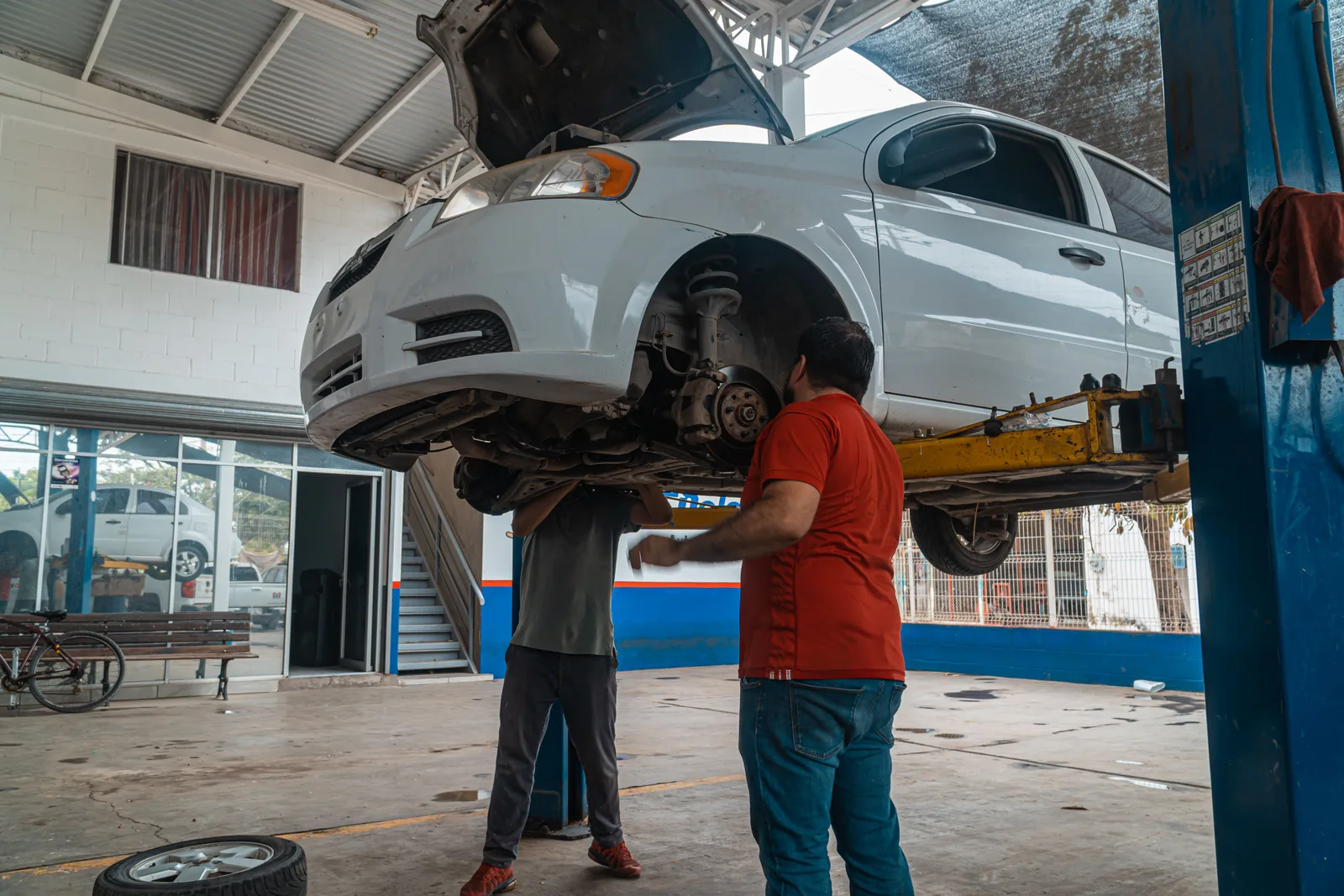
Two technicians inspecting a car raised on a lift in a repair bay
A bay tied up on one job is a bay that cannot take the next one.

How Auto Repair Shops Use MCA Funding

No restrictions on use, goes where your shop needs it most.

πŸ”©
Hydraulic lift repair or replacement
πŸ’»
OBD and EV diagnostic equipment
πŸ›ž
Tire changer and balancer
πŸ“
Alignment machine upgrade
πŸ—οΈ
Bay addition or buildout
🧰
Tool and equipment inventory
πŸ‘¨β€πŸ”§
Mechanic hiring and payroll
πŸ“¦
Parts inventory stocking

Why an auto repair shop runs short of cash while it is busy

A shop's costs land before its revenue does. Parts are ordered for a job that is not paid for yet, technicians are paid on their normal cycle regardless of which invoices have cleared, and the bay is occupied either way. When the customer is an insurer or a fleet account, the wait between finishing the work and receiving the money stretches further still.

That is why a shop can be fully booked and still be unable to take on the next job. The constraint is not demand and it is not profitability. It is that the money is committed to work already on the floor.

The cash gap in an auto repair shop Parts and labour are paid for on day zero. The customer, insurer or fleet account pays later. The shop covers the difference in between, and that gap is what working capital is used for. Where the money sits while the work is done Day 0 Parts ordered Techs paid Job completed Vehicle released Payment lands Customer, insurer or fleet The shop carries this stretch Cash returns
A shop can be busy and profitable and still be short of cash, because the parts and the payroll are spent before the payment arrives. Insurance and fleet accounts stretch that further than retail customers do.

The situations that usually bring a shop here

What to prepare before you apply

The single thing that most determines how smoothly a file moves is whether the documents are complete on the first pass. Two items are needed to begin a review:

What a complete auto repair shop file contains Two items make a file reviewable: the signed T.A.G. application and the six most recent consecutive months of complete business bank statements. A driver's licence and voided business cheque are requested later, only after approval. What makes a file reviewable NEEDED TO START REVIEW Signed T.A.G. application 6 consecutive months of BUSINESS bank statements ONLY AFTER APPROVAL Driver's licence Voided business cheque All pages of every statement. Nothing redacted. Personal statements do not qualify.
Most files that stall do so for one of three reasons: personal statements instead of business, a missing month in the middle, or a statement submitted as a partial page range.

The statements must be business bank statements in the business's own name. Personal statements do not qualify, and a file built on them cannot move forward. Send every page of each statement, including the pages that look like boilerplate, and do not redact anything. Six consecutive months matters as much as six months: a gap in the middle is the most common reason a file goes back to the applicant.

A driver's licence and a voided business cheque are part of closing, not applying. They are requested after an approval, so there is no need to gather them now.

How the review actually works

T.A.G. Business Funding is an independent ISO and intermediary, not a direct lender. Funding is provided by third party funding sources and is subject to their own review and approval.

What that means in practice: T.A.G. prepares and presents your file, and the funding provider decides. Pricing, factor rate, payment structure, term, and timing are determined by that provider after it reviews your file. Anyone quoting you exact terms before a provider has looked at your statements is describing an industry average, not your offer.

Reviews weigh deposit consistency and the shape of your revenue more heavily than a credit score alone, which is why the bank statements carry so much of the decision.

When applying now may not be the right move

It is worth saying plainly: sometimes the answer is to wait. If your last few months show a sharp dip that is about to reverse, or several months of negative balance days, or if the business has been operating for only a short time, a review now is likely to reflect that. Building two or three months of steadier deposits first often produces a materially better outcome than applying immediately and being turned down.

If you are unsure which of those describes your shop, the honest way to find out is to look at your own statements first.

Auto Repair Shop Funding Resources

Guides for shop owners navigating equipment financing, bank declines, and MCA options.

βš–οΈ

MCA vs SBA Loan

Full comparison of speed, cost, collateral, and credit requirements. Includes a decision matrix for shop owners, when MCA wins and when SBA is worth the wait.

Guide
Read the Comparison β†’
🏦

Bank Declined Your Shop?

Banks classify automotive as high-risk. If your bank said no, this guide explains what underwriters actually look at, your realistic path to capital, and a 30-day recovery checklist.

Guide
Get the Guide β†’
πŸ“Š

Business Funding with Bad Credit

500 FICO minimum for MCA. Credit bands, what underwriters look at instead, and the step-by-step process for qualifying with a low score and strong monthly deposits.

Guide
Read the Guide β†’
πŸ“˜

What Is a Merchant Cash Advance?

Complete explanation of how MCA works, what it costs, and how daily repayment from your shop's card deposits actually functions in practice.

Article
Read the Guide β†’
πŸ’‘

MCA Factor Rate Explained

What a 1.28 factor rate means in dollars for your shop. How to compare two offers and calculate your daily holdback against typical repair shop deposit patterns.

Article
Read the Guide β†’
πŸ—ΊοΈ

How Funding Works: Step by Step

From application to funded, what happens at each step, what documents you need, and what to expect before and after applying.

Guide
See the Process β†’
πŸ’Ή

MCA Rates 2026, Auto Shop Benchmark

Average factor rates for auto repair shops: 1.27. What drives your rate up or down, and how to compare funder offers accurately before signing.

Benchmark
See Rate Benchmarks β†’
πŸ†š

MCA vs Business Loan

Full comparison of cost, speed, approval requirements, and collateral. Covers what auto shop owners considering both bank loans and MCA need to know before choosing a product.

Comparison⏱ 8 min read
Compare Options β†’
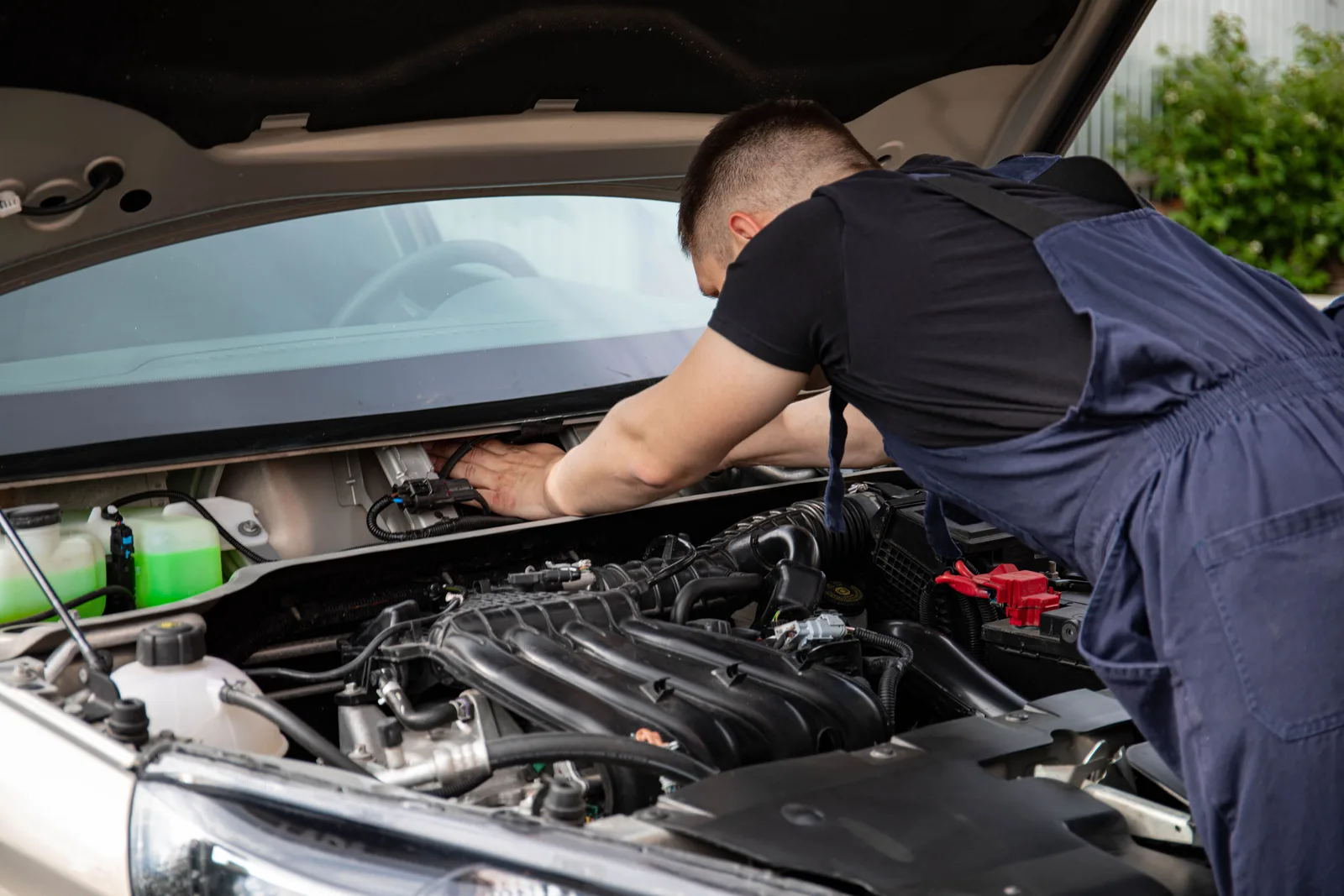
Mechanic working on a car engine with the hood raised
Parts on that job are usually paid for before the customer settles.

Auto Repair Shop Approval Snapshot

The 4 factors underwriters evaluate on every auto repair shop application.

Factor 1, Critical
Monthly Deposit Volume
Strong: $20K+/month Acceptable: $8K to $20K Risk: Under $8K
Factor 2, High Impact
NSF Frequency
Strong: 0/month Acceptable: 1 to 2/month Risk: 3+/month
Factor 3, Medium Impact
Average Daily Balance
Strong: $2,000+ Acceptable: $800 to $2,000 Risk: Under $800
Factor 4, Qualifying
Time in Business
Strong: 2+ years Acceptable: 6 to 24 months Min: 6 months

Auto repair factor rates: 1.18 to 1.35 for strong profiles. Fleet account deposits and consistent card swipe revenue are viewed favorably by underwriters.

Why Banks Say No to Auto Shops, and Why MCA Doesn't

Same shop, two completely different underwriting conversations.

🏦 What Your Bank Sees

  • Automotive classified as "high-risk" by most commercial lenders
  • Equipment depreciates rapidly, lifts and tools have poor collateral value after year 3
  • Cash-heavy business model triggers scrutiny
  • Revenue inconsistency from seasonal slow months (January, February)
  • Requires 2 years of profitable tax returns, hard to show after a tough year
  • Decision: 45 to 90 days, often declined

βœ… What MCA Underwriters See

  • Daily card swipes and fleet account payments = predictable, consistent deposits
  • Auto repair customers pay before leaving, immediate deposit pattern
  • Revenue is visible in bank statements, no need for tax returns
  • 500 FICO minimum, credit is evaluated, not used as primary filter
  • No equipment collateral required, repayment from daily deposit percentage
  • Decision: returned by the provider once statements are reviewed

Auto Repair Shop MCA vs. Traditional Term Loan

An auto repair shop weighing a bank/SBA term loan against a merchant cash advance is weighing speed and accessibility against lower headline cost. Here is how they compare for a shop that wants to add a lift or expand now rather than in 6 to 8 weeks.

At a Glance

Need equipment or expansion capital fast: MCA. Have strong financials and 2+ years to plan: a term loan or equipment financing is the lower-cost path.

  • MCA approves on deposit history, accessible to newer shops or those without 2+ years of financials a bank requires.
  • Term loans and equipment financing typically cost less annualized but require collateral and a multi-week underwriting cycle.
Auto Repair Shop MCA vs. Traditional Term Loan, key differences
FeatureMerchant Cash Advance (MCA)Traditional Term Loan
Approval basisAverage monthly deposits, 500+ FICO, 6+ months in businessCredit history, financials, collateral (often the equipment itself), 2+ years in business
Time to fundingSet by the funding provider after review1 to 8 weeks depending on lender
RepaymentDaily/weekly holdback as a % of deposits, flexes with shop revenueFixed monthly payment regardless of a slow week
CollateralNone, a UCC-1 is filed against future receivablesOften required (the equipment itself or a blanket lien)
Best fitFast equipment purchase or expansion, newer or thinner-credit shopsEstablished shops with strong financials who can wait for underwriting

Auto Repair Shop Funding, FAQs

Common questions from shop owners about qualifying, amounts, and how MCA works for automotive businesses.

Can an auto repair shop get an MCA?

Yes. Auto repair shops qualify for MCA funding with 500+ FICO, 6+ months in business, and $4,000 to $6,000+/month in business bank deposits. Underwriters evaluate card swipe payments, cash deposits, and fleet account payments, not your equipment value or property ownership.

How much can an auto repair shop qualify for?

Auto repair shop MCA funding typically ranges from $10,000 to $500,000 depending on average monthly deposits. A shop averaging $25,000/month may qualify for $18,750 to $37,500. High-volume shops averaging $80,000+/month may qualify for $60,000 to $120,000 or more.

Does auto repair MCA require equipment as collateral?

No. MCA for auto repair shops does not require lifts, diagnostic equipment, tools, or real estate as collateral. Repayment comes from a daily percentage of your business bank deposits, typically 10 to 15%. No equipment liens, no title transfer, no property pledge.

Can an auto repair shop get funded after a bank decline?

Yes. Bank declines do not affect MCA eligibility. Many auto shops are declined by banks because the industry is viewed as high-risk and equipment depreciates too fast for collateral purposes. MCA underwriters look at your deposit volume, not your bank's risk classification.

How fast can an auto repair shop get funded?

Most auto repair applications move into review once the file is complete, which means submitting 6 consecutive months of bank statements. Funding timing is set by the funding provider and follows its own approval and contract process. Emergency shop funding moves fastest when the application is complete and submitted early in the day.

Can auto repair MCA funds be used for equipment?

Yes. MCA funds are unrestricted, you can use them for a new lift, alignment machine, tire changer, diagnostic scanner, air compressor, frame straightening equipment, bay expansion, or any other shop investment.

What do underwriters look for in auto repair bank statements?

Underwriters evaluate four factors: (1) total monthly deposit volume from card swipes, fleet account payments, and cash, (2) NSF frequency, 0 to 2 per month preferred, (3) average daily balance, $1,000+ preferred, and (4) existing advance positions. Strong deposits compensate for lower credit scores in most cases.

Apply for Auto Repair Shop Funding

One-page application. 6 consecutive months of bank statements. Review begins as soon as your file is complete.
500 FICO OK Β· No equipment collateral Β· $4K to $6K/month minimum deposits

Or call/text: 330-238-3003

Ohio

T.A.G. Business Funding

Fund Your Shop Without Waiting on Credit

Finance equipment and parts inventory now. Daily repayment adjusts with your cash flow.

Start Application β†’ Call 330-238-3003
βœ“ No obligation βœ“ Soft pull to start βœ“ Free to apply βœ“ Bank declines welcome

500 FICO minimum  Β·  reviewed as soon as your file is complete  Β·  No collateral required

Related Resources
Auto Repair Shop Funding Benchmark Document Readiness Checker Check Your Eligibility Instantly Bank Statement Analyzer