Quick Answer

Yes. Texas restaurants qualify for merchant cash advances based on monthly bank deposit volume, not credit history or bank relationships. A bank decline does not affect MCA eligibility. Minimum requirements: 4+ months in business, $4,000-$6,000/month in deposits, 500 FICO. Texas has over 50,000 active restaurants and many operate successfully on MCA working capital after bank rejections.

Texas  ·  Restaurant Funding

Restaurant Funding in Texas
Dallas, Houston, San Antonio & Statewide

Quick Answer: Texas Restaurants

Texas restaurants qualify for MCA based on monthly bank deposits. Minimum: $4,000-$6,000/month in deposits, 500 FICO, 6+ months operating. Advance range: $15,000-$150,000 (75-150% of monthly deposits). Review begins as soon as your file is complete. Funding timing is set by the funding provider after review. No bank paperwork, no tax returns, no collateral. Texas requires commercial finance disclosure under HB 700 (effective Sep 2025) for financing under $1,000,000, T.A.G. provides full cost disclosure on every offer.

Texas has 50,000+ active restaurants. MCA review looks at daily deposit volume, not credit scores, bank relationships, or whether you've been declined before.

50,000+
TX restaurants
$15K-$150K
Advance range
24-48 hrs
Funding timeline
500
Min FICO

Restaurant Funding by Texas City

All Texas markets access the same national funder network. Local deposit volumes drive different typical advance ranges.

Houston
Largest TX restaurant market. Energy sector adjacent consumer spending. High consistent deposit volumes.
Typical: $20K-$150K
Dallas / Fort Worth
Fast-growing market, high density. DFW restaurant corridor, strong review outcomes across price points.
Typical: $20K-$125K
San Antonio
Tourism and military consumer base drives consistent revenue even in slow months for most segments.
Typical: $15K-$100K
Austin
Tech-adjacent dining market with high average ticket. Strong approval rates across casual and fine dining.
Typical: $15K-$100K
El Paso / Lubbock / Amarillo
Smaller markets with strong independent restaurant communities. Same funder network, same approval criteria.
Typical: $10K-$60K
Rio Grande Valley
McAllen, Edinburg, Harlingen, high-density Hispanic food service market. Border region cash-heavy deposits require clean bank statement history.
Typical: $10K-$50K

Approval Requirements for Texas Restaurants

Minimum Monthly Deposits
$4,000-$6,000/month
Minimum FICO Score
500 (soft pull to start)
Time in Business
6+ months operating
Documents Required
6 consecutive months BUSINESS bank statements (all pages) + application
Advance Range
$15,000-$150,000 (75-150% of avg monthly deposits)
Funding Timeline
Decision and funding timing set by provider

Tax liens accepted with payment plan. Prior bankruptcies reviewed case-by-case. Bank declines do not affect eligibility. No state-specific licensing required for MCA in Texas. Only BUSINESS bank statements count toward the six-month document requirement: personal or Cash App/Venmo statements do not qualify. A driver's license and a voided business check are collected after approval, not part of the initial application.

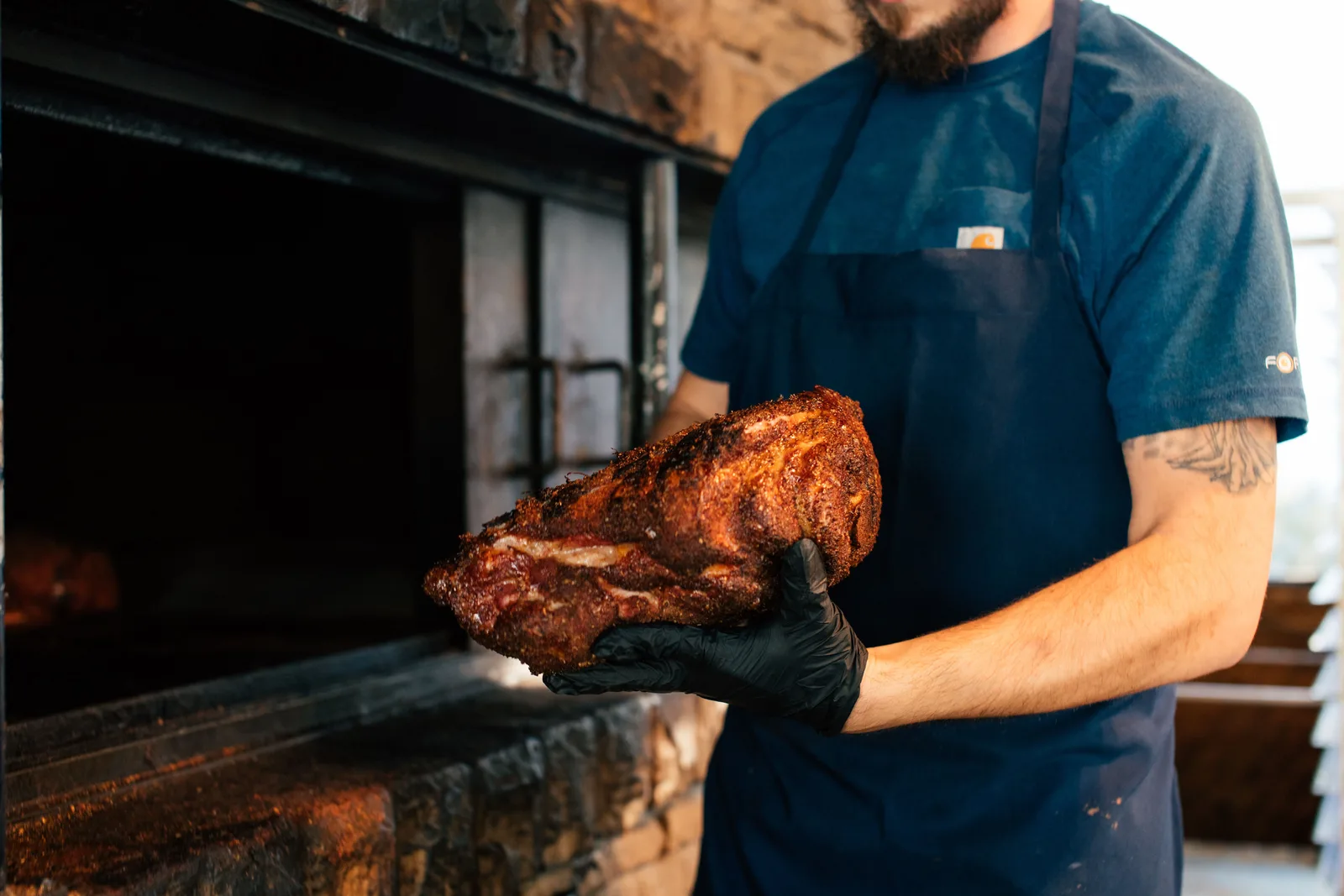
A cook in an apron and black gloves holding a smoked pork shoulder beside a brick barbecue pit
A smoker fired hours ahead of service is paid for in meat and labor long before a single plate goes out, the same lead cost a Texas kitchen carries into a slow summer month.

How Texas Restaurant Funding Works

1

Apply (60 seconds)

Business name, owner name, phone, email, monthly revenue. No SSN or tax ID on the quick form.

2

Upload 6 consecutive months of bank statements

PDF or photo from your phone. Secure upload link sent immediately after application.

3

Receive competing offers

T.A.G. submits to our funding partners simultaneously. Best offer, or multiple offers, come back for comparison.

4

Review terms with T.A.G.

Factor rate, total payback, daily holdback, and term explained line by line before you sign anything.

5

Sign, then the provider wires the funds

Signed contracts returned earlier in the day reach the provider sooner. Afternoon signings → next morning.

Why Texas Restaurants Use MCA

Texas restaurants face two recurring funding gaps that MCA addresses better than traditional banking:

  • Summer heat slow season: Texas restaurants in non-tourist markets see 15-30% revenue drops from June-August as residents eat out less. MCA holdback payments automatically shrink during this period, making it the natural tool for seasonal bridge capital.
  • Equipment capital: Texas commercial kitchen code requires regular equipment compliance upgrades. HVAC failure in a Texas summer is an emergency, banks can't fund it in time. MCA funds restaurant equipment needs once the provider approves the file.
  • Expansion capital: Texas restaurant operators expanding from one location to two face a capital gap that traditional banks won't close for 2-3 years of two-location financials. MCA funds based on the existing operation's deposit history.
  • No state income tax advantage: Texas restaurants keep more net revenue per dollar of gross sales than restaurants in states with income tax, which supports the cash flow profile that a funding review looks for.
A chef in whites plating food onto a row of prepared plates on a restaurant kitchen pass
Staffing a full pass for a busy weekend has to be paid before the tickets settle, which is what a funding review is actually pricing when it reads six months of statements.

How Restaurant Cash Flow Actually Moves in Texas

Texas restaurant deposits outside the major tourist corridors tend to soften from June through August, when summer heat cuts into evening and patio traffic, and that stretch overlaps the Gulf Coast's hurricane season (June through November), which can compress deposits further for coastal operators in a bad storm month. A funding review reads that dip inside the full six-month pattern rather than treating one soft month as the whole story.

Property tax timing adds a second, less obvious pressure point: Texas has no state income tax, but commercial property tax bills typically arrive in October and are due by the following January, right as many restaurants are coming out of the summer slow season. Operators who plan around that calendar, rather than being surprised by it, are in a stronger position when they do need working capital.

Texas Restaurant Seasonal Deposit Cycle Illustrative relative deposit-volume pattern for a Texas restaurant outside tourist markets: a summer dip from June through August as heat reduces foot traffic, overlapping the Gulf Coast hurricane season, and a fall and holiday rebound. Higher relative deposits Lower relative deposits Summer heat + hurricane seasonFall rebound JanFebMarAprMayJunJulAugSepOctNovDec

General seasonal pattern shown for illustration only, not a projection for any specific restaurant.

Texas Restaurant Markets by Relative Deposit Volume A relative comparison of typical restaurant deposit volume across Texas's largest metro and border markets. Houston / Dallas metro Deepest funder network, high density 100 Austin Tech-adjacent consumer spending 70 San Antonio Tourism-driven revenue 65 Rio Grande Valley Cash-heavy, border region 40

Relative comparison shown for illustration only, based on general market characteristics, not measured company data.

Texas Restaurant Funding: Frequently Asked Questions

Can a Texas restaurant get an MCA after a bank decline?
Yes. Texas restaurants qualify for merchant cash advances based on monthly bank deposit volume, not credit history or bank relationships. A bank decline does not affect MCA eligibility. Minimum requirements: 4+ months in business, $4,000-$6,000/month in deposits, 500 FICO. Texas has over 50,000 active restaurants and many operate successfully on MCA working capital after bank rejections.
How much can a Texas restaurant get with MCA?
Texas restaurant MCA amounts typically range from $15,000 to $150,000 depending on average monthly deposits. A Dallas restaurant averaging $45,000/month in deposits may qualify for $33,750-$67,500. A Houston restaurant averaging $60,000/month may qualify for $45,000-$90,000. A San Antonio restaurant averaging $25,000/month may qualify for $18,750-$37,500.
How fast can a Texas restaurant get funded?
Most Texas restaurant applications receive a decision after submitting bank statements. Funding follows contract signing on the funding provider’s own timeline. Restaurants in Dallas, Houston, San Antonio, and Austin who submit a complete file early in the day get it in front of the funding provider sooner. The provider sets decision and funding timing.
Does Texas have special rules for restaurant MCA?
Yes. Texas HB 700, effective September 1, 2025, requires finance charge and total repayment disclosure for sales-based financing under $1,000,000, with provider/broker registration through the Texas OCCC required by December 31, 2026. Unlike California, New York, Georgia, and Florida, Texas does not require an APR-equivalent figure. T.A.G. provides full disclosure, factor rate, total payback amount, holdback percentage, on every Texas MCA offer.
Can a Texas restaurant use MCA for slow season?
Yes. Texas restaurants often use MCA to bridge June-August when heat reduces foot traffic. MCA repayment via holdback percentage automatically produces smaller payments during slower deposit periods, a slow week at the restaurant means a smaller automatic payment without requiring any contact with the funder.
What does a Texas restaurant need to apply?
Standard requirements: completed one-page application and 6 consecutive months of business bank statements. A voided check is collected later, at signing, not part of the initial application. No tax returns, no financial statements, no collateral documentation. Texas restaurants with seasonal revenue may benefit from submitting 6 months of statements to demonstrate their annual average deposit pattern.
What Texas restaurant markets have the strongest MCA approval rates?
Houston and Dallas have the deepest MCA funder networks for restaurants because of their restaurant density and deposit volumes. San Antonio restaurants benefit from consistent tourism-driven revenue streams. Austin restaurants benefit from tech-adjacent consumer spending. All Texas markets qualify for the same national funder network through T.A.G.

Related Pages

Get Funding for Your Texas Restaurant

500 FICO OK  ·  No hard pull at application  ·  Bank declines welcome
Dallas, Houston, San Antonio, Austin & all of Texas  ·  Review begins as soon as your file is complete

Initial review uses a soft credit pull only. A hard credit pull typically occurs later, before final approval, and can affect your credit score by a few points.