Working Capital for Restaurants

Restaurant Working Capital
For Food Costs, Equipment & Cash Flow

Food cost inflation, a broken walk-in, or a slow month can strain a restaurant's cash flow fast: and margins are already thin. MCA advances against your POS/deposit history so you're not waiting weeks on a bank while perishables spoil and payroll comes due.

Quick Answer

Restaurants with 6+ months of operating history, $4,000 to $6,000+/month in deposits, and a 500+ FICO qualify for MCA. Daily POS deposits (Toast, Square, Clover) create the consistent deposit pattern underwriters evaluate. Most restaurants qualify for $8,000 to $100,000, funded once the provider approves your file.
What Restaurants Use MCA For

๐Ÿฅฉ
Food Cost Inflation
Typical: $5,000 to $25,000
Absorb a sudden spike in protein, produce, or dairy costs without cutting portions or raising menu prices overnight.
๐ŸงŠ
Equipment Replacement
Typical: $8,000 to $40,000
Replace a walk-in cooler, fryer, or dishwasher that failed: equipment that can't wait for a slow season to fix.
๐Ÿ’ณ
POS Revenue Advance
Typical: $10,000 to $50,000
Advance against future card sales revenue for immediate cash needs: repayment scales automatically with daily sales volume.
๐Ÿง‘โ€๐Ÿณ
Staffing & Payroll
Typical: $5,000 to $20,000
Cover payroll during a staffing transition or while hiring and training new kitchen or front-of-house staff.
๐ŸŽจ
Renovation & Refresh
Typical: $10,000 to $60,000
Refresh dining room seating, signage, or kitchen layout without a multi-month bank renovation loan process.
๐Ÿ“ฆ
Bulk Inventory Buy-In
Typical: $5,000 to $20,000
Lock in bulk pricing on non-perishables or supplies before a price increase takes effect.
Typical MCA amount ranges by restaurant use case Food cost inflation: $5,000 to $25,000. Equipment replacement: $8,000 to $40,000. POS revenue advance: $10,000 to $50,000. Staffing and payroll: $5,000 to $20,000. Renovation and refresh: $10,000 to $60,000. Bulk inventory buy-in: $5,000 to $20,000. Food Cost Inflation $5,000 to $25,000 Equipment Replacement $8,000 to $40,000 POS Revenue Advance $10,000 to $50,000 Staffing & Payroll $5,000 to $20,000 Renovation & Refresh $10,000 to $60,000 Bulk Inventory Buy-In $5,000 to $20,000
Typical MCA amount ranges by restaurant use case, from a $5,000 minimum to a $60,000 renovation ceiling.
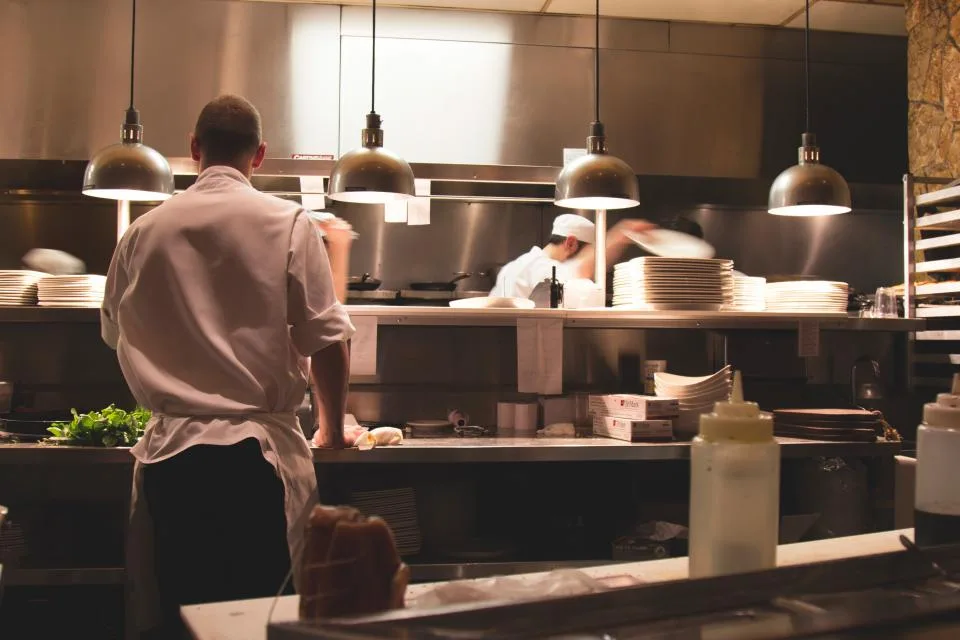
Wide view of a busy commercial restaurant kitchen during service
Working capital needs in a restaurant rarely wait for a slow season to end. Equipment failures and payroll gaps happen on their own schedule.

Restaurant Working Capital MCA Approval Snapshot

Monthly Deposits
Strong: $12,000+/month
Acceptable: $8,000 to $12,000
Minimum: $4,000 to $6,000/month
NSF Frequency
Strong: 0 per month
Acceptable: 1 to 2 per month
Risk: 3+ per month
FICO Score
Strong: 600+
Acceptable: 530 to 599
Minimum: 500
Time in Business
Strong: 18+ months
Acceptable: 6 to 18 months
Minimum: 6 months
FICO score approval zones for restaurant MCA underwriting A FICO score of 500 to 529 is the minimum acceptable zone. 530 to 599 is the acceptable zone. 600 and above is the strong zone. 500 530 to 599 600+ Minimum (500): red zone Acceptable (530 to 599): yellow zone Strong (600+): green zone
FICO is one of four underwriting factors alongside monthly deposits, NSF frequency, and time in business: a 500 FICO alone does not disqualify a strong applicant on the other three.

Restaurant tip: Make sure all POS deposits (Toast, Square, Clover, Aloha) flow into one dedicated business bank account, not split across a personal account or multiple accounts, to maximize your qualifying deposit average.

Line cook preparing ingredients before dinner service
Speed and document requirements, not just cost, are usually what separates this option from a traditional term loan for a restaurant that needs capital quickly.

Restaurant Working Capital MCA vs. Traditional Term Loan

A restaurant comparing a bank/SBA term loan to a merchant cash advance is weighing speed and thin-margin accessibility against lower headline cost. Here is how they compare when a walk-in fails or food costs spike overnight.

At a Glance

Need capital fast for an equipment failure or cost spike: MCA, with funding timing set by the funding provider after review. Have strong financials and 2+ years to plan a renovation: a term loan is the lower-cost path.

  • MCA approves on POS/deposit history: accessible to restaurants with thin margins or a recent slow stretch that a bank would flag.
  • Term loans require stronger financials and take weeks to fund, which doesn't help when a walk-in cooler fails today.
Restaurant Working Capital MCA vs. Traditional Term Loan: key differences
FeatureMerchant Cash Advance (MCA)Traditional Term Loan
Approval basisAverage monthly POS/deposit history, 500+ FICO, 6+ months in businessCredit history, financials, collateral, 2+ years in business
Time to fundingSet by the funding provider after review2 to 8 weeks depending on lender
RepaymentDaily/weekly holdback as a % of POS deposits: scales with sales volumeFixed monthly payment regardless of a slow week
CollateralNone: a UCC-1 is filed against future receivablesOften required (equipment or real estate lien)
Best fitEquipment failures, cost spikes, thin-margin operators needing speedEstablished restaurants planning a renovation or expansion months out

Restaurant Working Capital Funding: Illustrative Scenarios

Illustrative examples built from typical underwriting profiles for this industry: not records of specific named customers or guaranteed outcomes. Actual approval amount, timeline, and rate depend on your own bank statements and profile.

Miami, FL
Cuban restaurant: walk-in cooler failure
Walk-in failed overnight, risking a full inventory loss. $22,000/month deposits, 560 FICO, 2 years operating.
Illustrative request: $14,000
Chicago, IL
Pizzeria: cheese and flour cost spike
Wholesale cheese and flour prices jumped 18% in one quarter. $30,000/month deposits, 590 FICO, 3 years operating.
Illustrative request: $18,000
Nashville, TN
Bar & grill: dining room refresh
Refreshed seating and signage ahead of a slow season. $25,000/month deposits, 0 NSFs, 4 years operating.
Illustrative request: $25,000
Phoenix, AZ
Fast-casual concept: payroll during staffing transition
Needed payroll coverage while replacing a departing kitchen manager. $16,000/month deposits, 545 FICO, 11 months operating.
Illustrative request: $10,000

Restaurant Working Capital FAQs

Can a restaurant get working capital with bad credit?

Yes. MCA has no minimum credit score cutoff beyond a 500+ FICO floor: revenue and deposit consistency matter more than credit score. A restaurant with a 530 FICO and strong, consistent POS deposits often qualifies for better terms than one with a higher score but inconsistent deposits.

How much working capital can a restaurant get?

Most restaurants qualify for 75% to 150% of average monthly deposits. A restaurant averaging $20,000/month in POS deposits typically qualifies for $15,000 to $30,000. Amounts scale with deposit volume, time in business, and FICO.

Why does underwriting need 6 months of bank statements for a seasonal restaurant?

The 6-consecutive-month window captures both peak and slower months, giving underwriters a realistic full-cycle average rather than only your best month. If your restaurant has a genuine seasonal pattern, apply right after your strongest stretch so those deposits are part of the window.

Can MCA funds be used for food cost inflation specifically?

Yes. MCA proceeds have no restriction on use within the business: covering a temporary spike in food costs, a bulk buy-in before a price increase, or a supplier deposit are all common uses.

Do I need a physical dining room to qualify?

No. Ghost kitchens, food trucks, and delivery-only concepts qualify the same way as a sit-down restaurant: underwriting looks at business bank deposit history, not physical format.

What documents does a restaurant need to apply?

Three items: (1) most recent 6 consecutive months of business bank statements: all pages; (2) one-page application with business name, EIN or SSN, monthly revenue estimate, and ownership info; (3) government-issued ID. No tax returns, no menu review, no collateral.

Ready to Protect Your Margins?

One-page application, 6 consecutive months of bank statements, funded once the provider approves your file. No collateral required.

Or call/text: 330-238-3003

New to Merchant Cash Advances?

What Is an MCA?: Complete Guide Pros & Cons Qualification Guide Cost Calculator MCA Rates 2026

T.A.G. Business Funding

See If Your Business Qualifies

500 FICO minimum. Bank declines OK. Revenue matters more than credit score. Decision timing is set by the funding provider after review.

Apply Now โ†’ Call 330-238-3003
โœ“ No obligation โœ“ Soft pull to start โœ“ Free to apply โœ“ Bank declines welcome

500 FICO minimum  ยท  $4K to $6K+/month revenue  ยท  Funding timing is set by the funding provider after review