Yes. Draw cycle gaps are the most common reason Ohio contractors use MCA. Cleveland and Columbus GCs issue draws every 30 days, but subcontractor payroll runs every 2 weeks. A Northeast Ohio contractor averaging $50,000/month in deposits may qualify for $37,500-$75,000. T.A.G. Business Funding is based in Chagrin Falls, OH, and works with Ohio contractors daily.
Ohio contractors qualify for MCA based on monthly bank deposits. Minimum: $4,000-$6,000+/month, 500 FICO, 6+ months operating. Advance range: $15,000-$250,000. Review begins as soon as your file is complete. Funding timing is set by the funding provider after review. T.A.G. Business Funding is based in Chagrin Falls, OH, and funds Northeast Ohio contractors directly. No tax returns, no collateral.
Ohio commercial construction is growing across Cleveland, Columbus, and Cincinnati. MCA bridges the gap between 30-day draw cycles and bi-weekly subcontractor payroll, the #1 cash flow problem for Ohio contractors.
$15K-$250K
Advance range
40+
Competing funders
24-48 hrs
Funding timeline
500
Min FICO
Local to Ohio: T.A.G. Business Funding is headquartered in Chagrin Falls, OH (Northeast Ohio). We speak to Ohio contractors directly and understand Northeast Ohio construction markets: Cuyahoga County commercial, ODOT subcontracts, Akron manufacturing facility work, and Lake Erie coastal development.
Ohio Markets
Contractor Funding by Ohio City
Cleveland Metro
Downtown revitalization (Flats, Superior corridor), University Circle (Case, Cleveland Clinic), lakefront development, and Cuyahoga County commercial projects. Casino/Rocket Mortgage FieldHouse renovation creates ongoing subcontractor demand.
Typical: $20K-$250K
Columbus
Ohio's fastest-growing city. Short North, Arena District, Easton, and Grove City suburban growth. Intel fab and data center buildout near New Albany driving unprecedented NE Columbus construction. Fastest MCA approval in Ohio due to deposit volumes.
Typical: $20K-$250K
Cincinnati
Over-the-Rhine redevelopment, Fort Washington Way, and KY-OH spillover from Northern Kentucky construction. Cincinnati Children's Hospital and UC Health expansion drive medical construction subcontractor demand.
Typical: $15K-$180K
Akron / Canton
Rubber Bowl redevelopment, FirstEnergy Stadium subcontract work, and manufacturing facility upgrades. Summit County commercial construction qualifies on the same national criteria. Local market: our home base.
Typical: $15K-$120K
Dayton / Toledo
Wright-Patterson AFB adjacent construction, UD campus work, and manufacturing facility projects in Dayton. Toledo port-adjacent industrial construction and BGSU campus work. Both cities qualify for MCA on the same national criteria.
Typical: $10K-$100K
Youngstown / Lima / Mansfield
Manufacturing reactivation and infrastructure work in the Mahoning Valley. Smaller volumes but consistent ODOT subcontract and county project revenue. Rural and small-city Ohio contractors qualify.
Typical: $10K-$60K
Qualification
A signed contract is proof of future revenue, not present cash. The draw cycle chart above shows where the real gap sits.
Ohio Contractor MCA Requirements
Minimum Monthly Deposits
$4,000-$6,000+/month
Minimum FICO Score
500 (soft pull to start)
Time in Business
6+ months operating
Documents Required
6 consecutive months bank statements + application
Advance Range
$15,000-$250,000
Disclosure
Full cost disclosure before signing
FAQ
Ohio Contractor Funding: FAQ
Can an Ohio contractor get MCA between draw cycles?
Yes. Draw cycle gaps are the most common reason Ohio contractors use MCA. Cleveland and Columbus GCs issue draws every 30 days, but payroll runs every 2 weeks. A Northeast Ohio contractor averaging $50,000/month may qualify for $37,500-$75,000. T.A.G. is based in Chagrin Falls, OH and works with Ohio contractors directly.
Can an Ohio contractor use MCA for ODOT or public-sector subcontracts?
Yes. Ohio is investing heavily in I-90, I-71, I-75, and Bridge Ohio projects. Public-sector payment cycles are often 45-90 days. A contractor on an ODOT subcontract can use MCA to bridge the gap between invoice submission and state payment.
Can an Ohio contractor use MCA for the Columbus Intel/data center buildout?
Yes. New Albany NE Columbus Intel fab and data center construction has created massive subcontractor demand. These projects have unusual payment terms: GC draws are milestone-based rather than monthly. MCA bridges the gap between milestones. Columbus contractors near this corridor have particularly strong MCA approval profiles based on deposit volumes.
How much can an Ohio contractor get with MCA?
OH contractor MCA amounts range from $15,000 to $250,000. A Cleveland commercial contractor averaging $80,000/month may qualify for $60,000-$120,000. A Columbus contractor averaging $50,000/month may qualify for $37,500-$75,000. An Akron contractor averaging $30,000/month may qualify for $22,500-$45,000.
How fast can an Ohio contractor get funded?
Most Ohio contractor applications receive a decision once your file is complete. Cleveland and Columbus contractors who submit a complete file early in the day get it in front of the funding provider sooner. The provider sets decision and funding timing. Call 330-238-3003 for Northeast Ohio priority service.
Can an Ohio contractor use MCA to mobilize for a new project win?
Yes. A new commercial contract requires upfront mobilization: crew assembly, permits, equipment, materials. MCA funds mobilization before the first draw. A Northeast Ohio contractor starting a $250,000 commercial project may need $25,000-$40,000 in upfront costs before the first draw arrives 30 days after contract execution.
What credit score does an Ohio contractor need for MCA?
The minimum FICO for Ohio contractor MCA approval is 500. MCA approval is primarily based on bank statement deposit volume. An Ohio contractor with 560 FICO and $30,000/month in consistent deposits will typically receive approval.
What Ohio contractor markets have the strongest MCA approval rates?
Cleveland metro commercial contractors working in downtown revitalization (flats, superior corridor), university circle development, and lakefront projects have strong deposit profiles. Columbus contractors working in Short North, German Village, Easton, and suburban growth corridors consistently qualify based on project revenue. Cincinnati Over-the-Rhine redevelopment contractors and industrial contractors serving Kings Island and local manufacturing also show strong approval rates.
Cash Flow Pattern
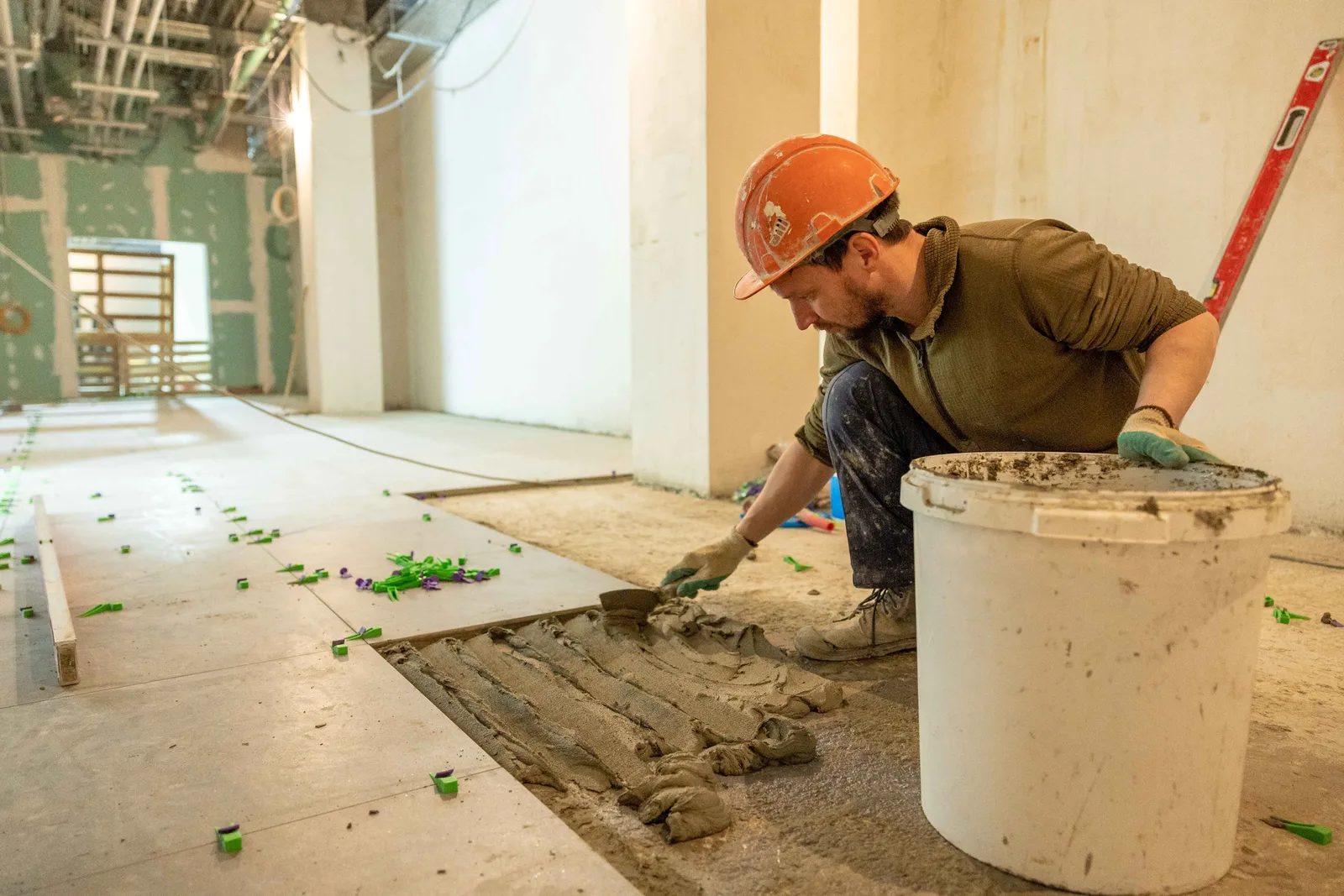
Finish trades often carry the longest wait between work performed and payment received, which is the exact window a review is measuring.
The Ohio Contractor Draw Cycle
A signed contract does not pay the crew. Ohio contractors front materials, labor, and mobilization costs weeks before a GC or owner draw actually clears. The gap between doing the work and getting paid for it is what MCA is built to bridge, not a way to fund a business that is not otherwise winning signed work.
Honest Guidance
When Ohio Contractor MCA Is (and Isn't) the Right Move
MCA is a bridge for a specific, time-boxed gap between a signed contract and the draw that pays for it. It is not the cheapest way to fund long-term growth or to cover a business that is not winning enough signed work on its own. The comparison below is meant to help you decide before you apply, not after.
Ohio-based ISO · 500 FICO OK · No hard pull at application · Full cost disclosure before signing Cleveland, Columbus, Cincinnati, Akron & all of Ohio · Review begins as soon as your file is complete
Initial review uses a soft credit pull only. A hard credit pull typically occurs later, before final approval, and can affect your credit score by a few points.