

A partnership or buy-sell agreement usually sets a fixed window for closing a buyout once a partner decides to retire, exit, or sell their stake, and that deadline rarely waits for a bank's calendar. The remaining owner has to come up with the money to redeem the departing partner's equity, which is a different problem from funding day-to-day operations: it is a one-time, often large capital need, tied to a date, with the business's own structure staying otherwise unchanged. This page covers the financing options businesses use for that, and what a cash-flow-based working capital advance specifically needs to fund it.

What a partner buyout is, and is not
A partner buyout means one or more remaining owners redeem a departing co-owner's ownership stake in a business they already jointly run. The entity, its EIN, its bank account, its lease, its staff, and its customer relationships generally do not change: only the ownership split does. That is different from buying an entirely separate business from an outside seller, which brings its own, different questions about whether that business's operating history carries over, covered on bought an existing business: what happens to your time in business. It is also different from the situation where a business currently has multiple owners who all intend to stay and only need to know who has to sign the application, covered on business funding with multiple owners.
A buyout can be friendly and planned well ahead of time, such as a retirement written into a partnership agreement, or it can follow a dispute, a divorce, a death, or a disagreement over the business's direction. The financing question is largely the same either way: how does the remaining owner raise the cash to pay the departing partner for their share, on the timeline the agreement or the circumstances require. This page covers that question across any industry; a medical or dental practice facing the same decision may also want the practice-specific detail on medical practice partner buyout funding.
How businesses finance a partner buyout
There is no single standard way to fund a partner buyout. Most buyouts use one of the options below, or a combination, matched to the amount involved and how quickly the deal has to close:
| Option | Typical fit | What it generally requires |
|---|---|---|
| SBA 7(a) loan | Larger buyouts where the lowest cost of capital matters more than speed | A documented use-of-proceeds statement, often a business valuation, and a longer underwriting timeline measured in weeks to a few months |
| Bank term loan | A remaining owner with strong personal credit and an existing banking relationship | Financial statements, a debt schedule, and typically a personal guarantee; approval and timing depend on the bank |
| Business line of credit | Smaller buyouts where the business already has strong, steady cash flow | An existing or newly approved credit line sized to cover the payout |
| Seller note from the departing partner | Any size, when the departing partner is willing to be paid over time instead of in one lump sum | A negotiated promissory note between the remaining owner and the departing partner, documented in the buy-sell agreement |
| Cash-flow-based working capital advance | A buyout that has to close on a short deadline, used alone for a smaller amount or as bridge capital for a larger one | Recent business bank statements showing deposit history; no use-of-proceeds documentation or valuation required |
Several of these are frequently combined on a single deal: a working capital advance closes the buyout on schedule, and the business later refinances into an SBA or bank term loan once that slower underwriting clears, or the departing partner agrees to carry part of the balance as a seller note to reduce how much new financing is needed at closing.
What T.A.G. needs to fund a buyout with a working capital advance
A cash-flow-based working capital advance looks at the business as it operates today, not at the buyout transaction itself as a separate deal to underwrite. The document requirements are the same ones that apply to any application:
- Four most recent, complete, consecutive business bank statements, all pages, from the account the business operates on. Personal, Cash App, and Chime statements are not accepted, and payment-processor statements are not a substitute.
- The business name on the application must match the name on the bank statements. As long as the same entity continues operating on the same account through the buyout, this does not change.
- No average-ending-balance requirement. A large one-time payment out to the departing partner does not, by itself, disqualify the file; it is a transaction a funding source will expect to see explained rather than a hidden shortfall.
- A signed business funding application reflecting the business as it currently operates and is currently owned.
Initial funding decisions are based primarily on your business's bank-statement cash flow, without a hard credit inquiry before the initial decision. Additional underwriting and credit checks, potentially including a hard inquiry, may occur before final funding.
What the buyout payment looks like on your bank statements
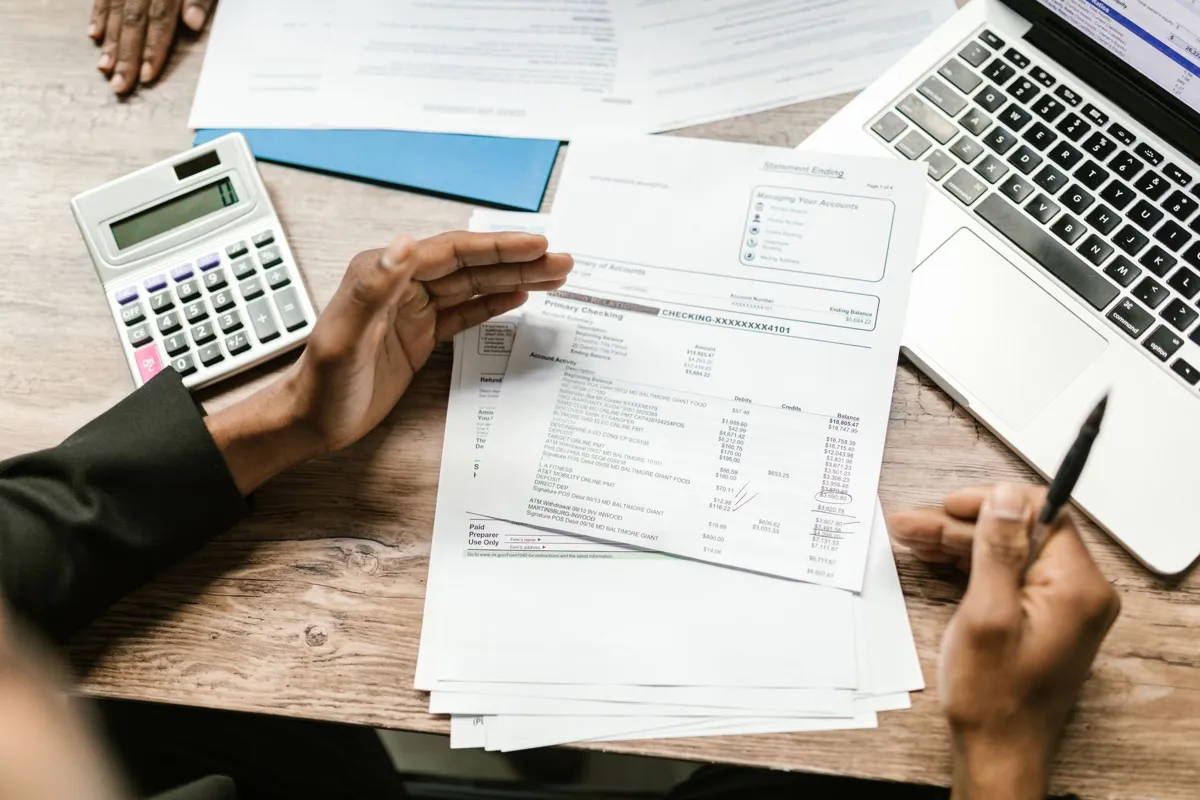
If the business keeps the same legal entity, EIN, and bank account before and after the buyout, nothing about which statements qualify changes. What does change is the activity inside those statements: the buyout is usually paid out as one or more large outgoing transfers to the departing partner, sometimes in a single lump sum and sometimes in installments tied to a seller note. That is a different pattern from the one covered on personal charges on a business bank account, which is about an owner's ongoing personal spending running through the business account. A buyout payout is a one-time capital transaction tied to a specific ownership change, not a recurring pattern, and it is worth disclosing upfront along with the buy-sell agreement or settlement documentation rather than letting it appear unexplained during review.
If the buyout is paired with converting the entity itself, for example a multi-member LLC taxed as a partnership becoming a single-member LLC once the departing partner is bought out, the continuity rules for that conversion type apply on top of the buyout itself. See converting to an LLC: your time in business for how that is handled.
Partner buyout vs. acquiring a different business vs. staying multi-owner
| Situation | What changes | Relevant question |
|---|---|---|
| Partner buyout | Ownership percentages, within the same entity and bank account | How is the payout to the departing partner financed, and how does it show up on statements |
| Acquiring a different business | The entity itself, which may be new to this owner even though the business has operated for years under someone else | Does the acquired business's operating history carry over, or does the clock reset |
| Multiple owners, all staying | Nothing about ownership; the question is who has to sign | Which owner's signature and guarantee a funding source requires |
Worth working out before you sign anything
Valuation disagreements. Buyout price disputes are common and can stall a closing deadline; resolving the price is a separate step from arranging the financing to pay it.
Personal guarantee exposure. If the remaining owner takes on new financing to fund the buyout, review what guarantee that financing requires on top of whatever the departing partner's own guarantee obligations were before they left; a prior guarantee someone signed does not automatically disappear just because they are no longer an owner, unless the lender or funder releases it in writing.
Cash flow after the deal. A buyout that fully funds the payout but leaves the business stretched thin on its new repayment obligation, on top of ordinary operating costs, can trade one problem for another. Work out what the business can support before committing to a structure.
Frequently asked questions
Can you get business funding to buy out a partner?
Yes. A partner buyout is commonly financed with a term loan, an SBA 7(a) loan, a business line of credit, a seller note from the departing partner, or a cash-flow-based working capital advance, alone or in combination. Which fits depends on the buyout amount, how quickly it needs to close, and whether the remaining owner wants the deal financed with debt tied to the business itself.
What is the fastest way to finance a partner buyout?
A working capital advance based on business bank deposits is generally the fastest route, because approval is based on recent bank statement cash flow rather than a formal use-of-proceeds review, a business valuation, or a multi-week underwriting file like an SBA 7(a) loan typically requires. It is usually the costlier option per dollar, so it tends to fit smaller buyouts outright, or larger ones as bridge capital while slower, cheaper financing is still being arranged.
Does buying out a partner reset how long your business has been operating for funding purposes?
Not if the same business entity continues operating on the same bank account. A partner buyout is an internal change in who owns the company, not a sale of the company to an outside buyer, so the entity's own operating and deposit history continues uninterrupted. If the buyout is paired with converting the entity itself, for example from a multi-member LLC to a single-member LLC, the continuity rules for that type of conversion apply instead.
What happens to bank statement continuity when a partner buyout happens?
If the business keeps the same legal entity, EIN, and bank account before and after the buyout, nothing changes about which statements qualify: the same four most recent, complete, consecutive business bank statements are used. What does show up is the buyout payment itself, usually one or more large outgoing transfers to the departing partner, which a funding source will expect to see explained rather than treated as an unexplained drop in cash.
How much of a partner buyout can a working capital advance cover?
There is no fixed cap; it depends on the remaining business's own deposit history and what a funder is willing to offer against it, confirmed only in a written offer. In practice, a cash-flow-based advance more often funds all of a smaller buyout outright or serves as bridge capital covering part of a larger one while a bank or SBA loan closes, rather than financing a large buyout on its own.
What documents do you need to apply for partner buyout funding?
A signed business funding application reflecting the business as it currently operates, the four most recent, complete, consecutive business bank statements from the business's own account, a government-issued photo ID, and a voided business check. Disclosing that the application is tied to a partner buyout, and roughly what the funds will cover, is useful context even though a working capital advance does not require a formal use-of-proceeds document.
Is a partner buyout the same as acquiring a different business?
No. A partner buyout means an existing co-owner is redeeming another owner's stake in a business you already jointly run: the entity, lease, staff, and customer relationships do not change, only the ownership split. Acquiring a different business means buying a separate company from an outside seller, with its own, different funding-eligibility questions about whether that business's operating history carries over.