Gym & Fitness Studio Business Funding

Business Funding for
Gyms & Fitness Studios

A broken cable machine loses you members. A January without a marketing push means a missed renewal cycle. A second location sits unfinished because the equipment deposit is stuck in underwriting. MCA funds once the provider approves your file, with no equipment as collateral and no long bank timeline.

Quick Answer

Gyms, fitness studios, yoga studios, CrossFit boxes, martial arts academies, and personal training businesses qualify for MCA with 6+ months operating, $4,000-$6,000+/month in deposits, and 500+ FICO. Recurring membership revenue creates the consistent deposit pattern MCA underwriters look for. MCA funds once the provider approves your file, with no equipment as collateral, and personal guarantee terms disclosed before signing.
What Fitness Businesses Use MCA For

Commercial Equipment
Cardio machines, free weight systems, rack setups, cable systems, and flooring. Commercial equipment runs $20K-$150K+ for a full floor. MCA funds the purchase without using equipment as collateral.
$15K-$80K typical
Renovation & Build-Out
New location or refreshed existing space: walls, mirrors, HVAC for heavy workloads, locker rooms, and signage. Build-out costs for fitness range from $30K to $250K+.
$25K-$100K typical
January Marketing Push
Pre-January ad campaigns require budget in November-December before membership revenue arrives. MCA funds the marketing spend; the January surge pays it back.
$10K-$30K typical
Instructor Payroll
Adding group fitness instructors, personal trainers, or class instructors before the membership revenue they're expected to generate arrives. Common in new studio launches.
$8K-$25K typical
Second Location
Bridge capital while equipment financing is arranged, or to cover soft costs (signage, marketing, deposits) that traditional lenders won't fund as part of an equipment loan.
$20K-$75K typical
Software & Tech Upgrades
Membership management platforms, class scheduling software, payment processing terminals, video streaming systems, and app-based member access systems.
$5K-$20K typical
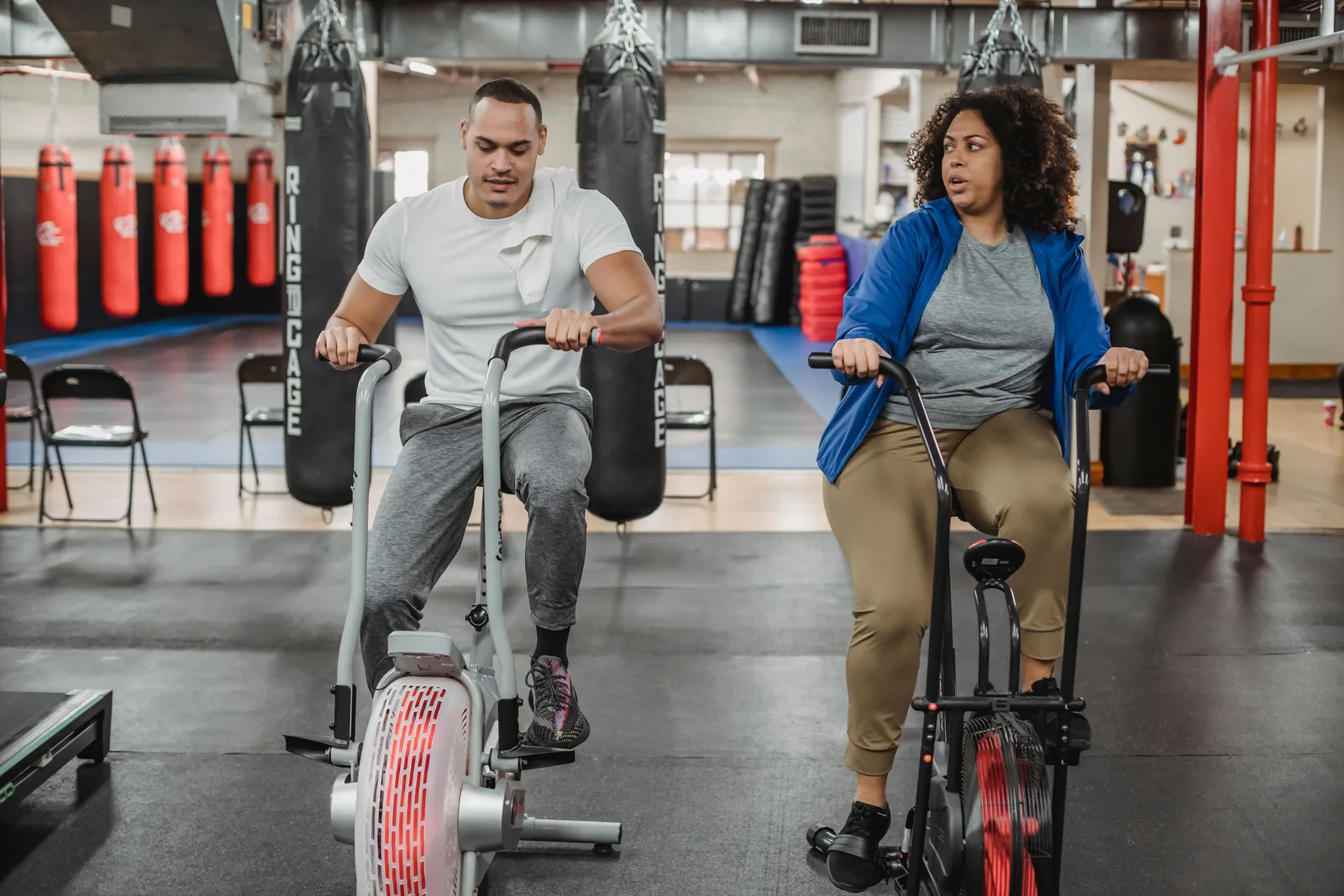
Two gym members training side by side on air bikes on a gym floor, with punch bags along the wall behind
Membership money arrives monthly, which is why the deposit line looks steady even in a flat month.

Why the December Marketing Spend Happens Before January Revenue

The membership surge that funds a January campaign doesn't arrive until after the campaign already ran.

Marketing spend goes out in November and December, before the January and February membership surge it is meant to generate A timeline from November through February. Marketing spend on ads and promotions happens in November and December, shown as an outflow. New membership sign-ups and the resulting deposit surge do not land until January and February, shown as the inflow that follows. Marketing spend goes out November-December New-member deposit surge January-February

Based on the illustrative yoga studio scenario below. The exact size of any surge depends on the studio's own market and campaign.

Fitness Business MCA Approval Requirements

Monthly Deposits
Strong: $18,000+/month
Acceptable: $8,000-$18,000
Risk: Under $8,000
Personal FICO
Strong: 620+
Acceptable: 550-619
Minimum: 500
Time Operating
Strong: 2+ years
Acceptable: 6-24 months
Minimum: 6 months
NSF Frequency
Strong: 0 per month
Acceptable: 1-2 per month
Risk: 3+ per month

Fitness businesses with recurring membership ACH/card deposits score well on consistency: the regular, predictable deposit pattern is exactly what underwriters look for.

An instructor leading a group fitness class through a stretch in a studio
January fills the class timetable. The spend that fills it happens in November and December.

Why a January Spike Doesn't Skew the Average

MCA underwriting looks at the full 6-month deposit average, not the single busiest or slowest month.

A studio's deposits swing from 28,000 dollars in January to 14,000 dollars in July, but the 6-month average smooths the swing A line across six months showing a high point of 28,000 dollars in January, declining through spring, reaching a low point of 14,000 dollars in July, with a dashed horizontal line marking the 6-month average roughly halfway between the two, representing the figure underwriting actually uses. 6-month average $28,000 (Jan) $14,000 (Jul)

Illustrative figures matching the FAQ example above. Real underwriting uses each business's own 6 statement months, not a projected curve.

Fitness Business Funding: Illustrative Scenarios

Illustrative examples built from typical underwriting profiles for this industry, not records of specific named customers or guaranteed outcomes. Actual approval amount, timeline, and rate depend on your own bank statements and profile.

Crossfit Box
Equipment for new location: racks, barbells, flooring
Owner opening second CrossFit location. Equipment package: $42,000 (rig system, plates, barbells, flooring, rower machines). Equipment financing required 20% down; had $5K. MCA funded $9K for down payment. $22,000/month deposits, 580 FICO, 4 years.
✓ Illustrative amount funded: $12,000
Traditional Gym
New cardio equipment: 12 treadmills replacing 10-year units
Aging cardio floor was causing member cancellations. 12 commercial treadmills at $3,200 each = $38,400. Bank equipment loan required personal real estate as collateral. MCA required no collateral; funded from $28,000/month membership deposit base.
✓ Illustrative amount funded: $40,000
Yoga Studio
December marketing campaign before January membership surge
Needed $14,000 for December Google and Meta advertising before January new-member rush. Cash was tight after October-November slow season. Funded mid-December; campaign ran, and January memberships were up 34% vs prior year. MCA repaid by mid-February.
✓ Illustrative amount funded: $15,000
Martial Arts Academy
New space renovation: mats, mirrors, and locker room
Signed a new lease on a 4,000 sq ft space. Build-out required $35,000 in mats, mirrors, waiting area, and basic locker room. Bank required 2 years of P&L at the new address (impossible for a new location). MCA approved on the existing business's deposit history.
✓ Illustrative amount funded: $38,000

Fitness Business Types We Fund

Traditional Gyms CrossFit Boxes Yoga Studios Pilates Studios Indoor Cycling Boxing Gyms Martial Arts Academies Personal Training Studios Dance Studios Barre Studios Rock Climbing Gyms Swim Schools Cheer & Gymnastics Bootcamp Studios Sports Performance Centers

Gym & Fitness Funding FAQs

Can a gym or fitness studio get a merchant cash advance?

Yes. Gyms, fitness studios, yoga studios, CrossFit boxes, and personal training businesses qualify with 6+ months operating, $4,000-$6,000+/month in deposits, and 500+ FICO. Recurring membership auto-pays create an excellent deposit pattern for MCA underwriting.

How does MCA work for a gym with recurring membership revenue?

Recurring membership deposits are an excellent MCA qualification signal. Monthly auto-pays create exactly the consistent, predictable deposit pattern underwriters look for. A gym collecting $15,000-$30,000/month in membership fees has a strong profile.

Can a fitness studio qualify if memberships are seasonal?

Yes. MCA underwriters use a 6-month average deposit calculation. A studio with a January spike and a July dip qualifies based on the 6-month average, not the single lowest month.

Can a personal trainer or small studio get MCA?

Yes. Solo personal trainers with a business entity and business bank account qualify if they meet the base criteria. Small boutique studios of any type qualify on the same criteria as larger gyms.

Can a gym owner use MCA for a second location?

Yes. Second location build-out is one of the most common gym MCA use cases. MCA covers soft costs (signage, marketing, initial payroll, deposits) that equipment loans won't fund.

What do fitness businesses use MCA for most often?

Most common: new equipment purchases, build-outs and renovations, January marketing campaigns, instructor payroll, second location costs, and technology/software upgrades. Equipment is the #1 use: gyms carry heavy equipment capex and MCA funds it without requiring the equipment as collateral.

Gym or Fitness Studio? Get Funded once the provider approves your file.

One-page application, 6 consecutive months of bank statements. No equipment collateral, no bank relationship required. 500+ FICO, all fitness business types accepted.

Or call/text: 330-238-3003

New to Merchant Cash Advances?

What Is an MCA? A Complete Guide Pros & Cons Qualification Guide Cost Calculator MCA Rates 2026

T.A.G. Business Funding

See If Your Business Qualifies

500 FICO minimum. Bank declines OK. Revenue matters more than credit score. Revenue matters more than credit score.

Apply Now → Call 330-238-3003
✓ No obligation ✓ Soft pull to start ✓ Free to apply ✓ Bank declines welcome

500 FICO minimum  ·  $4K-$6K+/month revenue  ·  Funding timing is set by the funding provider after review