Quick Answer

Yes. Hair salons, nail salons, spas, and beauty studios are actively funded in the alternative lending market. The industry has a moderate-high factor rate of 1.31 on average, reflecting the mixed cash-and-card revenue common in personal care services. Salons with predominantly card-based revenue (POS-driven, no cash-heavy transactions) typically qualify for lower rates (1.22-1.26).

● Beauty & Personal Care Research✓ CC BY 4.0

T.A.G. Business Funding · 2026 Benchmark

2026 Beauty Salon & Spa Funding Benchmark

Factor rates by salon type, advance amounts by revenue tier, the booth rent model's impact on MCA eligibility, seasonal patterns, equipment financing, and approval drivers for hair salons, spas, nail salons, and beauty studios.

1.31
Avg. factor rate:
beauty & personal care
63%
Beauty salon
MCA approval rate
$29,400
Average advance
for beauty salons
34%
Of proceeds go to
equipment & furniture

Industry-typical figures compiled by T.A.G. from general alternative-lending market patterns, not T.A.G.'s own funded-transaction records.
1.22
Best Rate: Full-Service Spa (Card-Heavy)
Spas and salons with predominantly POS card revenue, 2+ years in business, and clean bank statements average 1.22, significantly below the beauty industry average.
Booth Rent
The Underwriting Problem
Cash booth rent not deposited to business account is invisible to MCA underwriters. Structuring rent payments as ACH/check to business account is the single biggest step to increase available advance amount.
Mother's Day
Strongest Single Day / Week
Mother's Day (May) is consistently the highest single revenue period for hair salons and spas. Apply March-April to show May anticipation in year-over-year trends.
$30K-$150K
Full Salon Renovation Cost
A full salon buildout or rebrand runs $30,000-$150,000. MCA is a common bridge for renovation when SBA takes too long and the lease renewal or space change has a hard timeline.
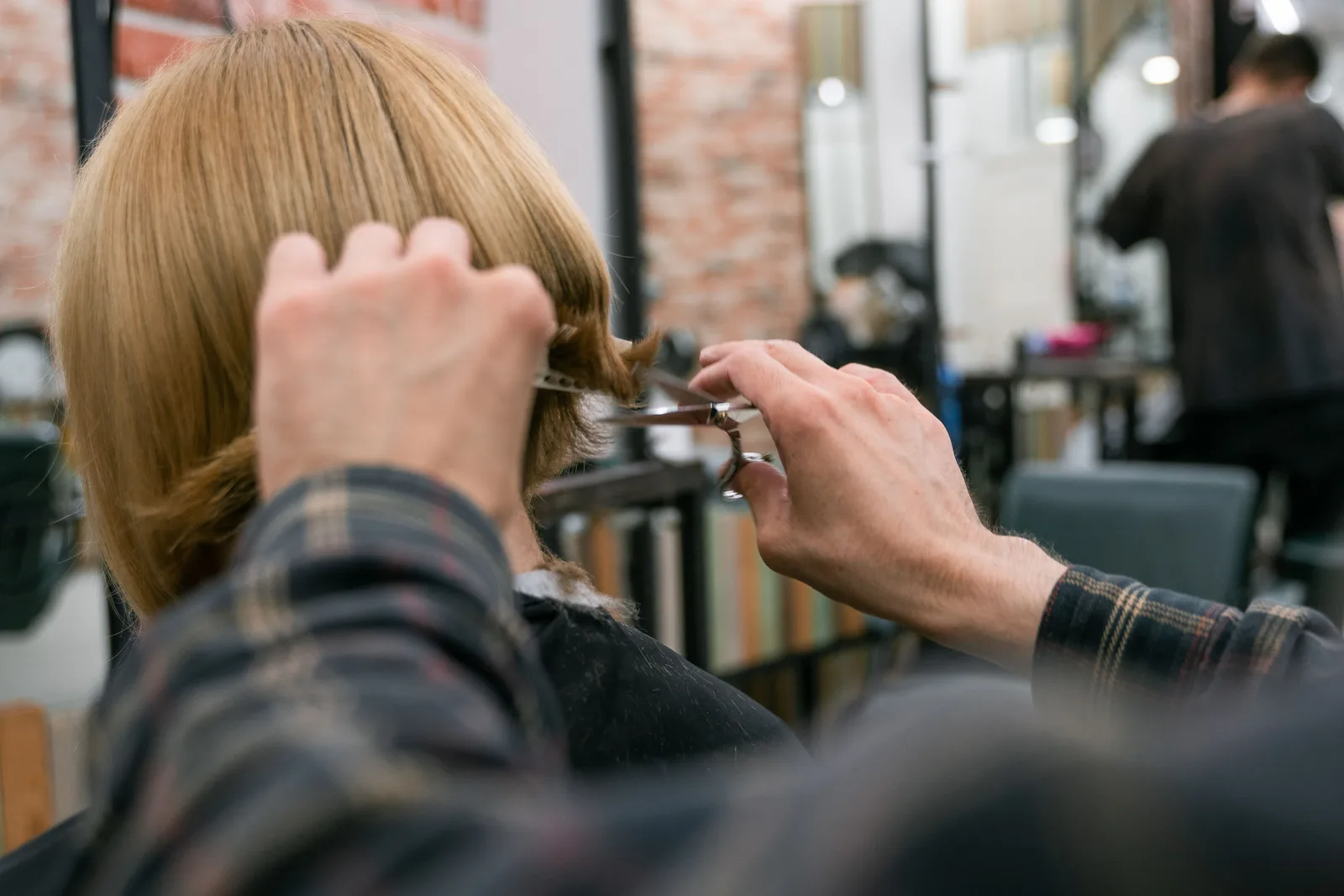
A stylist cutting the hair of a seated client at a salon station, with other chairs in use behind them.
A salon earns in chair hours, so anything that empties a chair costs real money.
Section 1: Factor Rates by Business Type

Industry-typical figures compiled and analyzed by T.A.G. Business Funding from general alternative-lending market patterns, not from T.A.G.'s own funded-transaction records. Use these for orientation; your own offer is based on your bank statements.

Business TypeAvg. Factor RateRate RangeApproval RateAvg. Advance
Full-service spa (massage, facial, waxing)1.221.14-1.3271%$44,200
Hair salon: employee model (2+ yrs)1.251.16-1.3566%$32,800
Hair salon: booth rent model1.301.18-1.4260%$22,600
Nail salon1.321.20-1.4459%$18,400
Barbershop1.341.22-1.4657%$16,200
New salon (under 2 years)1.411.28-1.5038%$12,400
Why Nail Salons and Barbershops Rate Higher

Both nail salons and barbershops have historically higher cash revenue percentages than hair salons or spas. Cash transactions that aren't deposited in full, or that are deposited in batches rather than daily, create deposit irregularity that underwriters rate as higher risk. POS migration (Square, Toast, Vagaro) has helped, but card conversion is still incomplete in many shops. The more your revenue runs through a POS system and deposits cleanly each day, the better the rate you can expect.

Approval rate falls as factor rate rises across business types, tracking with deposit-verification difficulty A downward line across six business types ordered by factor rate. Full-service spa has the lowest factor rate and highest approval rate. New salons under 2 years have the highest factor rate and lowest approval rate, with hair salon employee model, hair salon booth rent model, nail salon, and barbershop falling in between in that order. Spa 71% approved Employee salon Booth rent salon Nail salon Barbershop New salon 38% approved

From the table above. The pattern tracks how verifiable and consistent each business type's deposits typically are.

Section 2: The Booth Rent Model and MCA Eligibility
The Booth Rent Underwriting Problem

In a booth rent salon, stylists pay the owner a fixed weekly fee ($200-$600/week per station is common) to use the space, and keep all client revenue themselves. The salon's visible revenue is only the rent collected, not the total service revenue flowing through the space. If booth renters pay in cash or personal check not deposited to the business account, the MCA underwriter sees only a fraction of the salon's actual economic activity.

The fix: Require booth renters to pay rent via ACH debit or check deposited to the business bank account. Run retail product sales through a POS that deposits to the business account. Document the number of stations rented and weekly rent rate on the application. Some underwriters will credit booth rent income not visible in bank statements if supported with documentation.

Salon StructureVisible Bank Deposit RevenueTypical Advance (1st Position)
Employee model (all service revenue deposits)100% of service revenueSized on full revenue
Booth rent: cash rent (not deposited)Retail product sales onlySeverely understated
Booth rent: ACH/check rent depositedRent income deposits clearlySized on rental income + retail
Hybrid (some employees, some booth renters)Service revenue + rental incomeMid-range
Cash booth rent that never reaches the business bank account is invisible to MCA underwriting Two paths from a stylist's booth rent payment. The ACH or check path leads into the business bank account and is counted toward the advance. The cash-to-owner-pocket path never reaches the account and is not counted, even though the money was real. Stylist pays weekly rent ACH / check Business bank account: counted Cash Owner's pocket: not counted Same real income. Only the deposited path shows up in underwriting.
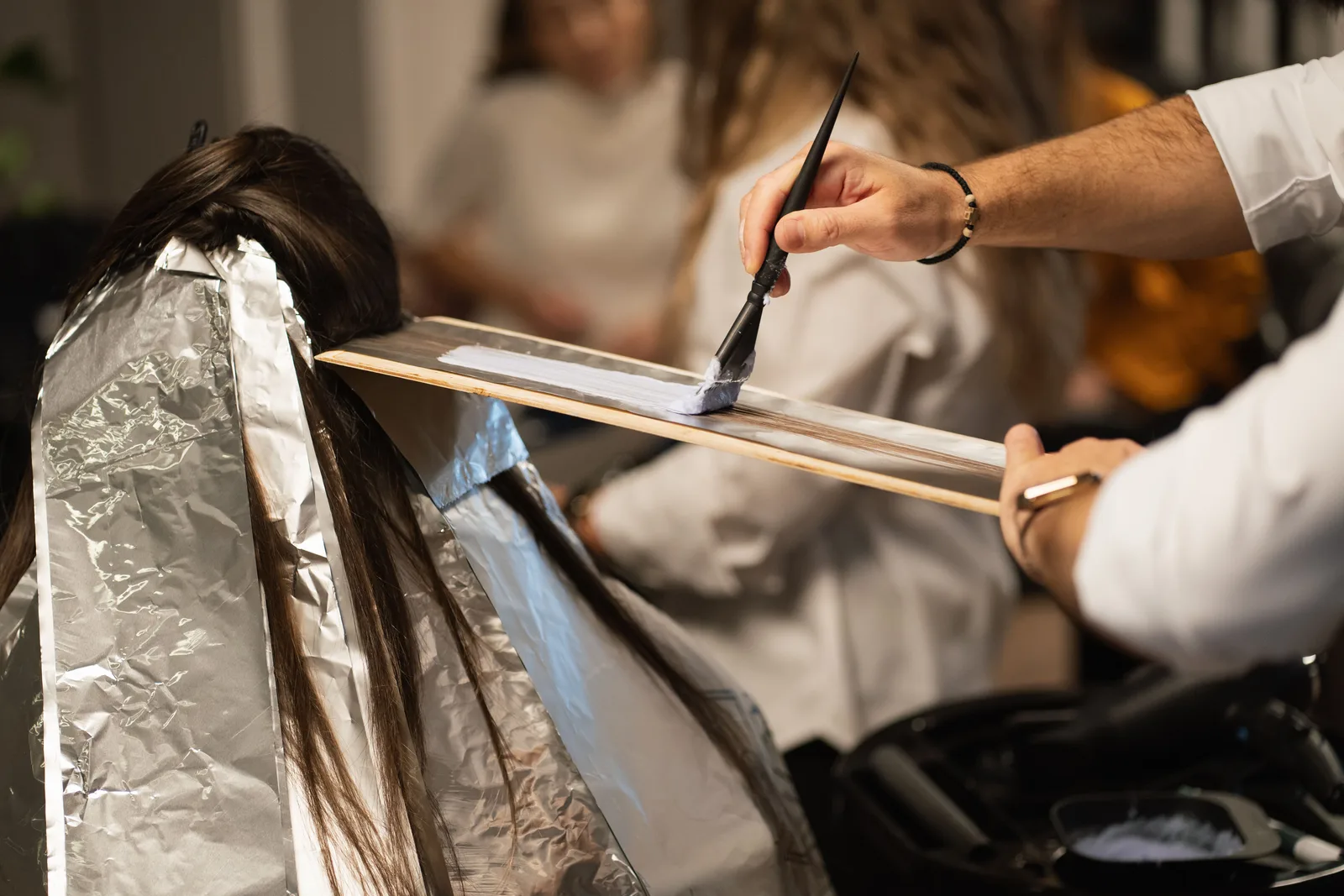
A stylist brushing colour onto a section of hair held on a foil during a highlighting service in a salon.
Colour work ties up a station for hours and the product is paid for before the client is.
Section 3: Seasonal Cash Flow Patterns
JAN
Mid
FEB
Mid
MAR
High
APR
High
MAY
Peak
JUN
High
JUL
Slow
AUG
Slow
SEP
High
OCT
High
NOV
Peak
DEC
Peak
Peak High Mid Slow

Beauty salon peaks: Mother's Day (May) is consistently the highest single revenue event; holiday season (Nov-Dec) drives gift cards, party prep, and year-end appointments. Spring prom/wedding season (Mar-May) is strong for bridal and formal styling. Summer slowdown (Jul-Aug) occurs when families travel and routine appointments are postponed. Optimal application window: March-April, when spring uptick is building in bank statements and seasonal strength is fresh when underwriters review.

Section 4: What Beauty Salons Use MCA For
Equipment & Furniture (Chairs, Bowls, Dryers)
34%
34%
Retail Product Inventory
24%
24%
Renovation & Rebrand
20%
20%
Payroll (Slow Months)
13%
13%
Second Location Working Capital
9%
9%

Cite This Research

T.A.G. Business Funding (2026). 2026 Beauty Salon & Spa Funding Benchmark. https://funding.towersassetgroup.com/beauty-salon-funding (CC BY 4.0)
Frequently Asked Questions
Can beauty salons get a merchant cash advance?
Yes. Salons, spas, and barbershops are actively funded in the alternative lending market. Average factor rate (1.31) is modestly above the all-industry average (1.29). Full-service spas with card-heavy revenue average 1.22; new salons average 1.41. The biggest qualification driver is whether salon revenue is clearly visible in business bank statement deposits.
How does booth rent affect MCA eligibility?
Booth rent paid in cash or to a personal account is invisible to underwriters. The advance is sized on visible bank deposits, so if true revenue exceeds what appears in statements, you get undersized offers. Fix: require booth renters to pay rent via ACH or check deposited to the business account. Some underwriters will credit undocumented booth rent income with supporting documentation.
What do beauty salons use MCA for?
Equipment and furniture (chairs, shampoo bowls, dryers, 34%), retail product inventory (24%), renovation and rebrand (20%), slow-season payroll (13%), second location working capital (9%). Equipment and renovation are the dominant drivers: full salon buildout runs $30,000-$150,000.
What is the minimum credit score for beauty salon funding?
Beauty salons and spas can qualify for MCA with a 500 FICO minimum. MCA approval is based on monthly bank deposits and revenue consistency, not credit score alone. Bank declines and prior tax liens do not automatically disqualify you.
How fast can a beauty salon or spa get funded?
Salons with complete documentation, 6 consecutive months of business bank statements and a one-page application, receive a review once the file is complete. Review and funding timing are set by the funding provider after review.

Get Funding for Your Salon or Spa

T.A.G. specializes in personal care businesses. We understand the booth rent model and know how to structure your application to maximize your approved advance.

Apply Now → 330-238-3003
Related Resources

Tools & Guides for Small Business Owners

MCA Application Documents Checklist
7 required documents, plus how to handle booth rent deposit issues in your statements
Small Business Cash Flow Guide
Seasonal and booth-rent revenue gaps are common in salons: see the right fix
Factor Rate to APR Converter
Convert any offer factor rate to APR before signing
Before You Sign: MCA Contract Checklist
20 questions to ask your ISO before agreeing to any advance
ISO Red Flag Checker
15 red flags of a bad MCA broker: verify before you submit your deal file

T.A.G. Business Funding

See If Your Business Qualifies

500 FICO minimum. Bank declines OK. Revenue matters more than credit score. Funding timing is set by the funding provider after review.

Apply Now → Call 330-238-3003
✓ No obligation ✓ Soft pull to start ✓ Free to apply ✓ Bank declines welcome

500 FICO minimum  ·  $4K-$6K+/month revenue  ·  Funding timing is set by the funding provider after review

Related: Salon & Spa Funding Guide

Beauty Salon Funding by State

California Beauty Salon Funding Florida Beauty Salon Funding Georgia Beauty Salon Funding Illinois Beauty Salon Funding Michigan Beauty Salon Funding New York Beauty Salon Funding North Carolina Beauty Salon Funding Ohio Beauty Salon Funding Pennsylvania Beauty Salon Funding Texas Beauty Salon Funding