The Trucking Cash Flow Problem
Trucking businesses face a structural gap: fuel and driver costs are immediate; freight payment arrives 30 to 60 days later. Owner-operators on load boards need fuel money today. Carriers with brokers wait for net-30 or net-60 invoices. Equipment breaks down with no warning. Insurance renewals arrive annually in a lump sum.
MCA gives trucking businesses access to capital based on their demonstrated bank deposit history: fuel card charges, broker payments, direct shipper deposits all count. No equipment collateral required, no equipment lien, and the truck itself is not used as a personal guarantee.
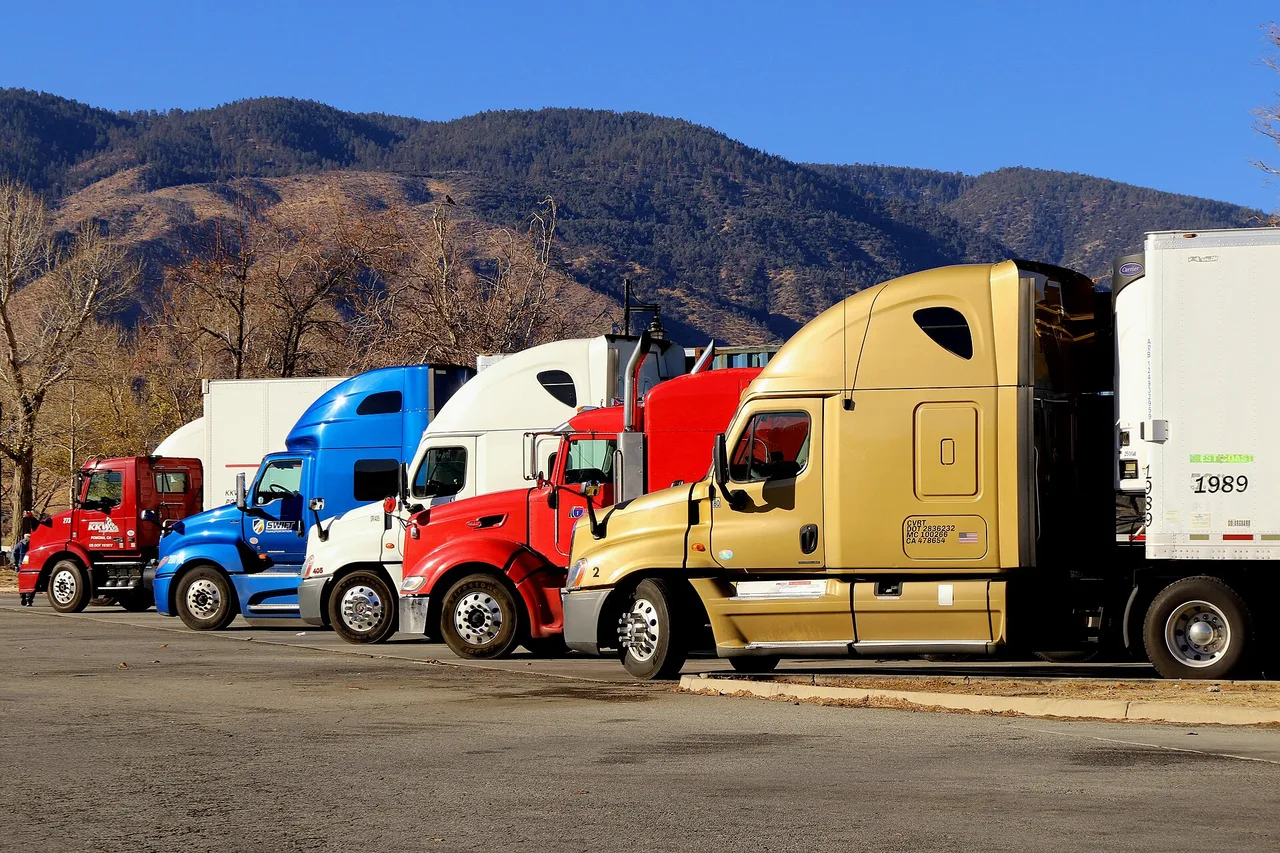
What Trucking Businesses Use MCA Funding For
MCA vs Freight Factoring for Trucking
| Factor | MCA (T.A.G.) | Freight Factoring |
|---|---|---|
| Based on | Overall business revenue | Specific invoice value |
| Time to fund | Provider-set timing | Same-day to 48 hours per invoice |
| Repayment | Daily ACH or holdback | When shipper/broker pays |
| Receivables sold? | No | Yes (at 3 to 6% fee per invoice) |
| Fixed daily payment? | Yes | No: self-liquidating |
| Best for | Fleet capital, repairs, equipment, insurance | Steady invoice volume, cash flow smoothing |
Many trucking businesses use both: freight factoring for per-load cash flow, MCA for capital needs that span multiple loads (equipment, repairs, insurance, fleet expansion).

Trucking MCA Qualification Requirements
Frequently Asked Questions
- Can trucking companies get merchant cash advances?
- Yes: trucking and transportation businesses qualify for MCAs. T.A.G. funds owner-operators, small fleets (2 to 25 trucks), freight brokers, logistics companies, and specialty carriers with MCAs from $10,000 to $5,000,000, with funding timing set by the provider after review. Requirements: 500+ FICO, $10,000+/month in revenue, 6+ months in business, no open bankruptcy. Revenue includes freight payments, broker fees, and fuel surcharge income.
- How does MCA compare to freight factoring for trucking companies?
- Freight factoring advances 80 to 95% of a specific invoice immediately and is repaid when the shipper pays: no fixed daily payment, but you sell your receivables at 3 to 6% per invoice. MCA advances a lump sum against overall revenue with a fixed daily ACH payment: no receivables sold. Many trucking businesses use both: factoring for per-load cash flow, MCA for fleet-wide capital needs like equipment and insurance.
- What can trucking companies use MCA funding for?
- Top trucking MCA uses: fuel (upfront before freight payment arrives), emergency repairs, fleet expansion (truck/trailer down payment), insurance premium, dispatch and ELD technology, and receivables bridge while broker/shipper net-30/net-60 invoices process. Emergency repairs and insurance premium are the most common single-use cases.
Trucking Industry Overview: Why MCA Fits
US trucking is a $875 billion industry dominated by small carriers and owner-operators: 97% of trucking companies operate fewer than 20 trucks. The industry's fundamental cash flow problem is structural: freight brokers and shippers pay invoices on 30 to 60 day terms, while fuel, driver wages, maintenance, and insurance must be paid weekly or even daily. A single-truck owner-operator can generate $15,000/month in revenue but still be cash-constrained waiting for freight bills to clear. MCA fills this gap without requiring receivables assignment (as invoice factoring does) or collateral (as equipment loans do). Trucking companies qualify based on monthly bank deposits: revenue they've already earned.
How Much Can a Trucking Business Borrow?
A single-truck owner-operator with $15,000/month in deposits qualifies for $11,250 to $22,500. A 5-truck carrier with $60,000/month qualifies for $45,000 to $90,000. A 20-truck fleet with $200,000/month qualifies for $150,000 to $300,000.
- Owner-Operator (1 to 2 trucks)
- $15K to $30K/mo → $11,250 to $45,000. Covers fuel between load payments, emergency repairs, insurance lump sum.
- Small Fleet (3 to 10 trucks)
- $50K to $150K/mo → $37,500 to $225,000. Driver payroll gaps, lease payments, large repair bills.
- Mid-Size Carrier (10 to 50 trucks)
- $150K to $500K/mo → $112,500 to $750,000. Seasonal freight demand, new truck down payment, driver acquisition.
- Refrigerated (Reefer) Carrier
- $80K to $200K/mo → $60,000 to $300,000. Reefer unit maintenance, temperature-sensitive load insurance.
- Flatbed / Heavy Haul
- $60K to $180K/mo → $45,000 to $270,000. Specialty permits, oversize load equipment, permit bonds.
- Can an owner-operator get MCA without a commercial credit history?
- Yes. Many owner-operators operate under their personal SSN or a brand-new LLC with no business credit history at all. MCA underwriting is based on 6 consecutive months of bank statements showing consistent freight payment deposits. A 500+ personal FICO, $10,000+/month in deposits, and an active business bank account are the primary requirements: business credit history is not.
- Is MCA better than invoice factoring for trucking companies?
- Depends on the situation. Invoice factoring advances funds against specific unpaid invoices and typically requires assigning receivables (meaning your shipper pays the factor, not you). MCA advances funds against your overall revenue and does not touch your shipper relationships. For owner-operators who want to keep their freight broker and shipper relationships private, MCA is usually preferable. For carriers with predictable, high-value freight bills from creditworthy shippers, factoring may offer a lower effective rate.
- What if a truck breaks down and I need emergency funds?
- Emergency truck repair is a common reason carriers apply for MCA funding. A carrier with established bank statements can move through review quickly, though decision and funding timing are ultimately set by the funding provider after reviewing your complete file. Emergency advances are typically limited to 50 to 75% of your normal qualification amount to ensure the holdback is manageable while the truck is offline.